
We Move Along
The All-American Rejects chart their industry-defying House Party Tour at SXSW

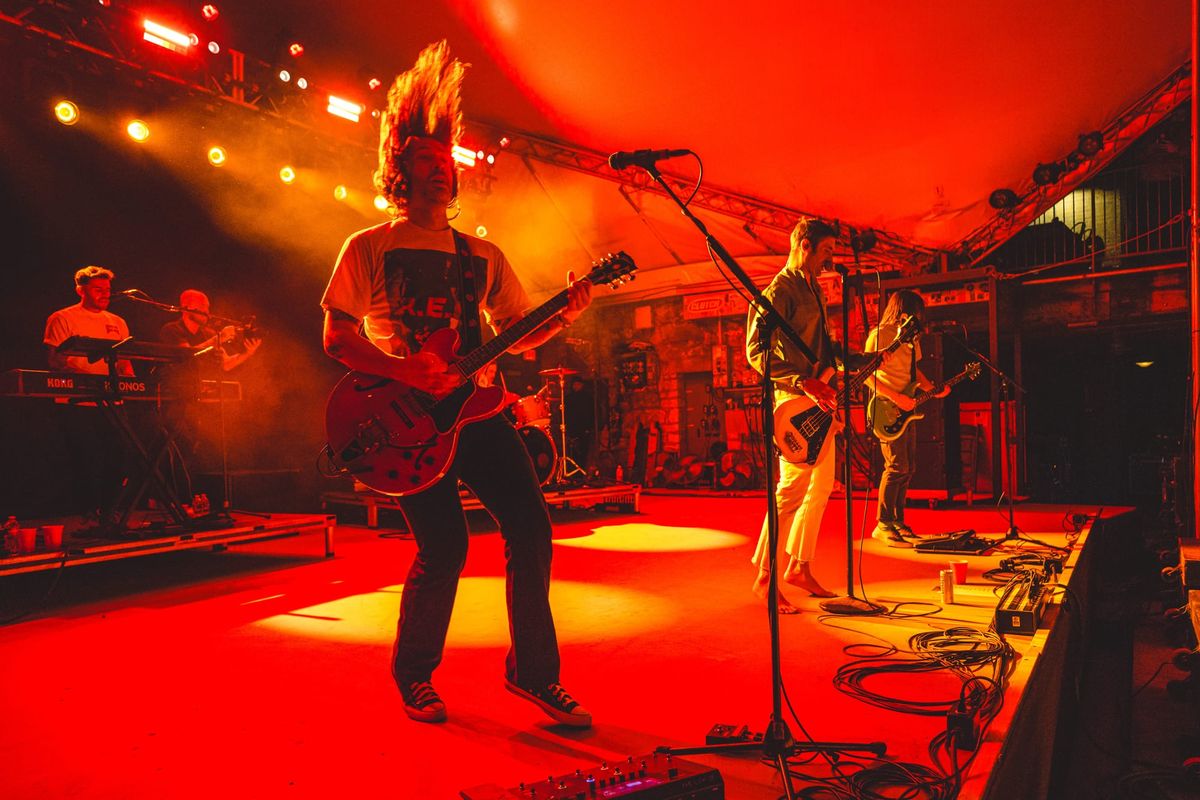
It was a lightning-in-a-bottle, dynamite-in-the-hole moment on May 16, 2025, when Tyson Ritter, lead singer and bassist of the All-American Rejects, shouted some words of truth to a crowd of screaming rock fans while standing on a bowling lane.
“We’re not trying to sell you financed tickets to Coachella. We’re not trying to sell you Ticket Master f***ing penalty fees. We’re not trying to sell you 25-dollar parking,” said Ritter from the Memory Lanes Bowling Alley in Minneapolis, Minnesota.
“We’re just trying to sell you some songs you might have grown up with so you can f***ing let go with us, in this non-denominational church of rock-and-roll.”
Okie rockstars Ritter, guitarist Nick Wheeler, guitarist Mike Kennerty and drummer Chris Gaylor dared rattle the cage of the behemoth of the music industry; the clip went viral, being picked up by major news outlets.

“I guess I tapped into something there I didn’t mean to, but this clip got passed around a while,” says Ritter from the stage of The All-American Rejects’ panel at SXSW on March 13, 2026.
“It struck a nerve, CNN and all that sh**, and it launched this tour into the national conversation.”
The aforementioned tour was the Rejects’ House Party Tour; average people with access to a backyard or other third-space venue could play host to the Rejects with no formal ticket price, maybe a donation bucket at the door for the venue. During 2025’s leg of the tour, the Rejects played stops across the Midwest, places that typically would never be able to pull such a big act.
Just 48 hours after the clip broke containment, 800,000 people added their contact information to be texted about a House Party show near them. An additional 25,000 people submitted venues: places as small as a studio apartment to as big as a high school basketball arena which could hold 18,000.
“I remember how we played VFWs and pizza parlors and God-knows-where on some of the first tours in a van we had,” says Ritter. “There was something here. Something we tapped back into.”

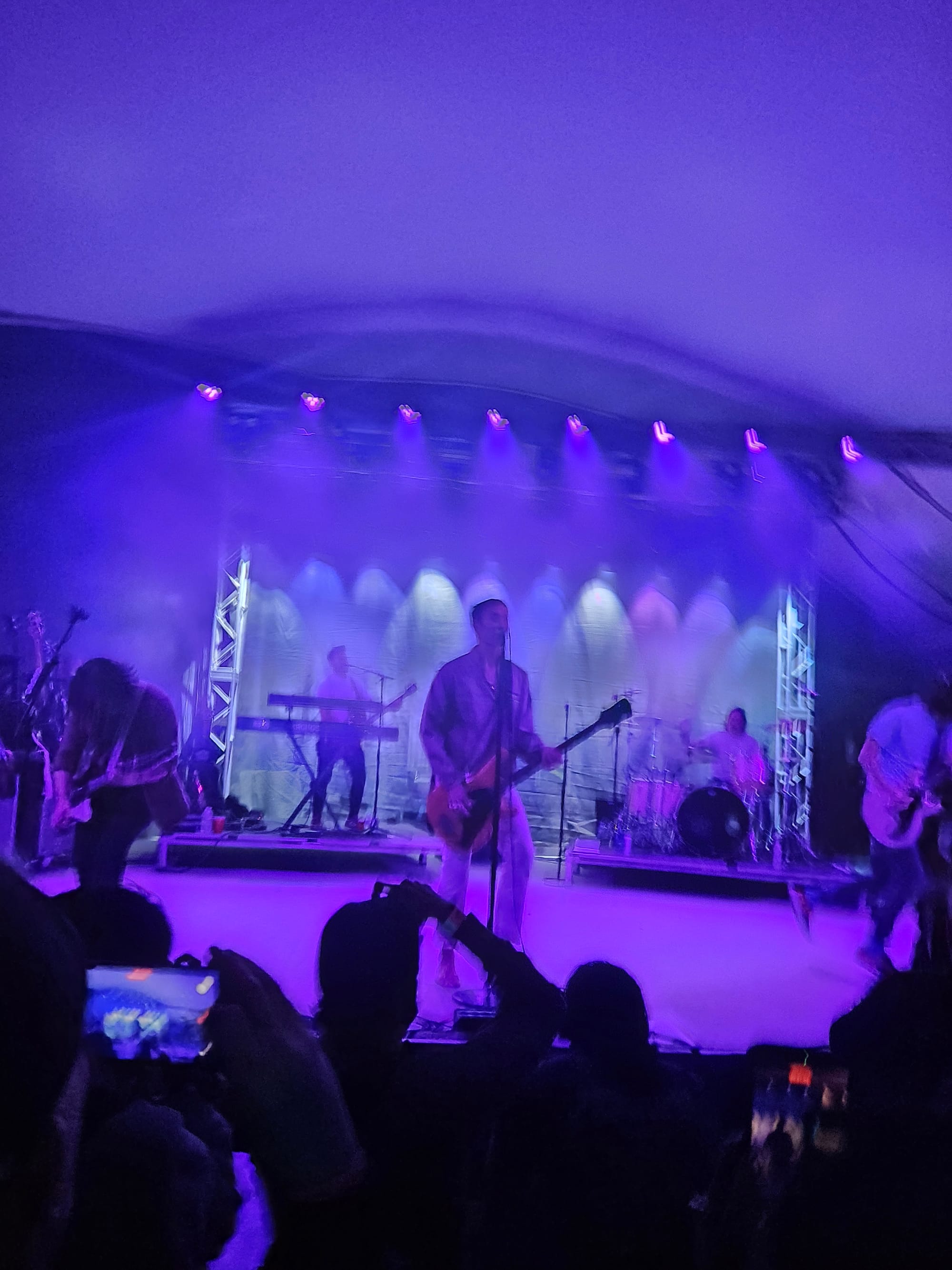
LEFT: Photo by Alexandra Bohannon. RIGHT: Photo by Sasha Hawthorne
From Stillwater and Edmond, the Oklahoma Music Hall of Famers have been playing together for around 27 years—Ritter and Wheeler have played together since they were high schoolers in 1999. After a slingshot rise to the top during the early aughts, the Rejects’ hits came quickly and became anthems of a snapshot in time. These songs will be no surprise to folks of a particular KJ103 listening era: “Dirty Little Secret,” “Swing Swing” and “It Ends Tonight.”
But things stalled. The band’s last new record was 2012’s Kids in the Street. Their former management wanted them to focus on anniversary tours of their past albums like their 2005 smash-hit Move Along. While they did negotiate release from their label to go independent, they were still limping from gig to gig—casinos to state fairs to corporate retreats.
All of this prompted a massive question: How does an independent artist, with no mainstream music industry push behind them, penetrate the public consciousness these days?
It was landing manager Megan Kraemer of High Maintenance Management, whom Ritter describes as someone who “actually loved the band,” (an apparent first) who shifted things for the group. She inspired new music and got them a distributor … but more importantly, got them thinking about a whole new way of promoting their music.
“Megan had an idea. A simple, foolish, pain-in-the ass idea: ‘Why don’t you play house parties?’” says Ritter.
Donning a high falsetto, Ritter continues as Kraemer: “‘We go and play in backyards, like at the end of those movies about college and sh**.’”
The band didn’t balk at the idea, even as risky and crazy as it sounded; for them, the contrast would be welcome. They had just played the most corporate of corporate gigs: a ballroom full of grocery executives that Ritter describes as a “poorly attended PTA mixer.”
But the Rejects walked away with a $50,000 check and a vision, thanks to Kraemer: They were going to play accessible venues in cities that weren’t music rich; charge nothing; and see what happened next.
First stop, the University of Wisconsin at Green Bay. The college’s radio station got the Rejects a spot on the quad at the end of finals week. The road crew depended on sidewalk chalk and word of mouth. Ritter didn’t think it was going to work, but people turned out. On to the next.
By the second stop, playing a backyard in Chicago, there was a noticeable shift in energy for the tour. People were already lining the streets of the venue house’s neighborhood despite the address not being public. By 3 PM, a queue of 5,000 people traced the Chicago streets. Ritter noted how this was different from waiting in line for a big stadium show.
“This was more than a line. I’ve been to shows, I’ve seen those lines,” he says. “This was a community. This was a community of people from all walks of life, and I guess that was fascinating to me, because it felt so different than the usual pre-show crowd.”
And playing these shows felt different, too.
“For many years now, I think we’ve played very high stages with barricades, and there’s a distance there,” says the Rejects’ rhythm guitarist Kennerty at the SXSW panel. “Getting back to playing with nothing separating us, it reminded us of the excitement we had when we started doing this that slowly gets whittled away as you get the success. These shows have given us the soul back to playing shows.”
The proximity and eye contact with fans and the palpable energy of the crowd were selling points not only for the fans, but for the Rejects too. After a successful show in Chicago, they were starting to feel momentum behind the House Party Tour project.
Following Chicago was the viral Minneapolis show where they played two sets for over 1,500 people at Memory Lanes; an overflowing bucket of $5 donations guaranteed the bowling alley would exist another summer. Ames, Iowa was next, where they played an old popcorn factory in the middle of a cornfield for 4,000 people. Driving south on US-63, the Rejects arrived in Columbia, Missouri.
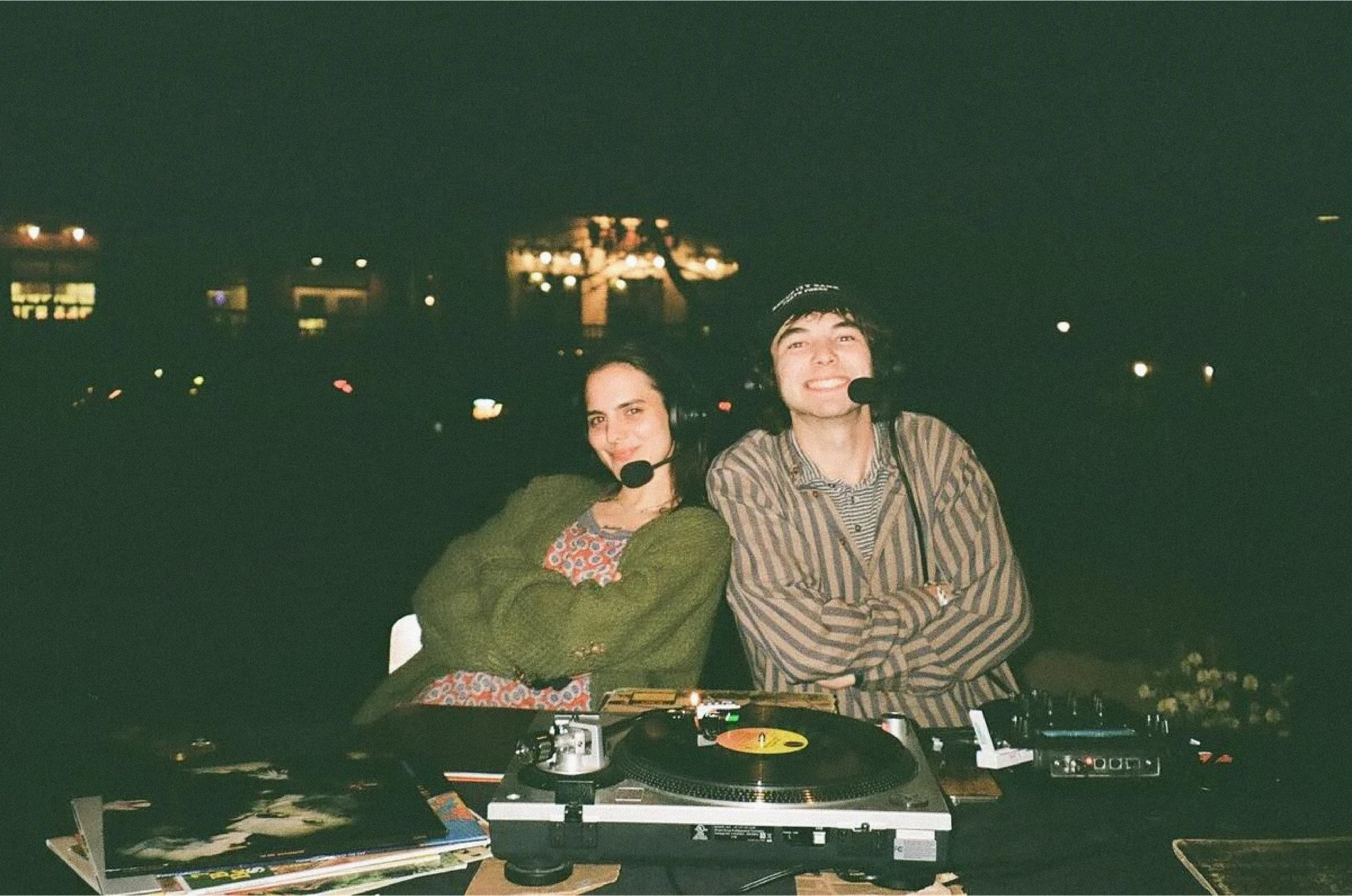
Rewind to a few weeks earlier: John Sansone, general manager of KCOU—the University of Missouri’s college radio station—received an email supposedly from The All-American Rejects’ management. Naturally, there were fears it was a scam. Feeling cautious, Sansone pulled in the station’s music directors Lily Franck and Michaela Bailey to set up a Zoom meeting.
It was real. And now the clock was ticking on the logistics of hosting the Rejects in Columbia.
“We were like, ‘Are you freaking serious?’ Because we’d been hustling for the last two years as music directors to get bands a fraction of that size to come to Columbia and then try and make people care about them,” says Franck.
On the eve of Franck’s graduation—with a post-graduation buffet and balloons still in her house for her graduation party—the All-American Rejects set up and played in Franck’s front yard. Over a thousand showed. People sat on roofs to just get a glimpse of the band while Ritter performed in Franck’s Mizzou cap and gown, fresh from her graduation a few hours earlier.
“The exact way that I picture the All-American Rejects is sort of the way that they ended up functioning in my life,” says Franck, comparing the lead up and the show to the ending of a college movie. “Because it’s like, ‘big end of the year party, and this band comes’ … it’s very positive-resolution music.”
Most of the band also agreed: The Columbia show felt like it was out of a movie. Especially after the cops shut the show down right after a chorus of “Move Along.” After Ritter negotiated with Columbia PD (“They said we can play one more f***ing song!”), the band closed with 2008’s smash anthem “Gives You Hell.”
“The Columbia show is hard to beat, because it literally looked like a movie. It was just the way those houses were, and kids like sitting on the roof, and then the cops come in and shut us down for a minute, you couldn’t have scripted that,” says Kennerty. “People keep asking me if we scripted that … it’s like, ‘No, those are real cops!’”’
The Rejects moved through the rest of their 2025 House Party Tour dates with continued success: a roller rink in Fayetteville, Arkansas; a porch in Nashville; and a coworking space in Tulsa. People and pundits can see what the Rejects are doing for what some uncharitably call “flyover country.”
“I think greater investment in the Midwest is always going to be a blessing for everyone. People from the Midwest understand that,” says Franck. “Because if you’re from California, you’re used to kind of being the center of attention, but I get excited when I’m watching a movie and they just randomly mention Missouri. I’m like, ‘Oh my God, they recognize us,’ and I think that Oklahoma has a kind of similar feeling to it.
“These are places that are worthy of investment. And they will be successful whenever people decide to pay attention to them.”
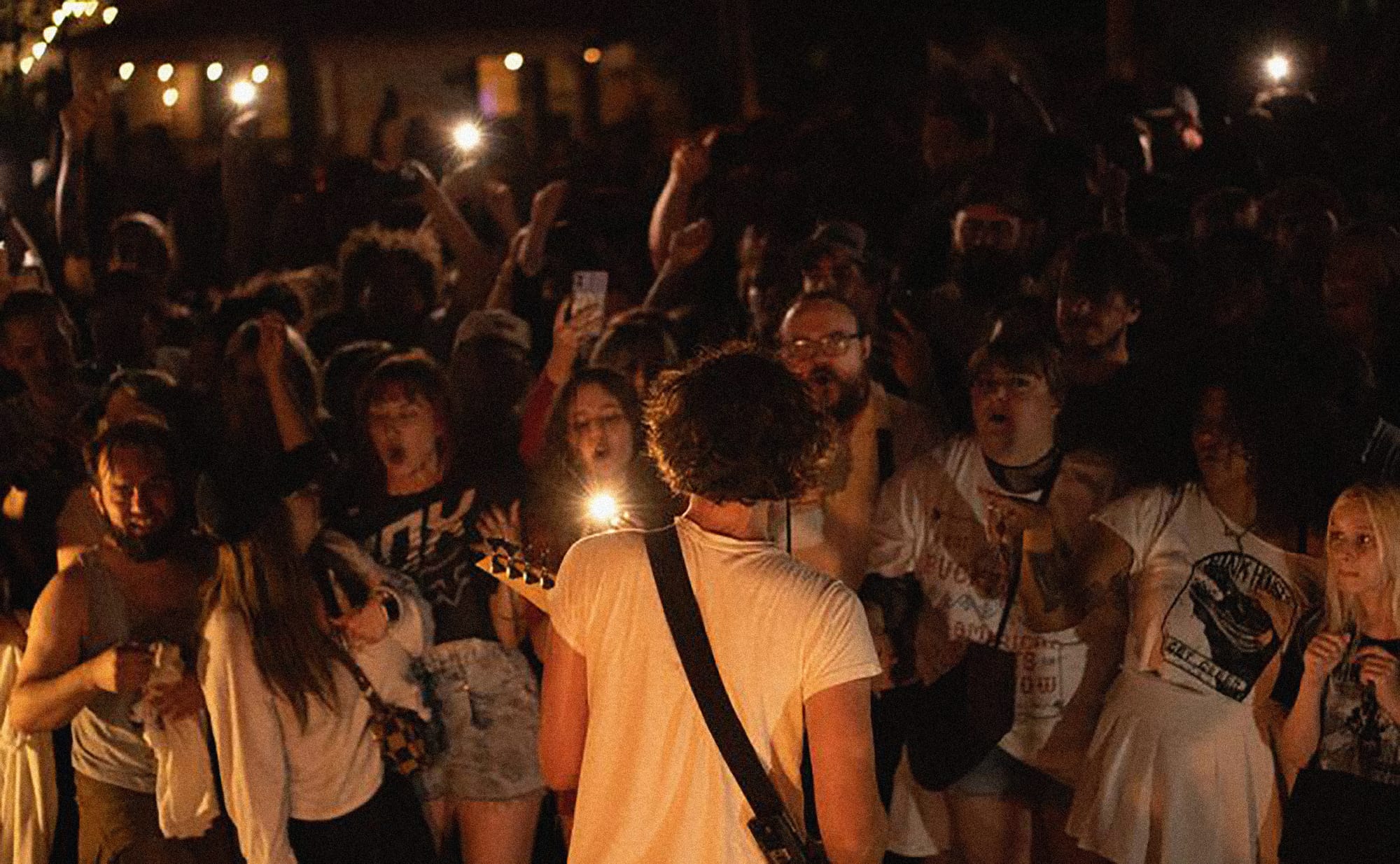
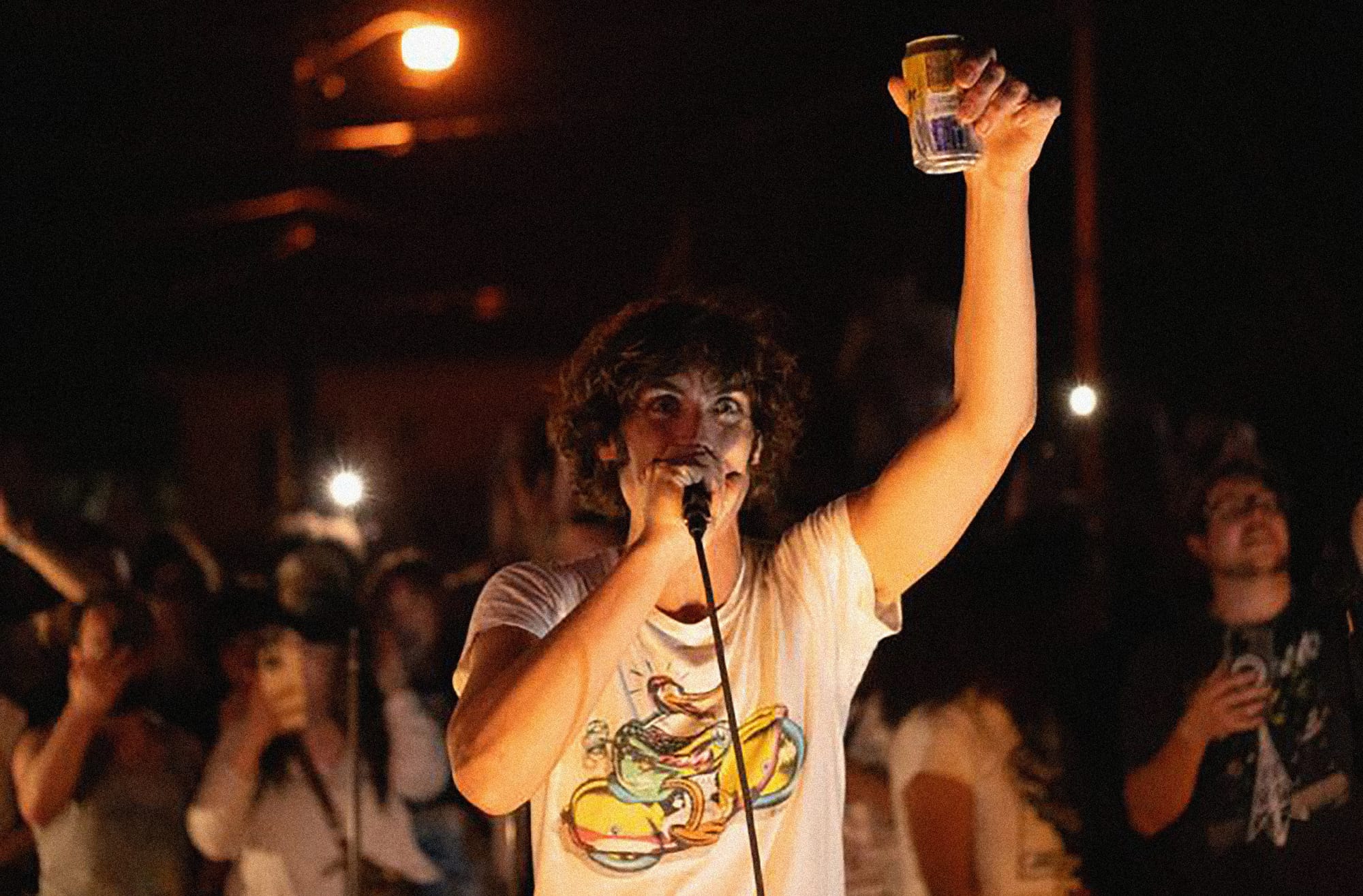
All-American Rejects’ frontman Tyson Ritter playing for a cheering crowd at the Columbia, Missouri House Party Tour stop on May 18, 2025, photography by Russ Bray
But the House Party Tour—is it an overstatement to call it a movement?—has gained traction beyond just the Rejects.
While in the midst of the tour, the band had to develop some kind of technology to keep up with the onslaught of venue submissions. Now, they’re offering that technology, called Playhouse, to other musicians. Co-founded by Ritter and Brian Battjer, Playhouse connects third-space venues with excited artists wanting to not have to pay to play. Artists don’t pay a cent for using Playhouse, fans pay a platform fee at checkout, meaning all the set ticket price goes back to the artist.
“I think being from Stillwater stays with us in a way, in every walk into this world, especially in facing this big beast of a music business.”
–Tyson Ritter
And while playing Austin’s famous Stubb’s Bar-B-Q on March 12 as part of SXSW wasn’t booked on Playhouse, Ritter remembered when gigging in Austin wasn’t easy. Having something like Playhouse would’ve come in clutch.
“To be finally invited to SXSW, better late than never,” jokes Ritter, contrasting it with him and Wheeler driving to Austin to play at The Red Fly at 15 years old. “Just you, me and a drum machine.”
Now that the Rejects have struck gold with the House Party Tour and Playhouse, big brands want a slice of the pie. However, the band gets to do it on its own terms and through no music executive’s dictate.
“I think being from Stillwater stays with us in a way, in every walk into this world, especially in facing this big beast of a music business, you know, 25 years later,” says Ritter. “I feel like I’m in my Oklahoma pocket right now more than I’ve ever been, just because there’s so much I just don’t want to participate in.”
As misfits, outcasts and the new champion of working class music fans, they’re the ones doing the rejecting. According to an interview with Vulture, Ritter grew up in a trailer and was unable to afford CDs. He, and the rest of the band, know what they’re doing is life-changing for people who are growing up like he did.
“I feel like we were always the songs that had that band. I feel like last year, we finally created something that made us a band with those songs, and that we did it on the back of this sort of blue-collar crusade,” says Ritter. “I’ve never been more proud to be a Reject.” •
The All-American Rejects’ latest album, Sandbox, released May 15 and is available for purchase or streaming wherever you find your music. Keep up with the Rejects and the Playhouse Platform by following them on Instagram @therejects and @playhouse.band.
