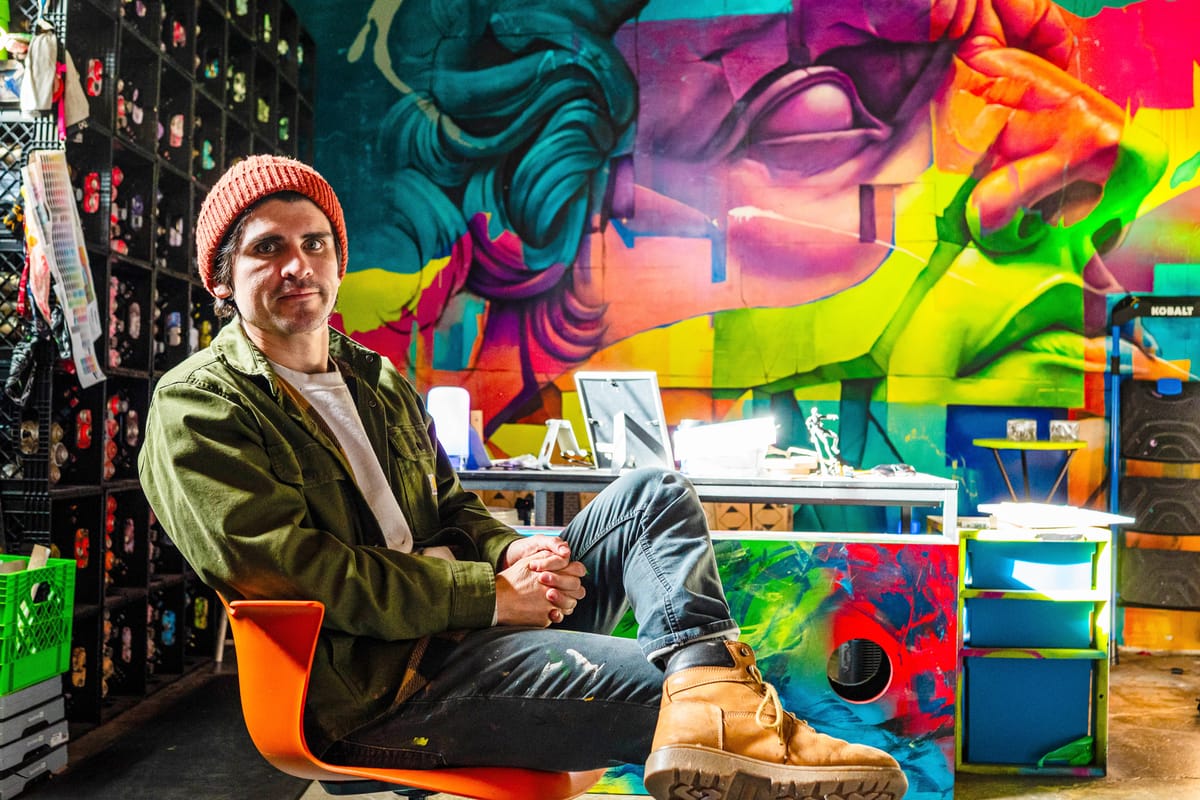
Muralist Carlos Barboza in his studio at Canopy Art Center
Carlos Barboza just can’t help it. When it comes to his art, the phrase “the bigger the better” almost feels like an understatement.
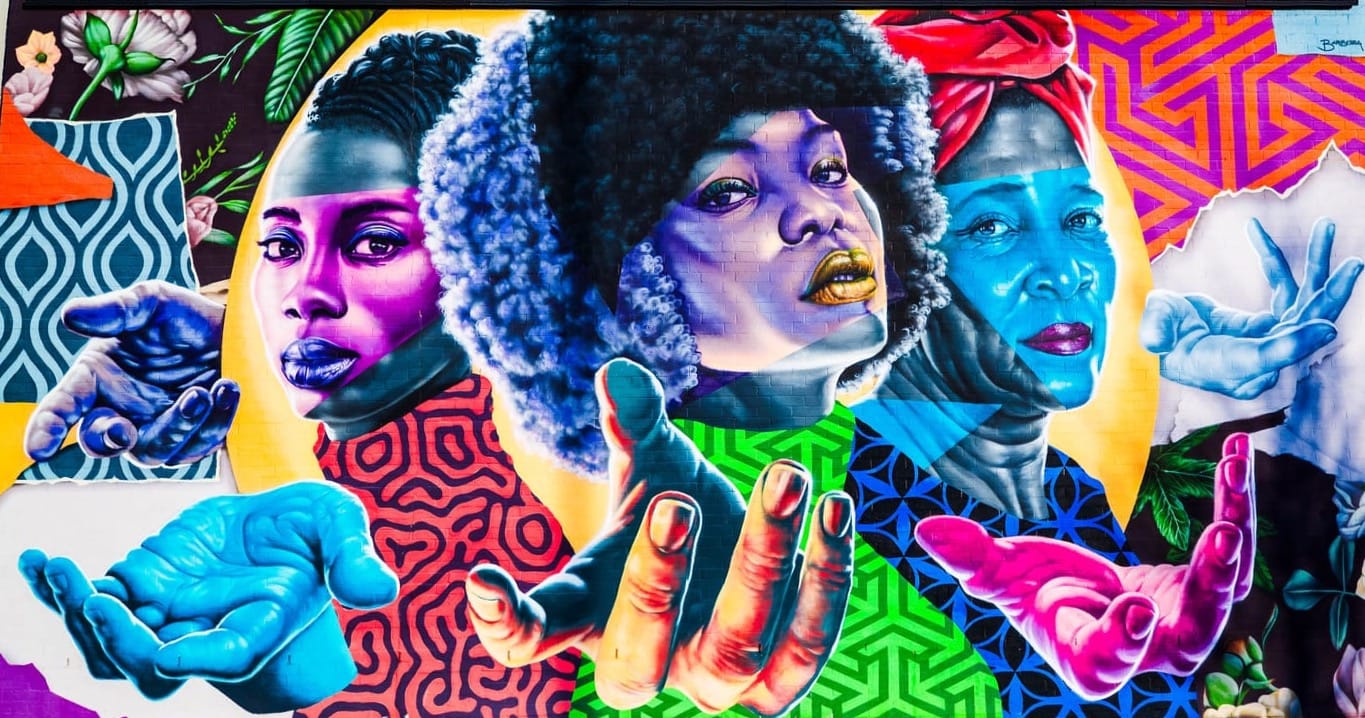
The Costa Rican-born painter has murals scattered across Oklahoma City as a testament to his love of making art as big, bold, and vibrant as possible.
“Anytime that I do a painting, I always try to find the biggest canvas possible,” Barboza says. “I think mostly I love to do details. So, the bigger the canvas is, the more real estate I have to add details. To go even further, I think with murals, I discovered how they’re such a great tool to democratize art, and to make it available to everybody.”
Barboza’s work can be found on the sides of grocery stores, office buildings and schools. He has more than 50 murals to his name.
Besides size, Barboza’s other calling card is realism combined with a strong color palette that comes to life.
“Maybe this comes from my love for film and the movie-going experience,” Barboza says. “I like things big, and seeing something rendered 20 feet tall does kind of give you a weird psychological kind of feeling of being overwhelmed by something when it’s large. I've also always liked painting big.”
The overwhelming majority of Barboza’s paid work has nothing to do with his life. He describes them as fun, but just surface deep. It’s not until you step inside his office at the Canopy Art Center (1717 NW 16th St.) that Barboza’s life is on display in living color. There, his life as a once undocumented immigrant growing up in the United States starts to come into focus.
“My childhood in that situation, I think it is very much like people who grew up in poverty. They don’t know that they’re poor,” Barboza said. “I think it was somewhat similar where I didn’t quite know what the implications were of my situation up until I think I was maybe like 16 when I couldn’t get a driver’s license. I couldn’t go to college and get an education. My therapist said it’s no wonder why I’m an artist—because I really had no other choice.
“I think once you kind of understand the situation that you're in, it is very traumatizing, and it was a very fearful time.”
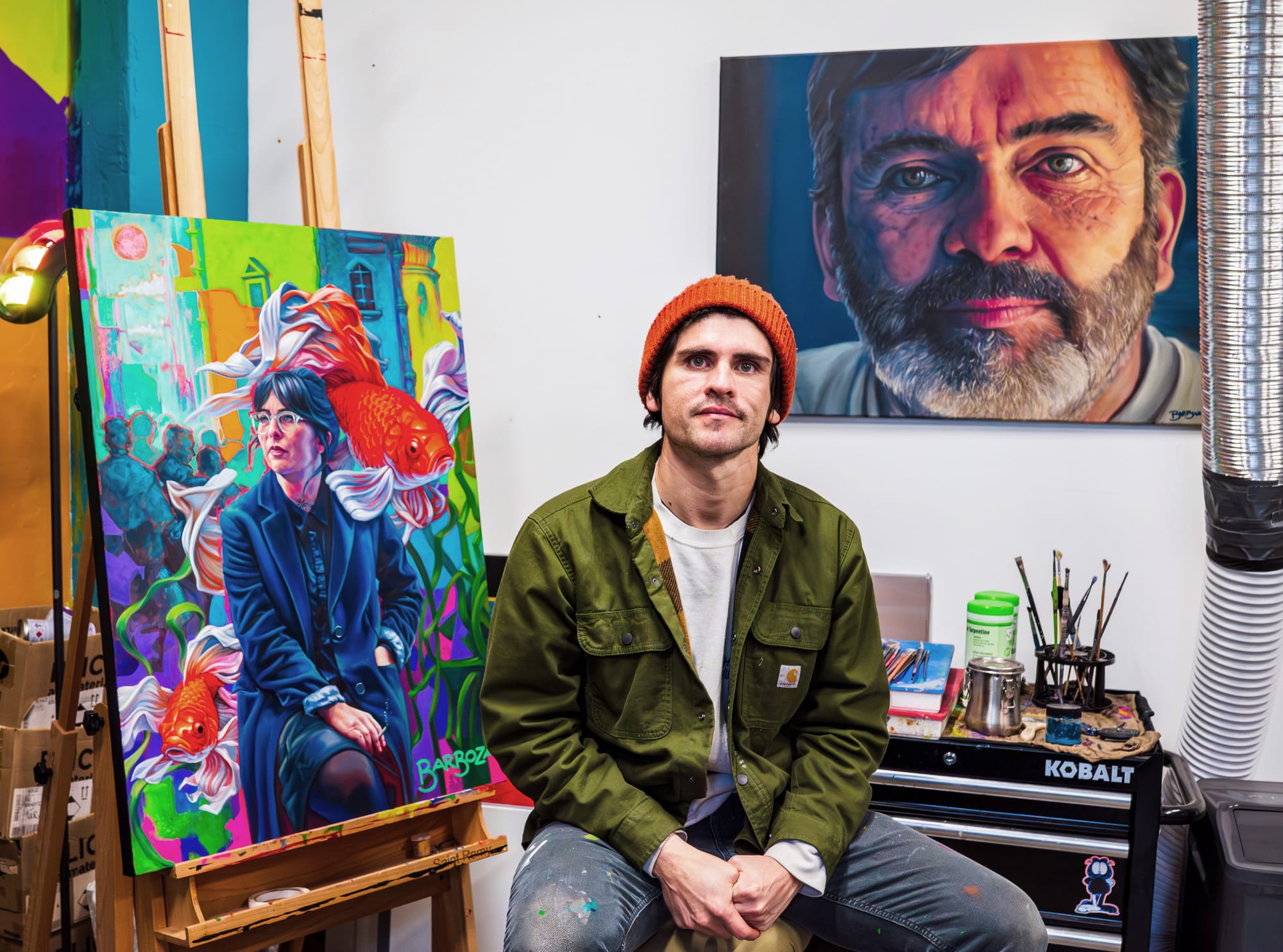
The paintings that adorn his office walls tell the story of a boy who grew into a man just as the battle over immigration was starting to heat up in America. They include a large portrait of his father, whose eyes seem to bore into the viewer’s thoughts. But it’s the one of his sister, sitting in water with large goldfish swimming around her, that may depict his story of immigration and artistic inspiration the best.
By the time Barboza’s parents and youngest sibling had gained U.S. citizenship, he and his sister had passed the age of being included. That left them still being a part of the family, but not according to the government.
“It was just her and I that were in this situation, this living undocumented in the United States, with our parents being citizens now,” Barboza explains. “She and I, we had no path towards citizenship other than getting married or something like that. But ultimately, my sister decided to leave. She was kind of fed up with it, and I totally understood that fact. She had all this hope and promise for what she wanted to do for a living, and she just was not getting the opportunities that she wanted when she was here.”
Barboza’s sister decided to leave for Europe. At the time, they both believed they would not see each other again for at least a decade, because he couldn’t leave the country and she wouldn’t be able to return. After surviving the life of being undocumented children together, they had to say goodbye without knowing when they would see each other again.
“There was this moment when we were driving to the airport, she was about to leave, and the song ‘Wish You Were Here’ by Pink Floyd was playing on the radio,” Barboza remembers. “That always stuck with me. It was almost like a movie scene. Very cinematic, and anytime that I hear that song, I just always associate it with her.”
When Barboza was looking through photos to use for a portrait of his sister, he was trying to figure out what he wanted to say. That is when a lyric from the Pink Floyd song popped into his head. “We’re just two lost souls swimming in a fishbowl” was the inspiration he needed.
“So that’s kind of why I had this idea of someone being isolated in a fish tank, kind of like separate from everybody else,” Barboza said. “That’s very personal as well, but people wouldn’t know that. I always wanted to still like a thing that works as a painting, something that’s beautiful to look at, a little bit surrealist too. But I know what it means to me.”
Fortunately for Barboza, he didn’t have to wait a full decade to see his sister again. After he got married in 2020, he was able to obtain his Green Card the following year. He immediately booked a flight to Italy to visit her.
“It was the first time that I left the country in that long,” Barboza says. “So it was like a very scary thing being on the plane. I remember whenever we went over the border of the United States, and that was the first time in 20-plus years that I’d been outside of these borders, and so it was a very profound kind of thing.”
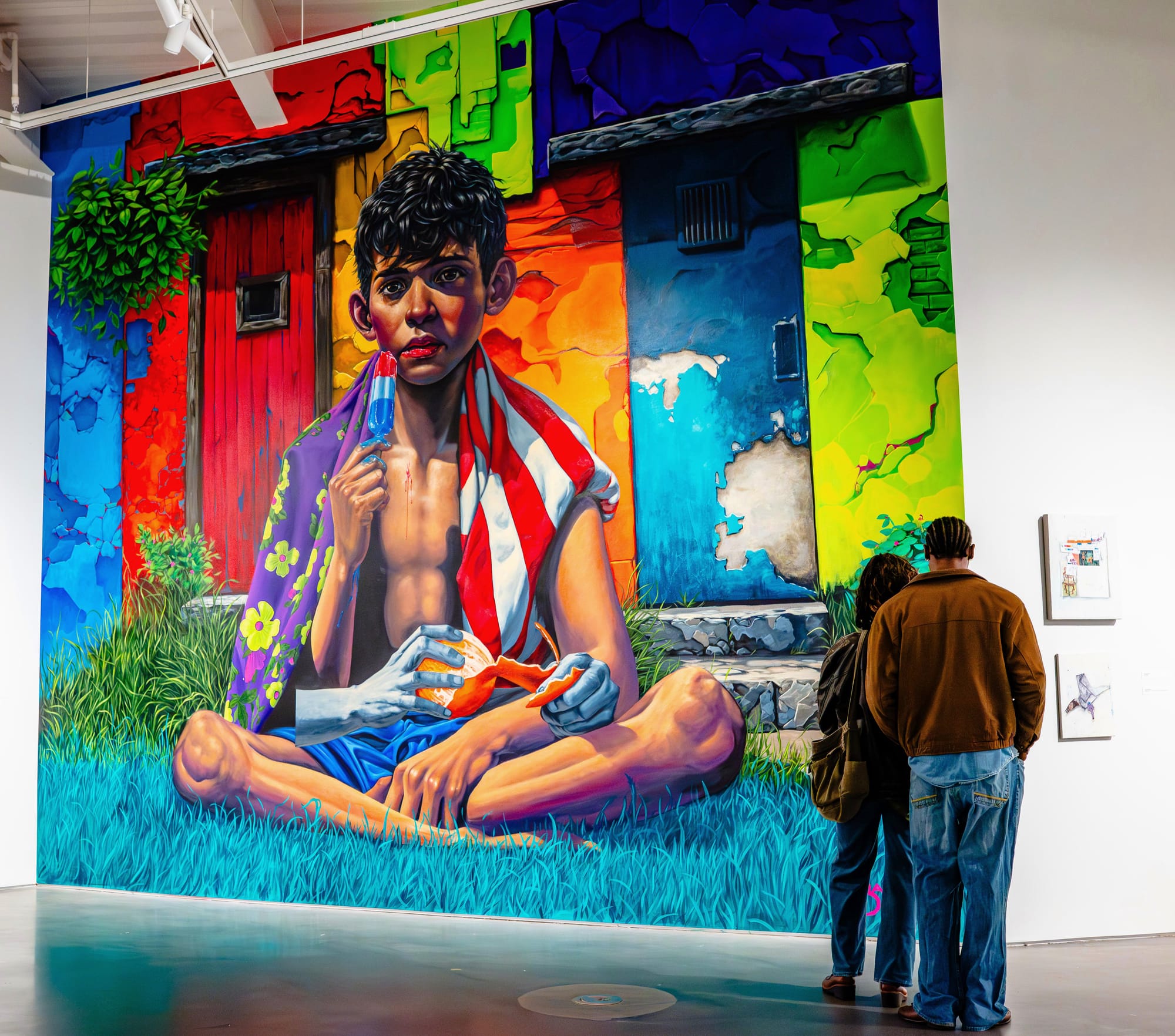
It wasn’t until recently that Barboza began to sprinkle more personal life into his work. As part of the ArtNow 2025 exhibition at Oklahoma Contemporary, he unveiled a piece titled “What We Buried (We Became).”
“It explores themes of identity, assimilation and the quiet ways in which our childhood lingers within us,” Barboza says. “Especially when we hide or suppress fundamental parts of ourselves in order to feel like we belong. This work is about that split. The innocent nostalgia of growing up in a new culture, and the darker undercurrents of what gets left behind in the process.”
LEFT: Barboza in his studio with a piece inspired by his sister. RIGHT: “What We Buried (We Became)” on display in the ArtNow 2025 exhibition at Oklahoma Contemporary.
A trip back to his native land of Costa Rica reminded him that he does have two homes to be proud of. But he’s also moved by the recent debate over immigration and the effect it’s having on the country that he loves.
“What’s happening right now was like my worst nightmare,” Barboza says. “You see things like back when Ryan Walters was wanting kids in school to be outed as undocumented. That was my biggest fear, because it was like a very deep secret that I had—to the point where I wanted to go by Charlie and not Carlos. I just wanted to try and hide this as best as I can. And that’s also what your parents tell you. You know, keep your head down. Don’t put yourself out there. Don’t get in trouble.”
However, after staying quiet for most of his career, he no longer finds that option appealing. Even though Barboza has a wife and daughter and is just a Green Card holder trying to gain full citizenship, keeping his head down and staying quiet means the other side wins.
That is definitely not doing it big, which is not in Barboza’s nature.
The link has been copied!
Your link has expired. Please request a new one.
Your link has expired. Please request a new one.
Your link has expired. Please request a new one.
Great! You've successfully signed up.
Great! You've successfully signed up.
Welcome back! You've successfully signed in.
Success! You now have access to additional content.