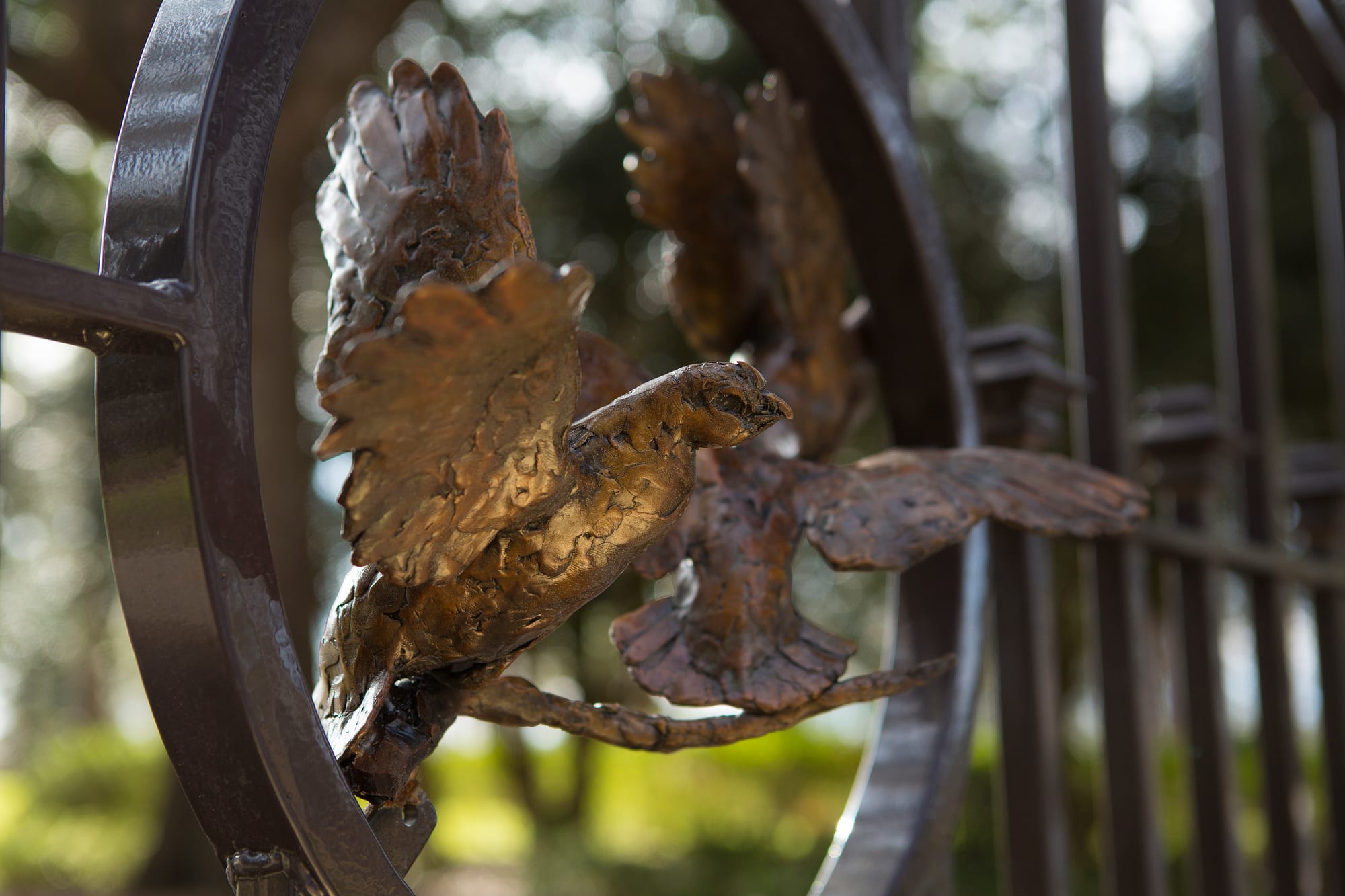
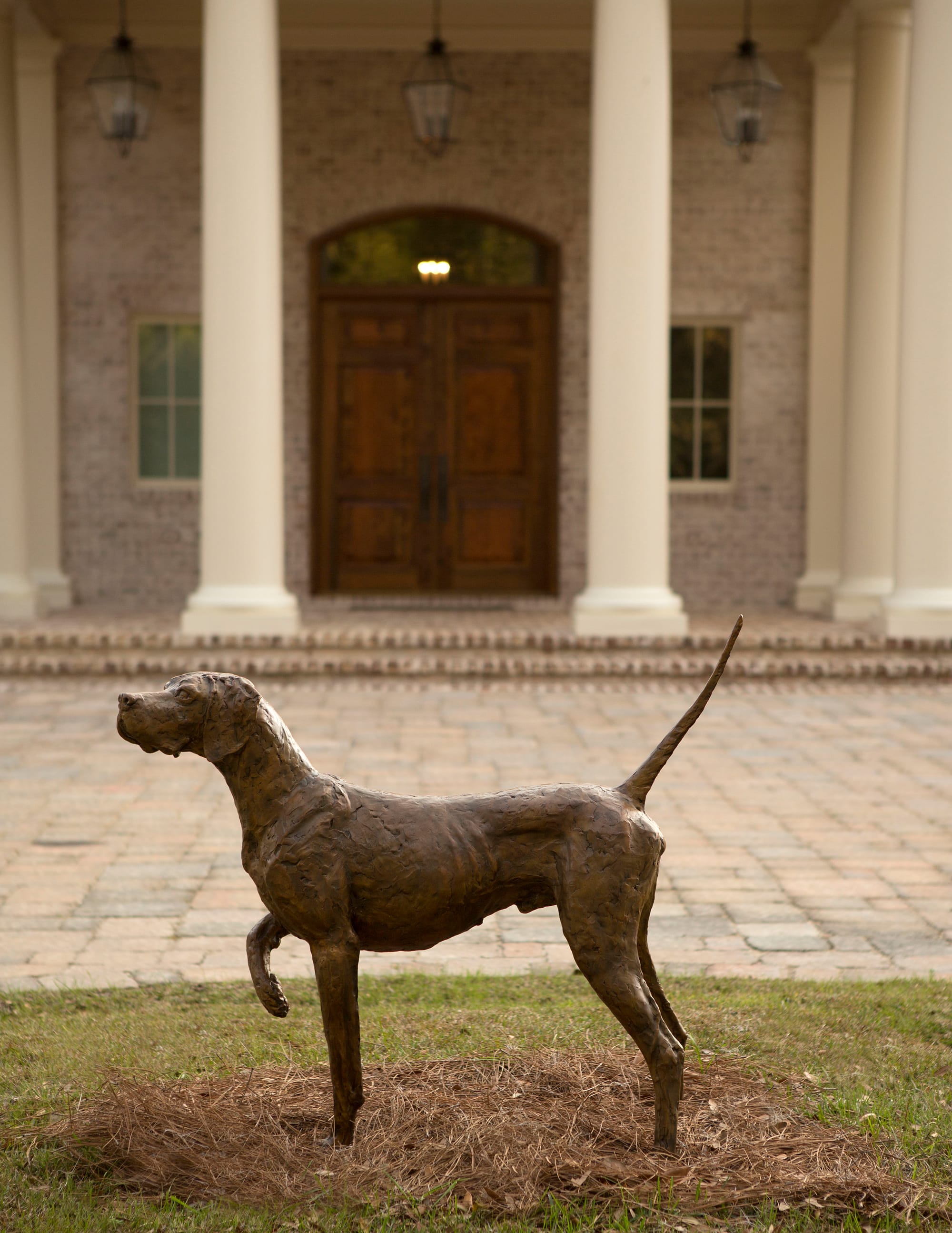
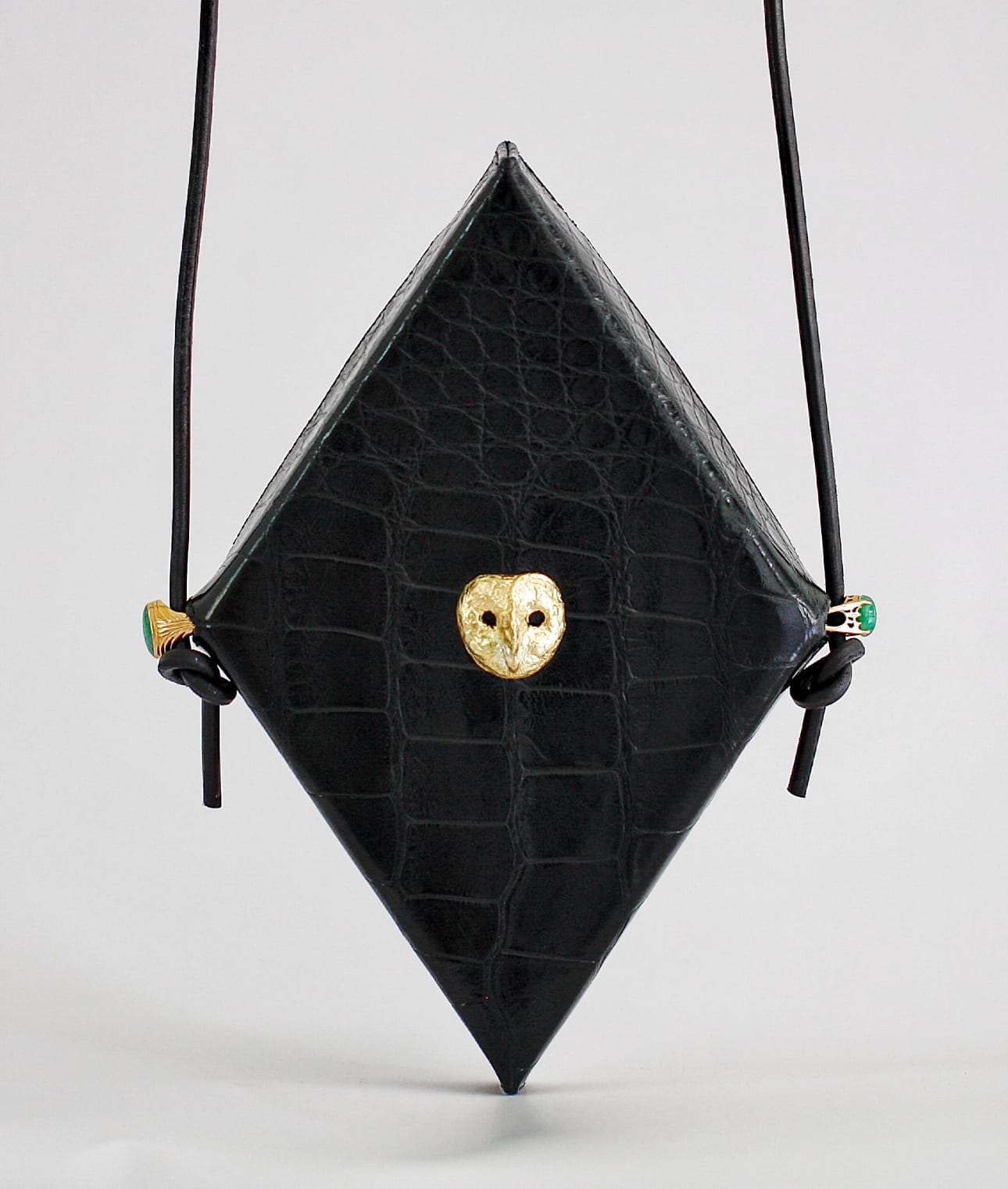
Despite being in a profession that often screams for acknowledgment, H Kreg Harrison has done a great job of staying out of the limelight. A quick Google search of the longtime artist’s name brings up a few scant articles, a barebones social media presence and suggestions on how to spell his first name. There isn’t even a Wikipedia page that details his work or the buyers who paid big money for his one-of-a-kind bronze sculptures.
But that is how Harrison likes it. He embraces being anonymous in his own solitude.
“I do not try to capitalize on sensationalism or the grandiose,” Harrison says. “I do my thing. My bronzes are found in some of the finest art collections in the world. And it doesn’t bother me if people don’t know me, especially where I live.”
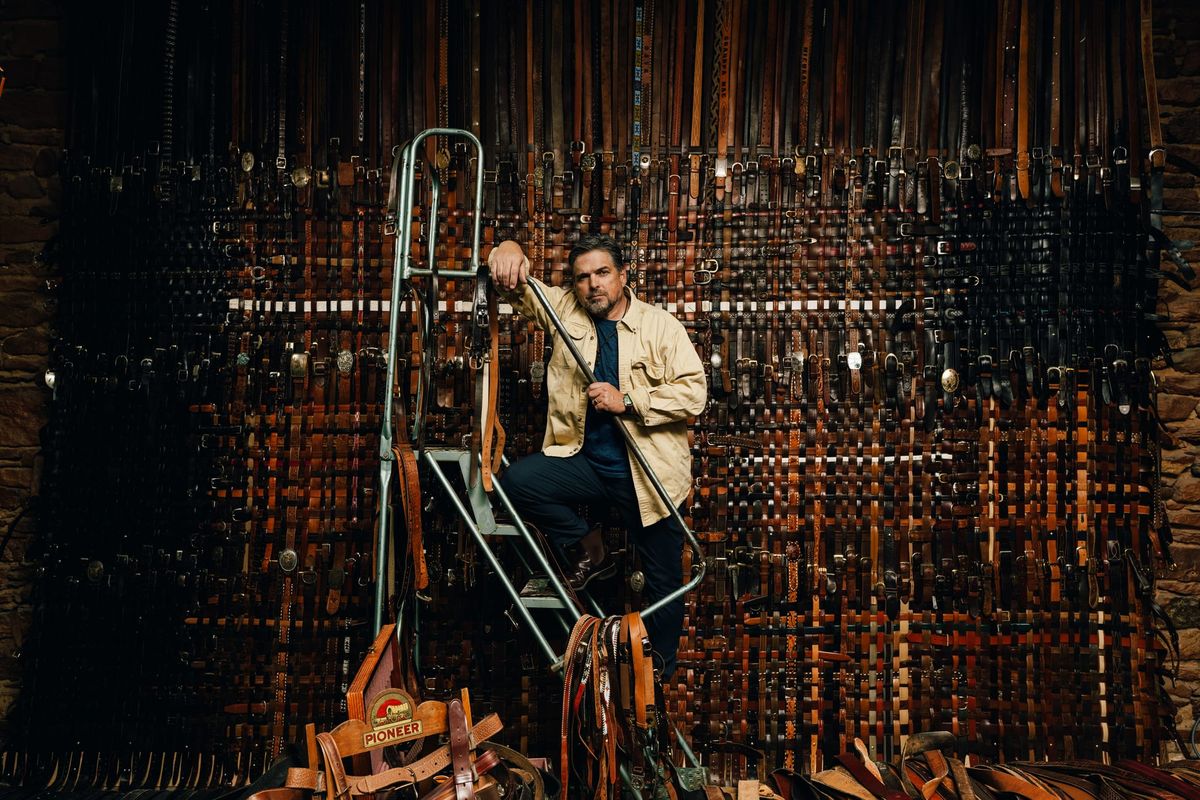
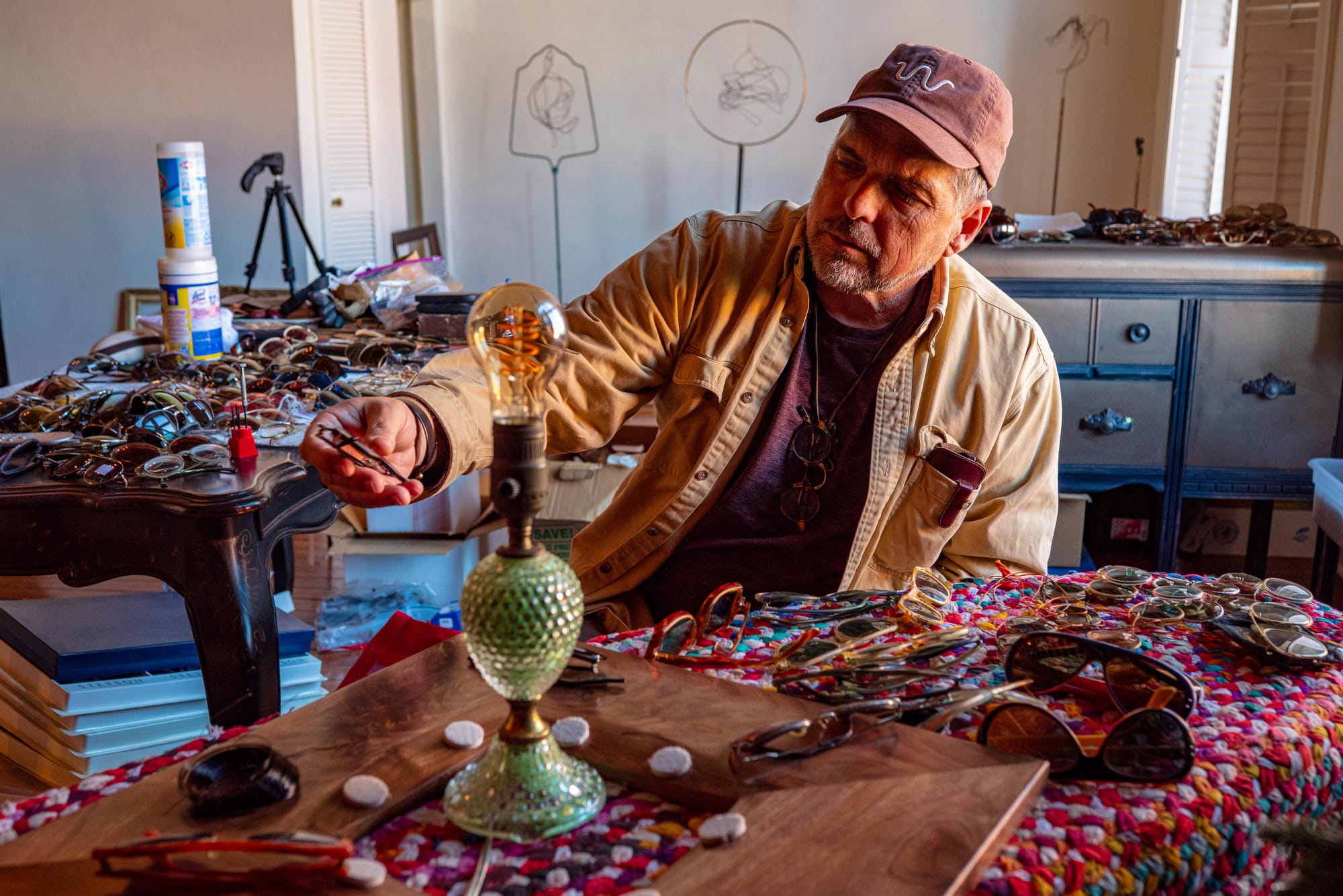
That is also one of the reasons the Utah native now calls Oklahoma a part-time home. He moved to Guthrie and set up shop in a second-floor apartment that is packed wall to wall with a large and growing collection of items that range from vintage cowboy boots to ice cream scoopers. Harrison sees them all as potential pieces to a masterpiece that just hasn’t found the right form yet.
While he built his name molding sculptures into works of art, modern art has been Harrison’s focus of late. He recently collaborated with his daughter, Sydnie Banks, to debut a woven tapestry at Art Basel titled “Pressure and Time.” It is made up of 1,000 vintage leather belts that were once worn by friends, strangers and even himself. Many include belt buckles he molded by hand.
Typically, Harrison would never have seen himself as part of the Art Basel scene in Miami Beach. As someone who has spent the majority of his career sculpting dogs, horses and world-class athletes or hiking in remote locales like Patagonia and elsewhere in Chile and Argentina, he had to be nudged by Banks to make his way to one of the art world’s most prestigious events with an experimental piece.
“I’m most comfortable in nature. And I like being alone,” Harrison says. “I don’t mind it, like some people. I fish alone. I hike alone. Not completely a hermit or a recluse, but I’m partially. Sitting on a mountainside with no human noise, that’s a symphony to me.”
But when it was all said and done, even Harrison had to admit that Art Basel was the perfect forum for one of his newest forays into modern and abstract art.
“The belt weaving, that’s the place to expose that,” he says. “So it was a good start. It’s led to some other things because I’ve learned through it. I’ve never gone to one event where I didn’t say, ‘OK, what can I grasp here?’ Something good is there if you work hard and don’t get down and just work through it.”
Harrison is currently working on several new pieces that he plans to introduce this year and is keeping under wraps. While they are a far departure from his previous works, to him, they all spring from the same creative well.
Photography by Terry Allen
“I think for me, art is life,” Harrison says. “Every part of it. It’s not just photography, sculpture, painting and watercolors. You can divide it up into a lot of things. But I see art really everywhere I look. In nature, obviously, that’s the great art. But in texture of clothing, in color, in leather—and that’s probably part of the reason I’m a pack rat.”
Harrison, 62, and his wife produced five daughters (Madison, Sydnie, Shaeli, Nykelle, Erica) and an only son (KJ), who passed away at an early age. He said his daughters have gone on to do amazing things in their own professional careers. That includes Banks, who has become one of the most sought-after designers in the country from her home in Edmond.
The life Harrison has created over the past years for him and his family was not a forgone conclusion. One of seven kids, he was never projected to be the next Rodin, Bernini or Brâncuși. Early on, art was more of a side passion to his endeavors as a four-sport athlete.
Harrison drifted through his college and early adult years trying to find his niche while also supporting a family. He recalled working as a guide on fly fishing trips when the only food he would have for his family was the fish he caught.
While in his late 20s, Harrison had a chance at a stable career and a good income when he received offers from advertising agencies in New York and California. With a wife and five kids at home, he was on the verge of finally being in a position where he wasn’t going to have to struggle to provide for his family.
However, he took an alternate path.
“We moved into our first home, into a neighborhood with a man named Grant Speed, who was a world-renowned cowboy artist,” Harrison recalls. “He became a friend and then a mentor. And then he critiqued my work for almost two years. I asked, ‘When should I approach a gallery?’ Once he said, ‘Okay, go for it,’ I walked away from everything cold turkey. From a good income, a great job. We actually moved to Montana.”
Even though Harrison said the 9-to-5 office life was like a prison to him, turning his back on the money and job was a definite risk.
“For whatever reason, I was not afraid,” Harrison says. “Making it in the fine arts is not easy, even at its best. But, for whatever reason, the fear of failing wasn’t the issue. My wife was busy at home; she could not hold a job at that time. So, I had to make it. I had to make it, or we didn’t eat.”
Harrison did make it. Built on a foundation of constant research and attention to detail, his bronze sculptures were displayed in art galleries across the country. They included the Legacy Gallery in Jackson Hole, Wyoming, the J.N. Barfield Galleries in New York and Collectors Covey in Dallas.
“But I chose to walk away from that,” Harrison says. “I walked away from gallery representation. I started doing primarily commission work for private collectors. And I started attending large exhibitions—I would sculpt live at their booths as an attraction, and the people would stop to see what I was working on.”
The same thing would happen when Harrison attended sporting events and would sculpt his clay models live as the competitions were taking place.
“I would go to track meets, go on the infield, I was able to get a credential and sculpt what I was watching,” he says. “And I realized that was magical to people. And the company saw that, too. They didn’t pay me. They wanted me to be there because it’s so captivating.”
Some of the athletes Harrison has sculpted include Olympic track stars Edwin Moses, Michael Johnson and Maurice Green.
Harrison has not put away his bronze sculpting tools just yet. He is currently working on long-term projects, including spending the past two and a half years visiting Spain, where he was focused on Spanish horses and working cowboys.
With foundries in Europe and South America, Harrison has clay models and bronzes that are waiting to be completed and added to his legacy. That’s not a word he has much use for, but he did say there is one word he would want people to take away from his art.
“I guess if someone were to see it in 50 years, I would hope the word ‘honesty’ comes up,” Harrison says. “Because there’s nothing counterfeit about what I do, the way I work. There’s no gimmick to what I do.”
Harrison sees the oncoming change. With the injection of Artificial Intelligence into the art world, fewer and fewer artists will be able to say they created a piece from their imagination or memory. It’s a world he has no enthusiasm to work in.
“I’m just glad I’m not going to be around for most of that, because I’m not interested in that,” Harrison says.
However, he isn’t close to stopping. He still dives so deeply into his creative process that he loses track of what day, what month and even sometimes what year it is. While that may upset his wife sometimes, it’s something he relishes.
“The way I feel about what I’m doing, it’s never changed,” Harrison says. “The passion is never … There’s not less. The passion to make something is just as strong today as it was 40 years ago, or when I was a kid. I’ve never felt like I have a job. Every day is Saturday in my mind. That to me is more important than money; the fact that I have complete autonomy. I don’t see myself stopping until I fall over.”
The link has been copied!
Your link has expired. Please request a new one.
Your link has expired. Please request a new one.
Your link has expired. Please request a new one.
Great! You've successfully signed up.
Great! You've successfully signed up.
Welcome back! You've successfully signed in.
Success! You now have access to additional content.