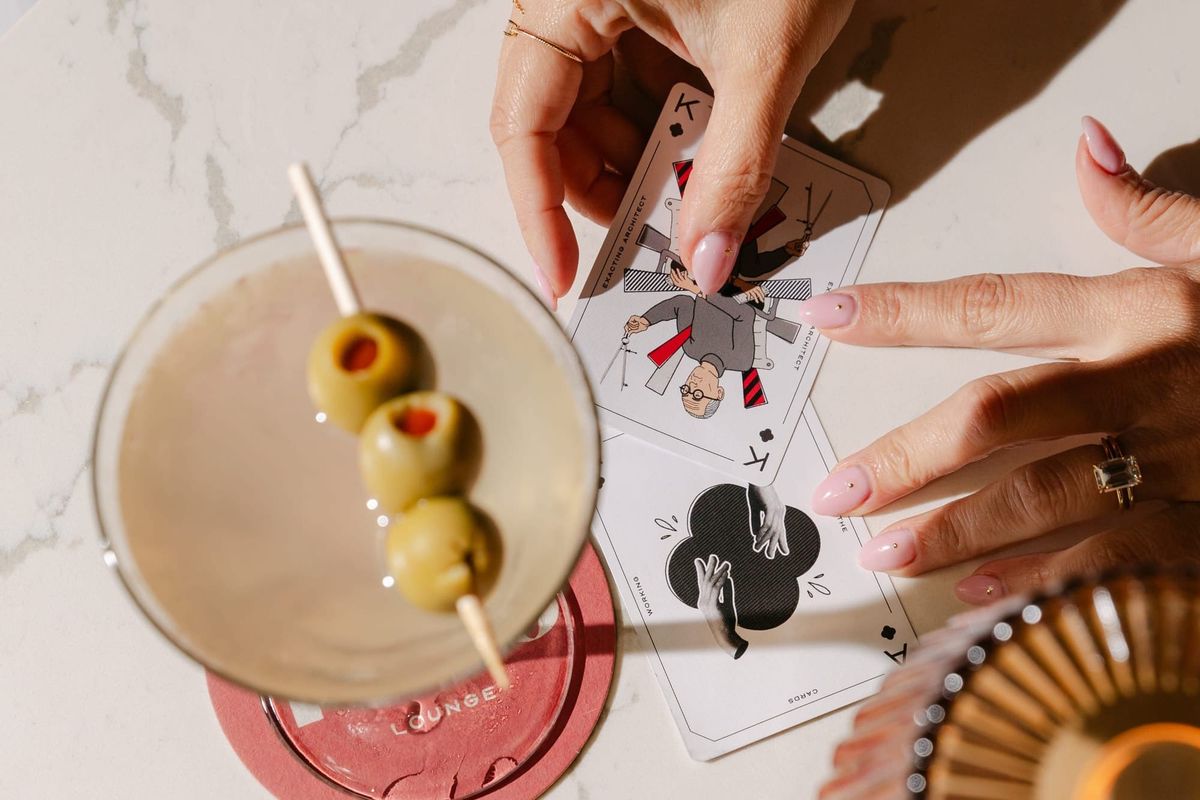
Custom playing cards designed for Red Piano Lounge at Skirvin Hotel in Oklahoma City, OK, Photo by Betsy Dutcher
Erin Cooper is from Port Orford, Oregon, a small town on the state’s southern coast less than 100 miles from California; it could easily be called Cannot Wait to Graduate, Oregon. It’s a fishing village, and like many other small towns in the Texas Panhandle, Wyoming cattle country, Georgia farm belts and West Virginia coal mining communities—all of which could easily be named Cannot Wait to Graduate, especially for the kids who always had ideas and ways of being that didn’t jibe with the small-town ethos—it was the point of launch for a career, in this particular case one that landed her and husband-business partner Tim Cooper in Forbes recently.
They founded Cooper House, a creative services agency, after her career in the U.S. Air Force (1998-2006), where she was a graphic designer in Space Command. That was the hook that inspired this feature earlier this year: Home-schooled kid grows up working in her family’s fish market on the Oregon coast, leaves for the military, lands in Space Command in Colorado, moves to Oklahoma for love and winds up in Forbes. Not the sort of thing you script, unless you’re making movies, or romance novels.
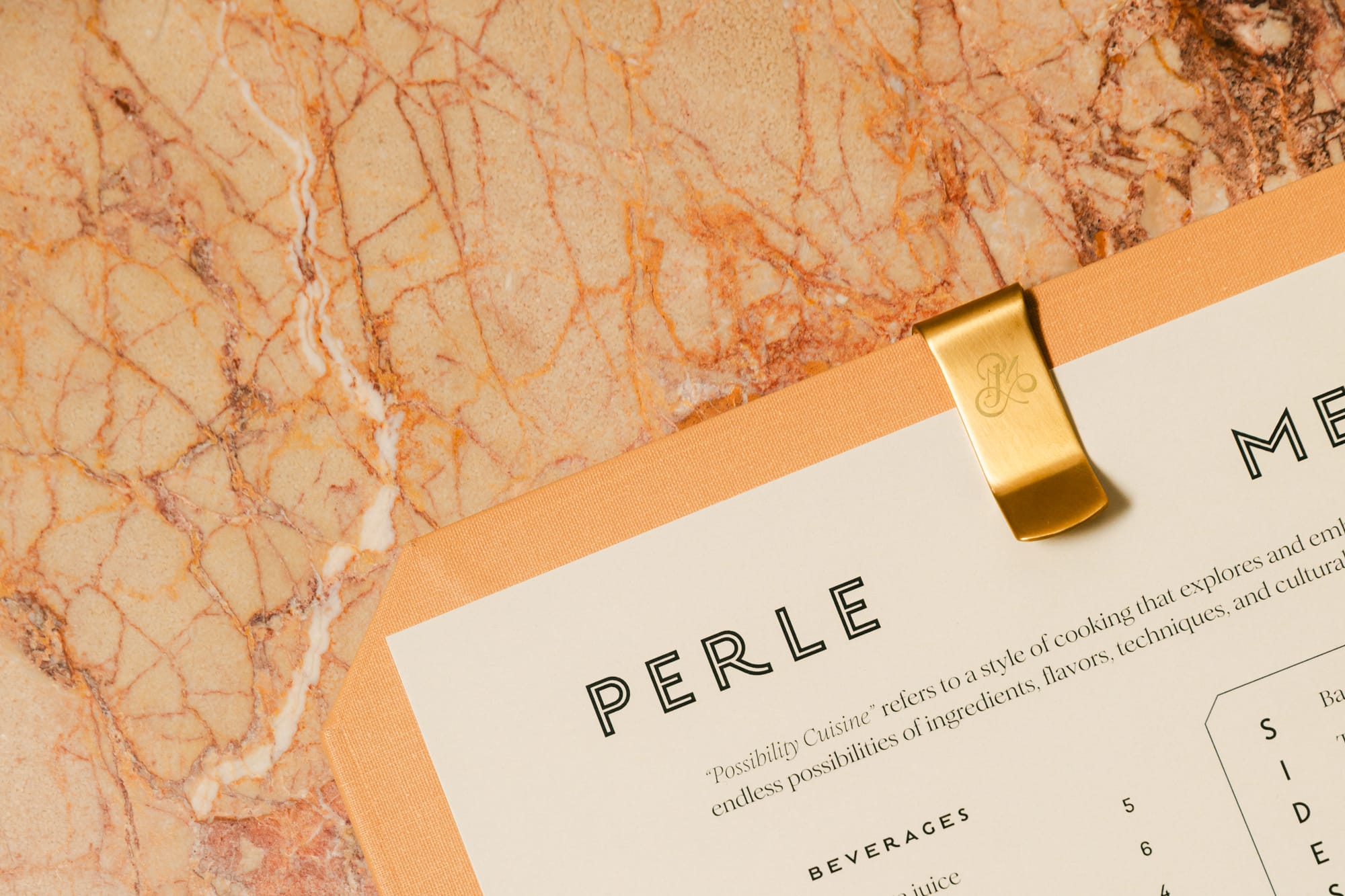
Menu detail and custom brass clip designed for Perle Mesta at Skirvin Hotel in Oklahoma City, OK, Photo by Betsy Dutcher
“I wasn’t sure what I’d do after high school,” she says. “I didn’t know what was out there. I thought I’d move to New York and go to film school. I had a camera in high school, so I shot video, participated in Shakespeare and community theatre productions, made my friends help me make movies.”
One memorable day she had all her friends in the trees just outside Port Orford, and she was shooting video when the resonance hit her. “It was the Lost Boys in Hook! I remember thinking, ‘This is my dream!’ In a very real sense, I was already doing design and art direction.”
This too is a common theme in the kids who leave; the differences and drive show up early, whether it’s the theatre nerds producing plays, the gay kid experimenting with fashion, the angsty songwriter cobbling together a garage band or the “head in the clouds” artist endlessly sketching their lives, the differences are apparent early, and in retrospect usually seem inevitable. They are not inevitable, of course, and Cooper said her parents encouraged her to prepare for a different life by looking at the military. Both are Navy veterans.
“I knew I needed to get out,” she says. “I was already dating a deckhand on a fishing boat, and they didn’t want that to be my life, and neither did I. I went to see the Marine recruiter, and he said I was too small, so he sold me on the Air Force.” When she arrived home, having already signed up, her mom said, “I thought you were just going to get brochures!”
After basic training and tech school, she went into visual information for Space Command, a role that meant she worked in design, even after her command was converted to security forces post 9/11. It was in this capacity that she met Tim Cooper, a Bishop McGuinness and Denver University graduate (Digital Media Studies), when her department was given a “civvies” day to go downtown Denver to see a presentation about a complex design program.“I was excited because we didn’t have to wear our uniforms, and then when we get there, there is this guy explaining how to work with a program I’d been trying to decipher, and he was using it effortlessly,” she says.
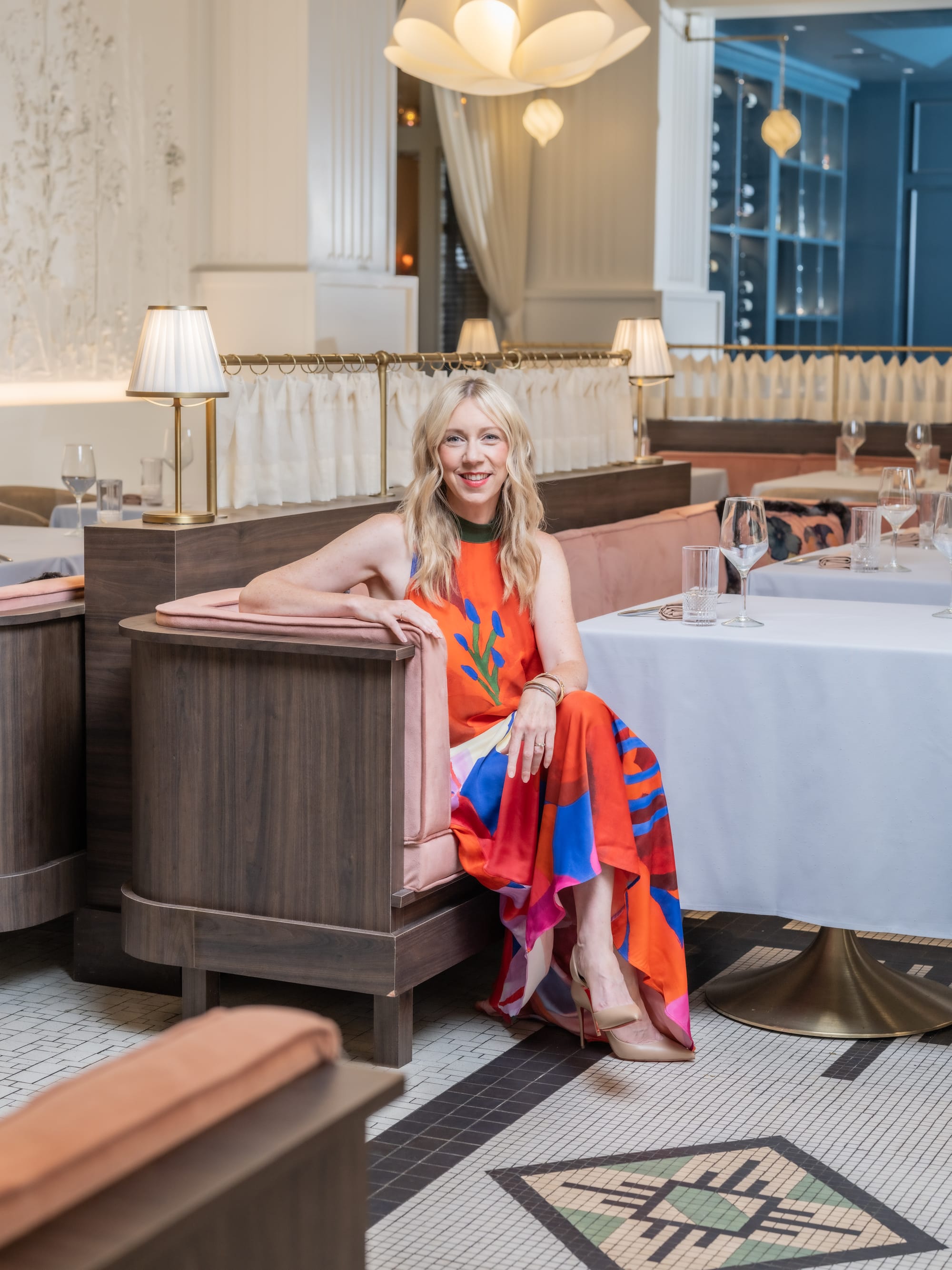
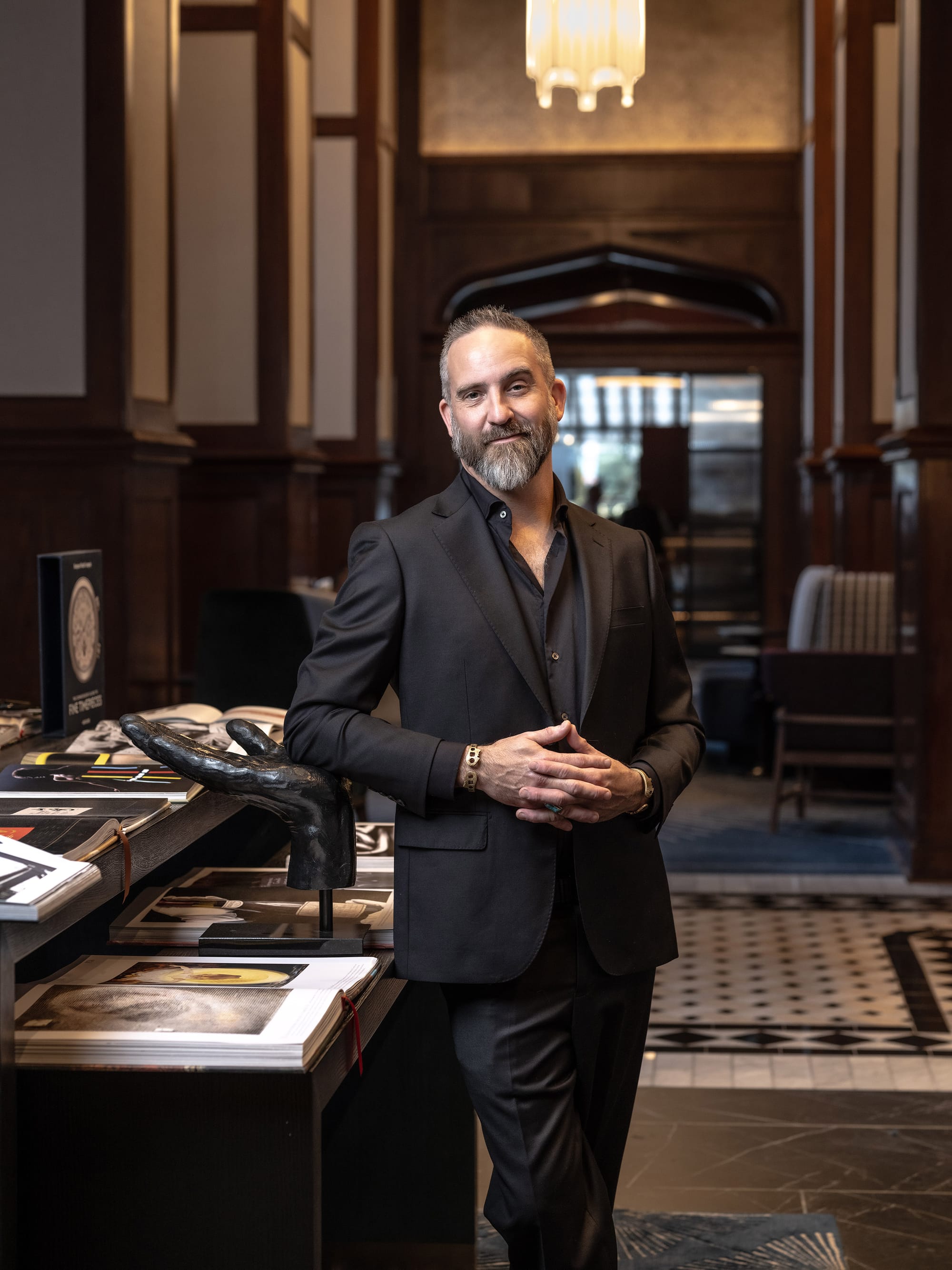
Cooper House co-founders Erin and Tim Cooper, Photos by Todd Scott
The admiration, attraction and wonder are still in her tone when she recounts their first meeting, and he too retains some important recollections. “She was the only one in the room asking questions,” he remembers.
“It was definitely his intelligence and competence that caught my attention, because I was not vibing with his outfit,” she says.
Tim remembers it differently: “She loved me for my pleated pants.”Whatever the truth, and we’re leaning toward Erin’s version, the two married in 2004 so Tim could accompany her to England; she’d received new orders. Just before the wedding, her orders fell through, and they decided to marry anyway. They decided to honeymoon in San Francisco, but on the way there, she got the word she’d be deployed to Iraq. At the last minute, a fellow airman volunteered to go in her stead, and the Coopers officially became a design team when Erin left the Air Force in ’06.
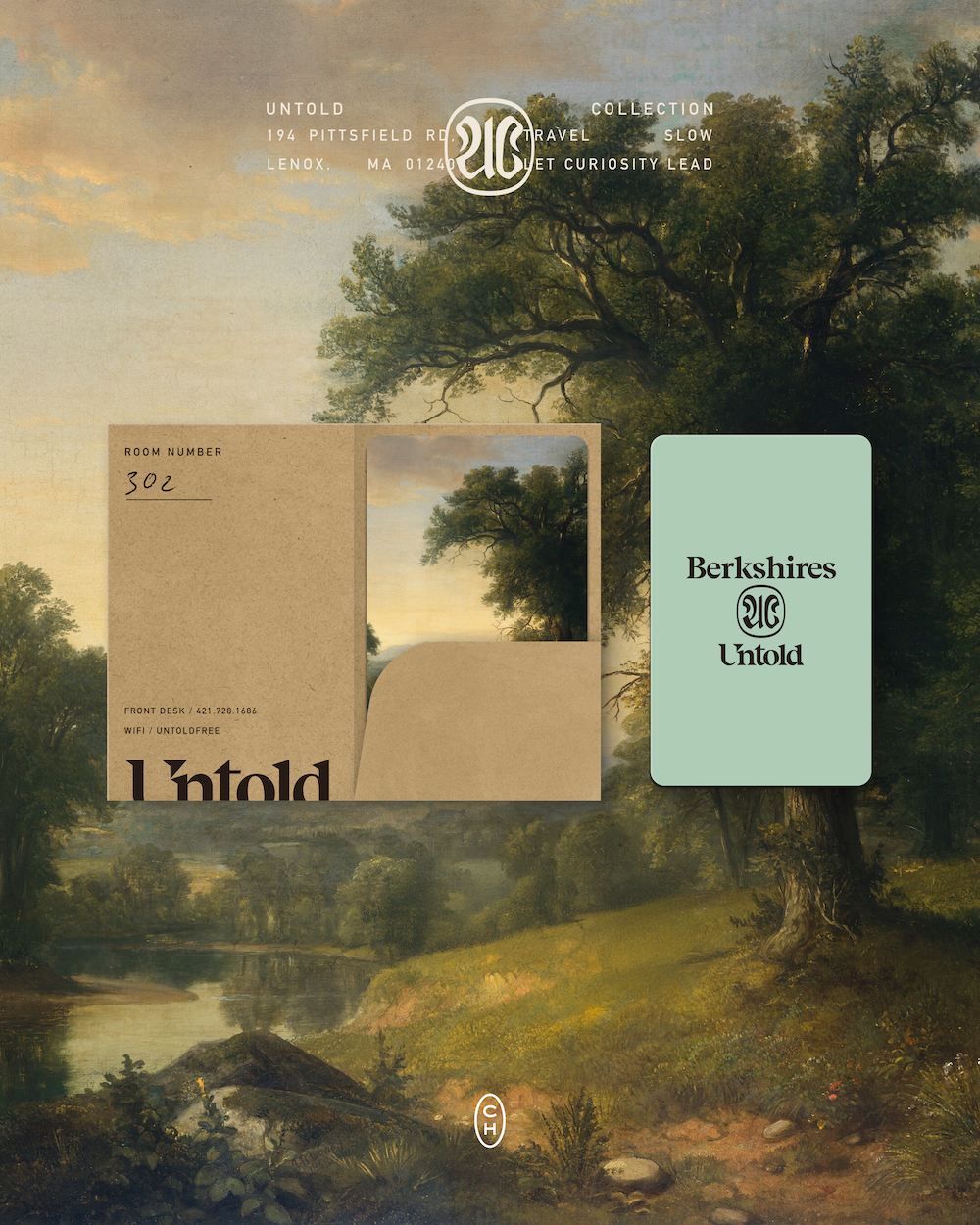
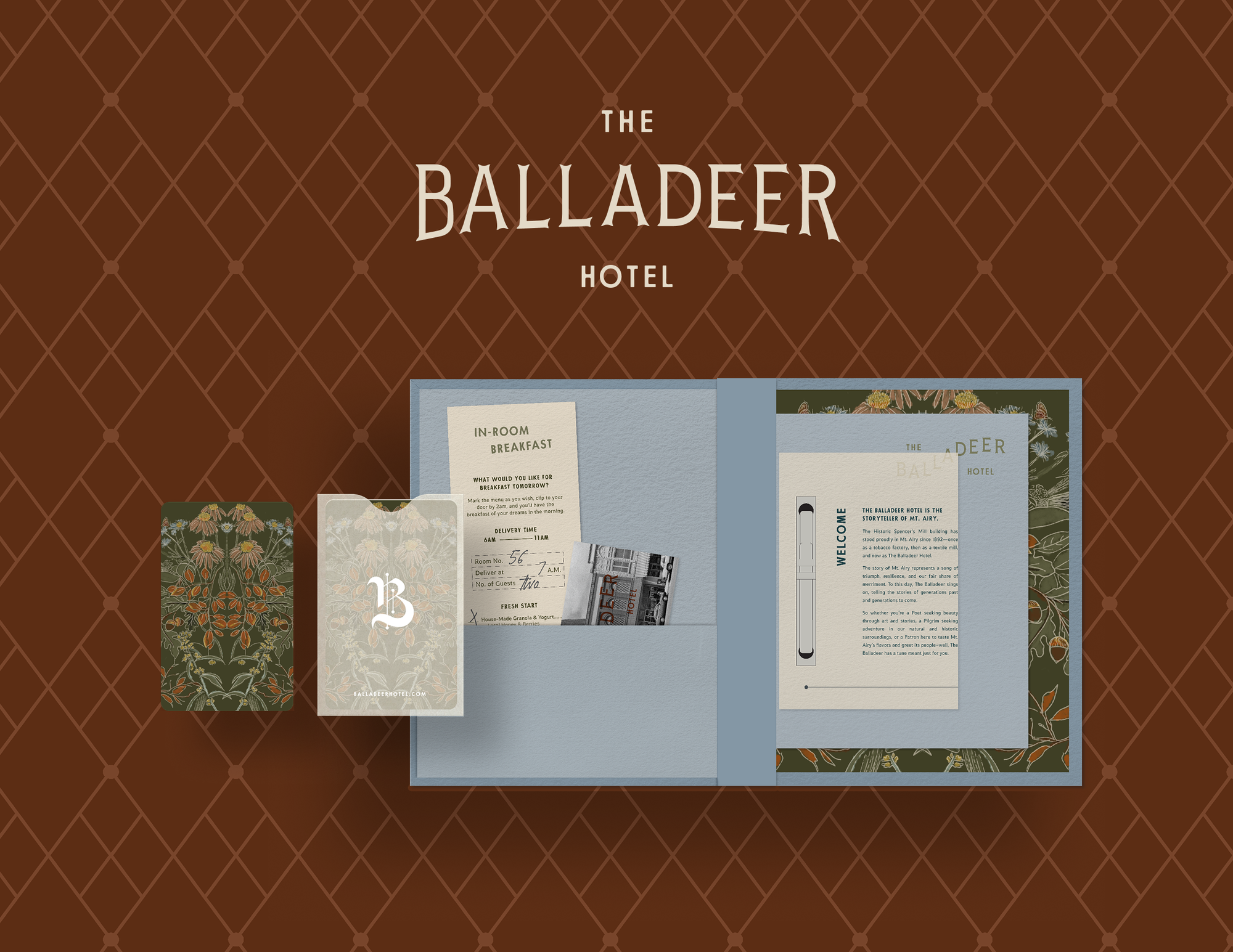
LEFT: Collateral designed for Berkshires Untold in Lenox, MA, RIGHT: Welcome packet designed for The Balladeer Hotel in Mt. Airy, NC
“Our early websites were better because Erin didn’t think like a web designer; she thought like a designer, so she didn’t restrict her style,” Tim says.
Beneath every observation he makes about her work, there is a complimentary tone, the awareness of a man who has realized and continues to appreciate that he found the ideal complement in business and a partner in life and family—they have two children. In fact, they started Cooper House when Erin was eight months pregnant.
“I’ve looked at thousands of brands, and the ones that have a degree of artfulness are the ones that last.” –Erin Cooper
They returned to Oklahoma in 2007, citing cost of living and expansive opportunities. Since then, they’ve built a reputation as a creative, groundbreaking, attentive and narrative creative services agency. That narrative part is important, because when I asked her for her design philosophy, she thought about it for less than a minute before answering:
“Great design comes from a great story, and in uncovering something authentic.” She understands how overused the “a” word is in branding, marketing and advertising, but she means it in the traditional, narrative sense—a real story about a real life and a real vision.“We occasionally get a potential client who says ‘We want to be this,’ and I ask them, ‘But are you that?’” she says. “You can’t manufacture a story (that leads to authenticity); it has to come from what really happened. Many designs are meant to be ephemeral, but a hotel [Note: This has become their specialty, and it inspired the Forbes story] needs something that stands up to time. I’ve looked at thousands of brands, and the ones that have a degree of artfulness are the ones that last.”
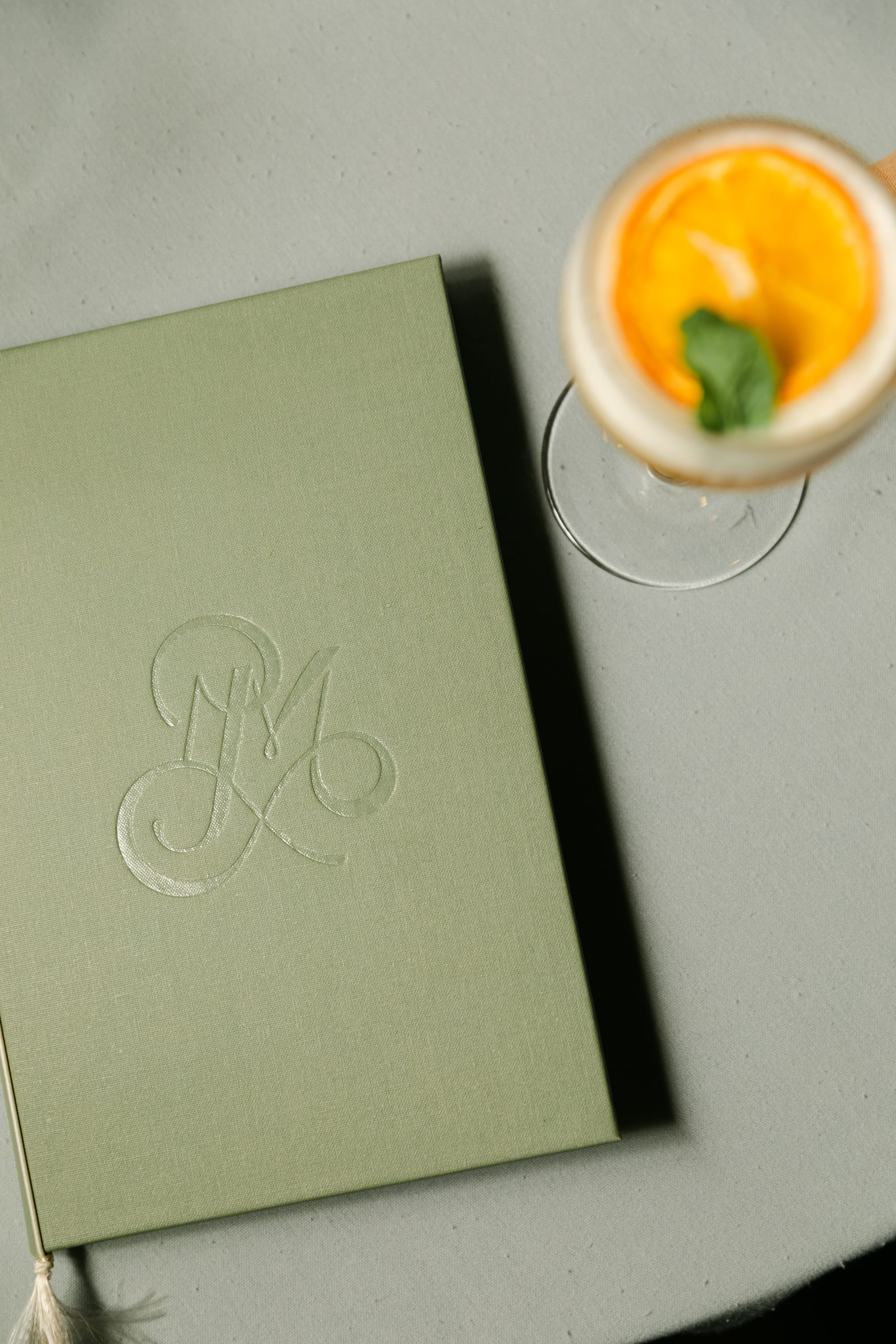
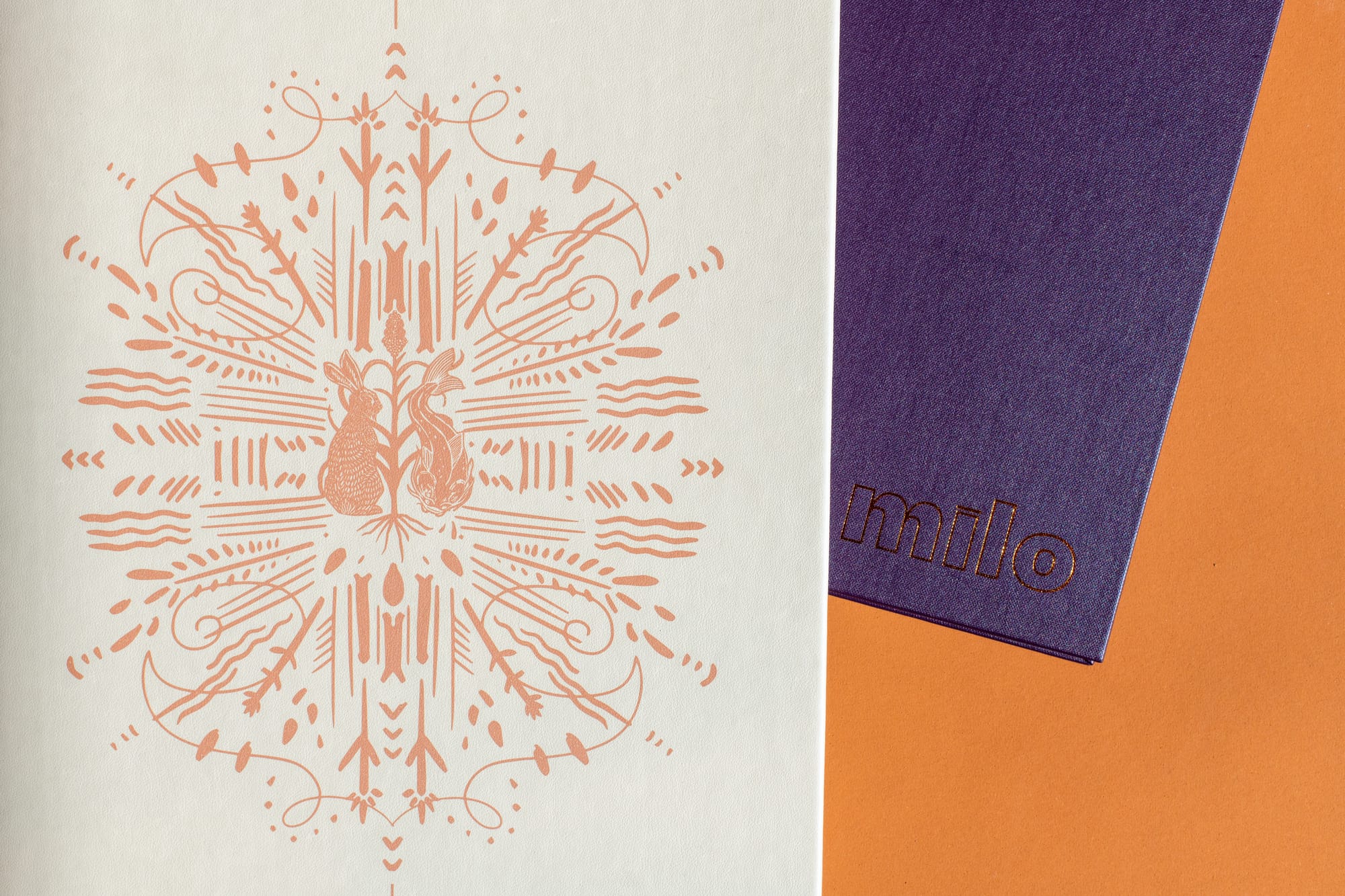
LEFT: Foil embossed monogram designed for Perle Mesta at Skirvin Hotel, Photo by Betsy Dutcher, RIGHT: Illustration designed for Milo’s drink menu at The Ellison in Oklahoma City, OK, Photo by Rachel Maucieri
Erin noted that branding a hotel is a long-term process, and it requires extensive conversations with clients about who they are, what their story is, what they want in the design and how to incorporate important parts of their story and personality in an overall design strategy. While Tim, brilliant in his own right, likes to say tongue-in-cheek that “We’re trying to keep the redheads in short pants,” they both bring a level of professional seriousness to a process that requires handling complex egos.
“The military served me well in this,” she says. “I learned how to navigate egos, leadership and strong personalities, so I can be assertive, but I also recognize that they are the ones taking the risk. We all have skin in this game; we all have ego, and I want the ego because I don’t want to work with people who don’t care.”
Read more about Cooper House and get a feel for its visual storytelling at cooper-house.com.
The link has been copied!
Your link has expired. Please request a new one.
Your link has expired. Please request a new one.
Your link has expired. Please request a new one.
Great! You've successfully signed up.
Great! You've successfully signed up.
Welcome back! You've successfully signed in.
Success! You now have access to additional content.