Mud, Fire & Swagger
Jonathan Adler has spent 32 years turning clay into a philosophy of living

There is clay on his white jeans. There is almost certainly always clay on his white jeans—the only jeans he owns, worn to funerals, weddings and Tuesday afternoons in his SoHo pottery studio with what he describes as a spectacular lack of foresight. He is working while he talks, which is to say he is always working. The wheel is turning. He is 59 years old and has been doing this for 32 years, and the thing he needs you to understand—addressing it urgently, repeatedly—is that he considers himself extraordinarily, inexplicably lucky.
Jonathan Adler is not, by his own insistent account, a visionary. He is a potter who got fired from five jobs in a row; who was told by a pottery professor that he had no talent and should move to New York and become a lawyer; who surrendered to clay not out of artistic ambition but as a kind of happy default. “The best thing that ever happened to me,” he says, “was what felt like the worst thing.” He returned to the wheel because there was nowhere else to go. From that unlikely posture of necessity, he built one of the most recognizable design empires in America—a body of work now available through the Oklahoma City Museum of Art, bringing his singular vision to Oklahomans who have long deserved access to it.
The museum’s decision to showcase and offer Adler’s work is not merely a matter of institutional taste. It is a statement about what the decorative arts are, and what they have always been. Pottery is among the oldest human practices, predating writing, agriculture and nearly every other medium now displayed on a museum’s walls. That a contemporary American potter, working in SoHo, throwing egg-shaped vessels by hand at 59, should find his work available in such a setting is at once entirely expected and quietly radical. It is a reminder that the line between fine art and applied craft has always been drawn in shifting sand—and that the most enduring objects refuse, beautifully, to stay on the right side of it.
He was 12 years old at summer camp when he first touched clay. “It’s like having just the right amount of intermittent reinforcement to make it somewhat addictive,” he says. “One day you’ll throw a cylinder that’s 16 inches. The next day, not so much.” There is a Yiddish word he reaches for to explain the depth of the attachment: beshert. Meant to be. “I kind of always felt like clay and I were beshert,” he says, with the slightly abashed cadence of a man who has said this many times and still means it completely.
What pottery taught him, in those years before success, was something he still struggles to articulate without sounding more spiritual than he is. “It taught me that I’m very primitive,” he says. “That my happiest time is spent in the most primitive way—one guy, mud, fire and water.” He pauses. “I say that and I sound like a really spiritual and soulful person; I am not at all. But it’s also undeniable. It’s a human impulse, the impulse to make stuff.”
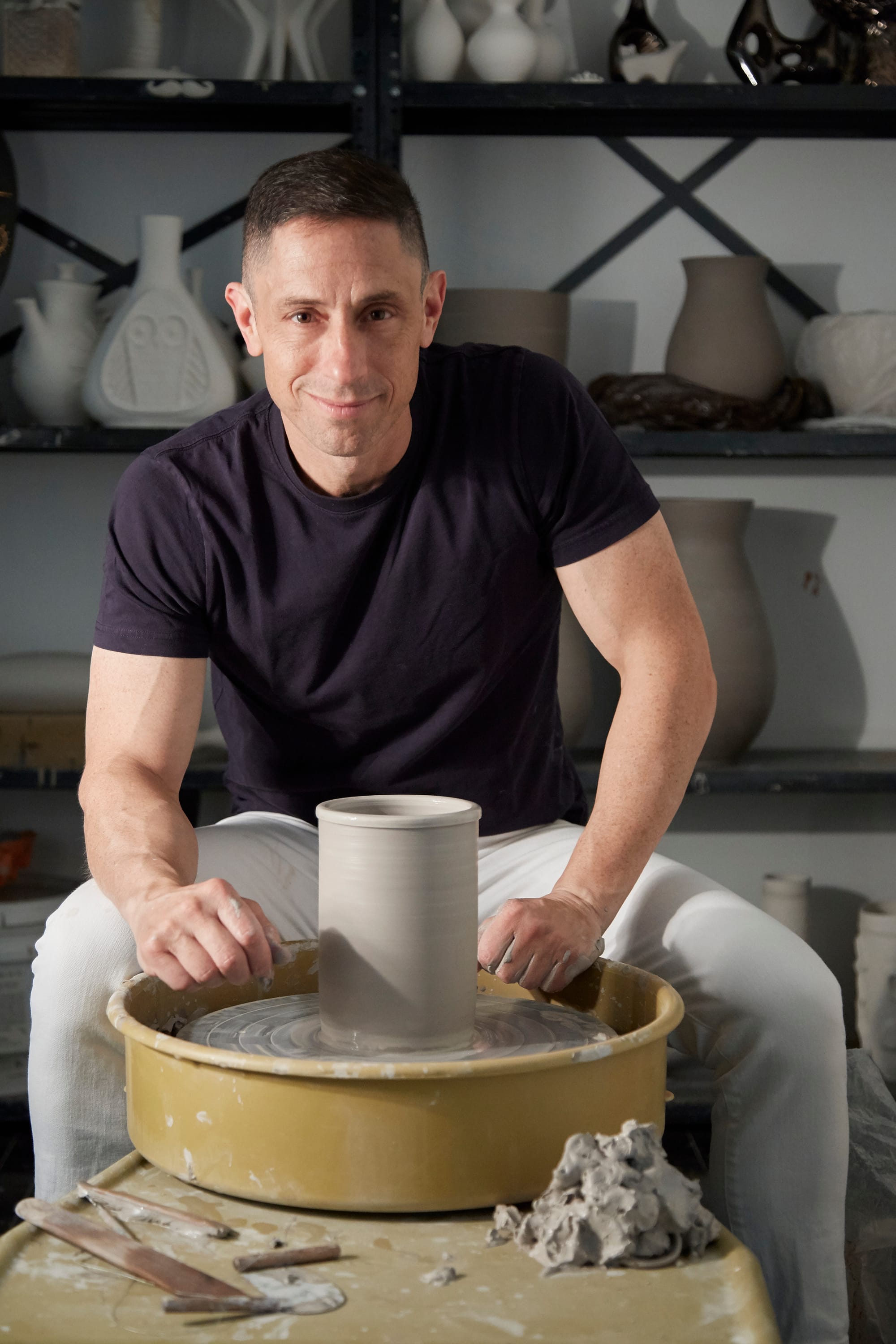

This is the central tension of Adler’s self-presentation: a man who reaches reflexively for the philosophical and retreats, equally reflexively, into self-deprecation. He is not special, he insists. Not a model. Not a visionary. Just a potter. And yet the work—vessels with weightless proportions, interiors with off-kilter glamour, objects insisting on being simultaneously beautiful and slightly absurd—carries unmistakably the marks of a very particular mind that thinks in elegance and wit, in narrative and surprise, in things that the heirs will fight over.
He cold-called Barneys. He rollerbladed to his studio at six in the morning. He crowdsourced his existence, job loss by job loss, back to the wheel. “I don’t think I should ever be seen as somebody who created a path others can take,” he says. “I think I have been uniquely lucky.” What he built from that luck is a craft-based design practice that begins, still, with a human hand on clay. Every object in the Jonathan Adler universe originates in the SoHo studio before artisans worldwide execute production. It’s a model that situates him in a tradition far older than the contemporary design industry: the ceramicist as author, the object as argument.
His collaborations with artisans in Peru and beyond have made him feel not like a visionary but like a student. “The potters I worked with in Peru could make pots a hell of a lot better than I could,” he says. “Working with artisans has taught me humility and appreciation.” His aesthetic philosophy is elegantly simple and, he suspects, slightly out of fashion. “I strive for elegant proportions,” he says—something harkening to an older standard than the intentional naivete that defines so much contemporary ceramics. “A slightly older time wherein elegance was what people sought.” He is making egg shapes while he says this. He wants them perfect. He wants them weightless. He wants them fought over at estate sales decades from now.
Ask Adler to define glamour and he will tell you, with considerable relish, that it is impossible. “It’s like an ineffable quality. Sort of like charm or charisma. You know it when you see it.” Then, with the pragmatism of a man in the business of glamour for three decades: “The closest word I can think of would be swagger. Confidence. Sparkle.” Not luxury—he is precise that luxury is “expensive stuff that you can afford that other people can’t” and that he has no patience for the notion that luxury is time or attitude. Luxury is stuff. Glamour is a posture. Personal style, meanwhile, is something simpler still: “Consistency. Just looking like yourself every day.”


This hierarchy of values explains the strange buoyancy of his work—rarefied yet approachable, confident yet playful, laughing without being silly. “As much as my work has humor,” he says, “that needs to be just sort of the last touch. The main focus needs to be on glamour, elegance and luxury. Only once those things are clearly present do I have the permission to add a note of levity.” The irreverence is earned. At the Parker Palm Springs resort, his most complete spatial statement, he designed every room around the fictional character of Mrs. Parker, a glamorous and unknowable woman whose taste suffused every corridor and detail. The lesson for anyone designing their own home: “Why not design the house for the person you want to be? Your house should be something you aspire to live up to.”
When Adler’s work found its way to the shelves of the OKCMOA, it arrived as a philosophical position that a beautifully made object is a choice about how to live. In offering his work, the museum—which has long championed the proposition that beauty belongs to painters, potters, sculptors, designers and makers of all kinds—places itself among the institutions willing to argue that the line between a painting and a pot is finally a matter of convention rather than quality.
That argument resonates with particular force in Oklahoma, a state whose deep tradition of material culture has always understood that a vessel can carry more than its contents. Adler’s egg shapes, thrown in SoHo, carry the same elemental logic as a pot thrown in Tahlequah or Anadarko a century ago: one person, mud, fire, water and the ambition to make something that outlasts its moment. He is, after all, a student of ceramic history. “If you're going to be a potter,” he says, “you should become a student and learn the history, learn all the references, so that at least you are steeped in a tradition.” Museums are full of pottery from cultures whose names we barely know. Civilizations collapsed to dust. The pots remain.
After three decades, the question people ask him most—“What still excites you?”—gets the most immediate answer. “I woke up this morning and I was like, ‘I have to go make that pot.’” He has made three or four today while talking. He has thought about what makes a space unforgettable (something a little off, not too polished), about what homes reveal (“often a little melancholy even if they’re beautiful and bright — the accumulated evidence of a life”), about the danger in his career (“stasis, not growth”). He has done all of this thinking out loud while the wheel turns.
His husband Simon—once creative director of Barneys, a famously stylish person with the smallest closet Adler has ever seen—provided him with the metaphor he returns to most often. Life, Simon wrote, is like being on a cube at a disco: You jump up when you’re young and start jiggling, having your moment. The goal is simply to keep jiggling until you fall off and it’s somebody else’s turn. “I would like to think,” Adler says, “that I’m still passionate about jiggling and making pots. And that’s what is in my past, my future and my forever.”
The wheel keeps turning. The clay on the white jeans is not coming out. He doesn’t seem worried. He is, by his own insistent account, a very lucky potter—a man told he had no talent who proved, not out of spite but out of something more elemental, that the impulse to make stuff is its own kind of genius.
In Oklahoma, in the bright rooms of the Museum of Art, his work is available to be taken home, lived with, passed down. It is elegant. It is slightly absurd. It is very much alive. Someone, someday, will fight over it.
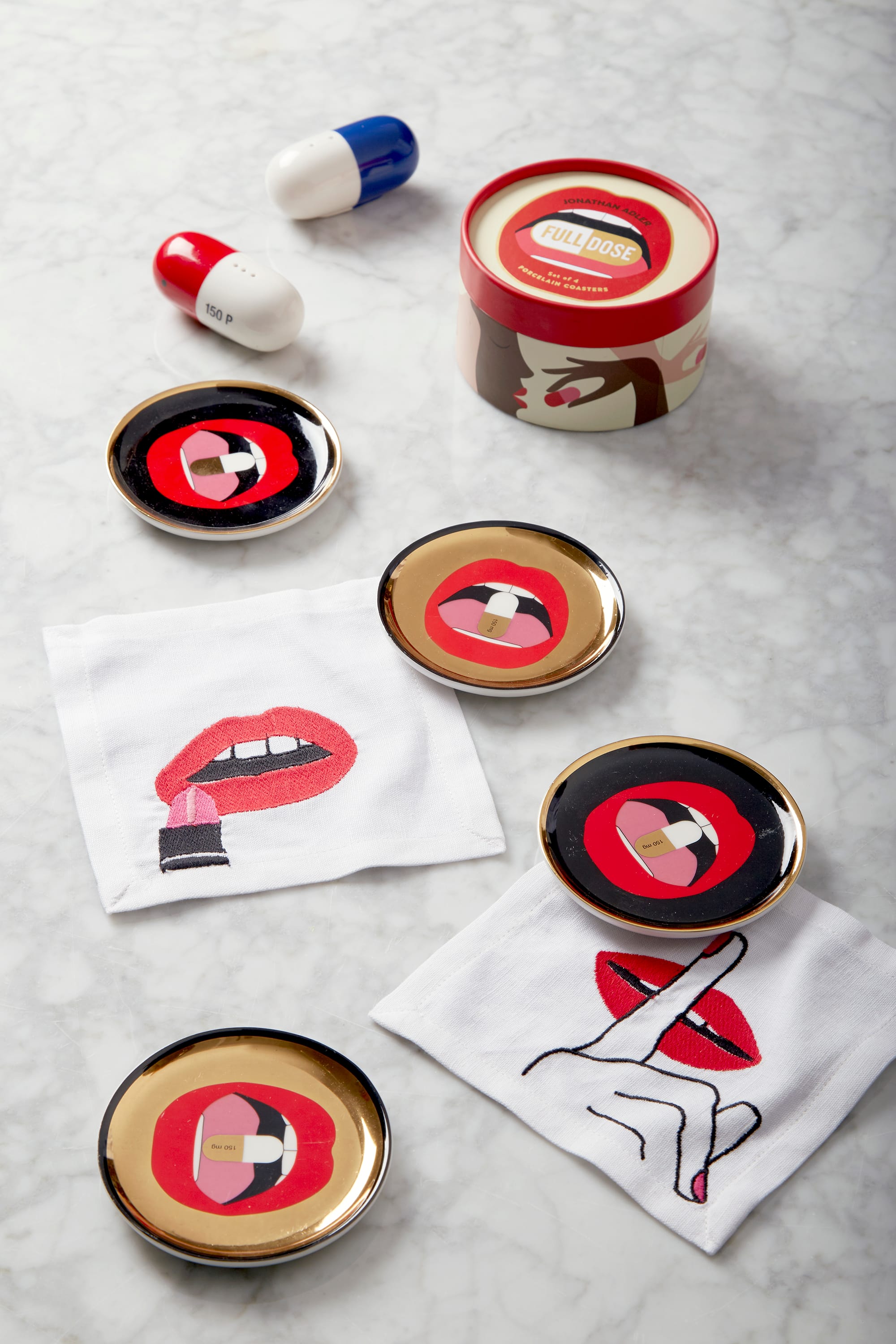
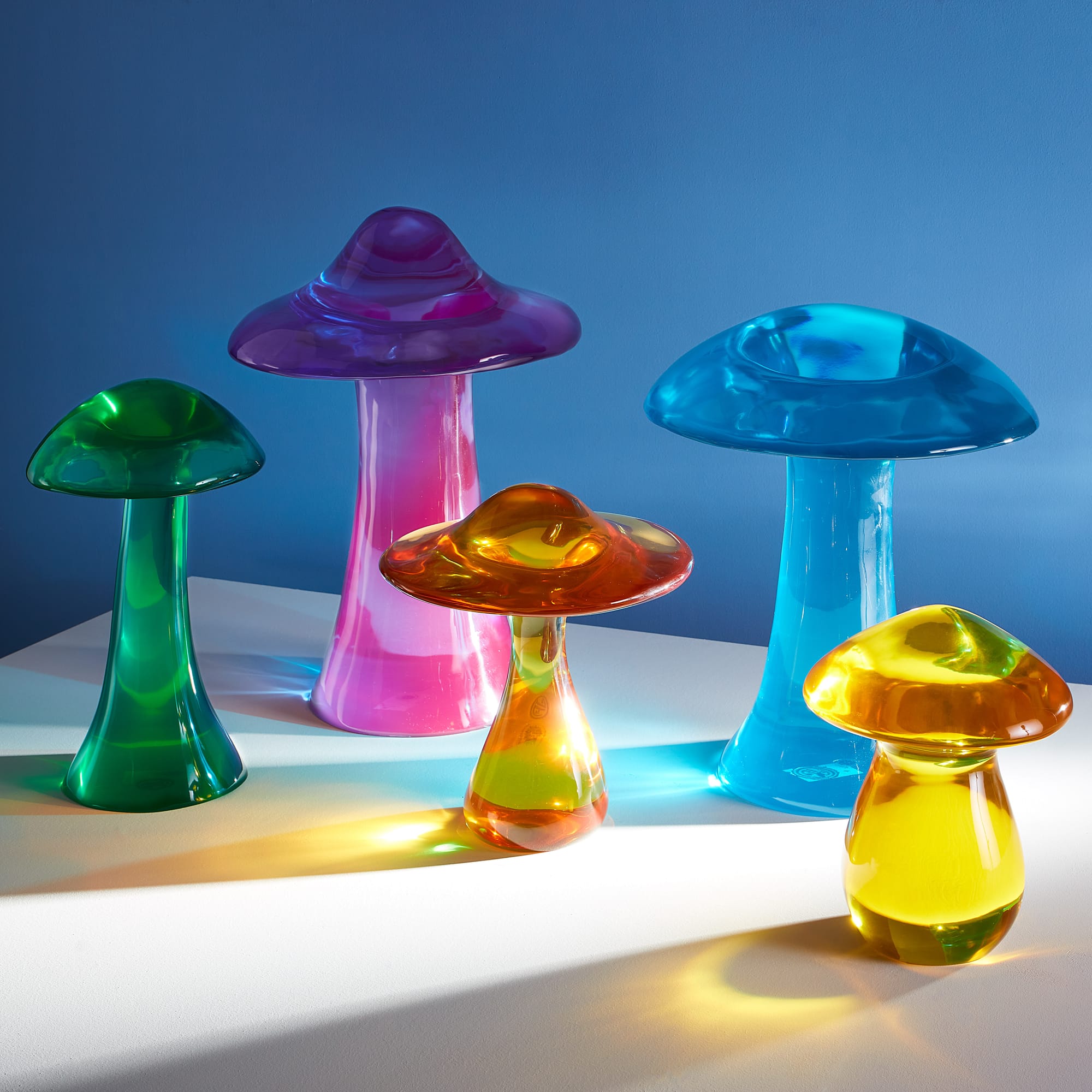
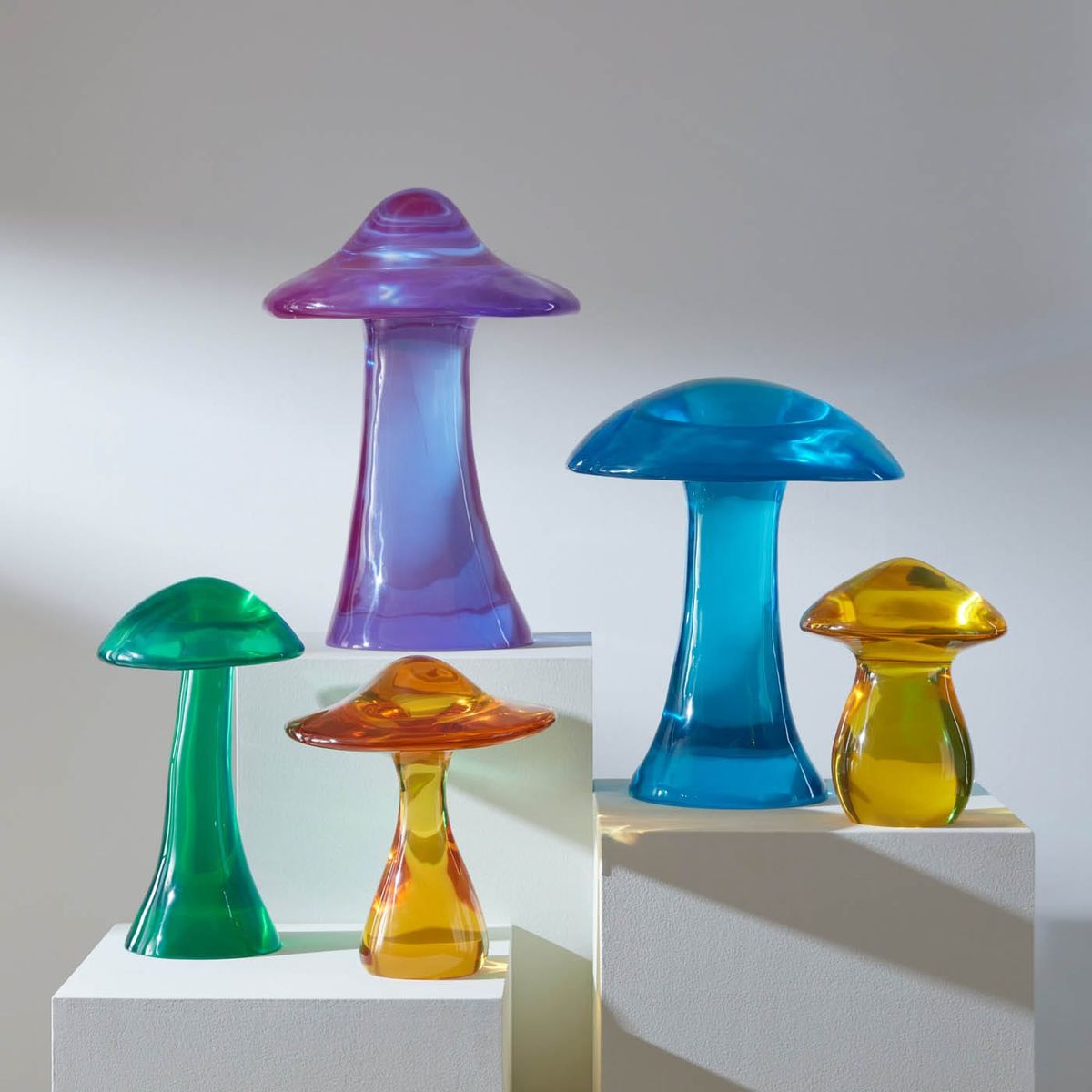
Selections from Jonathan Adler's collection are now available at the Oklahoma City Museum of Art.