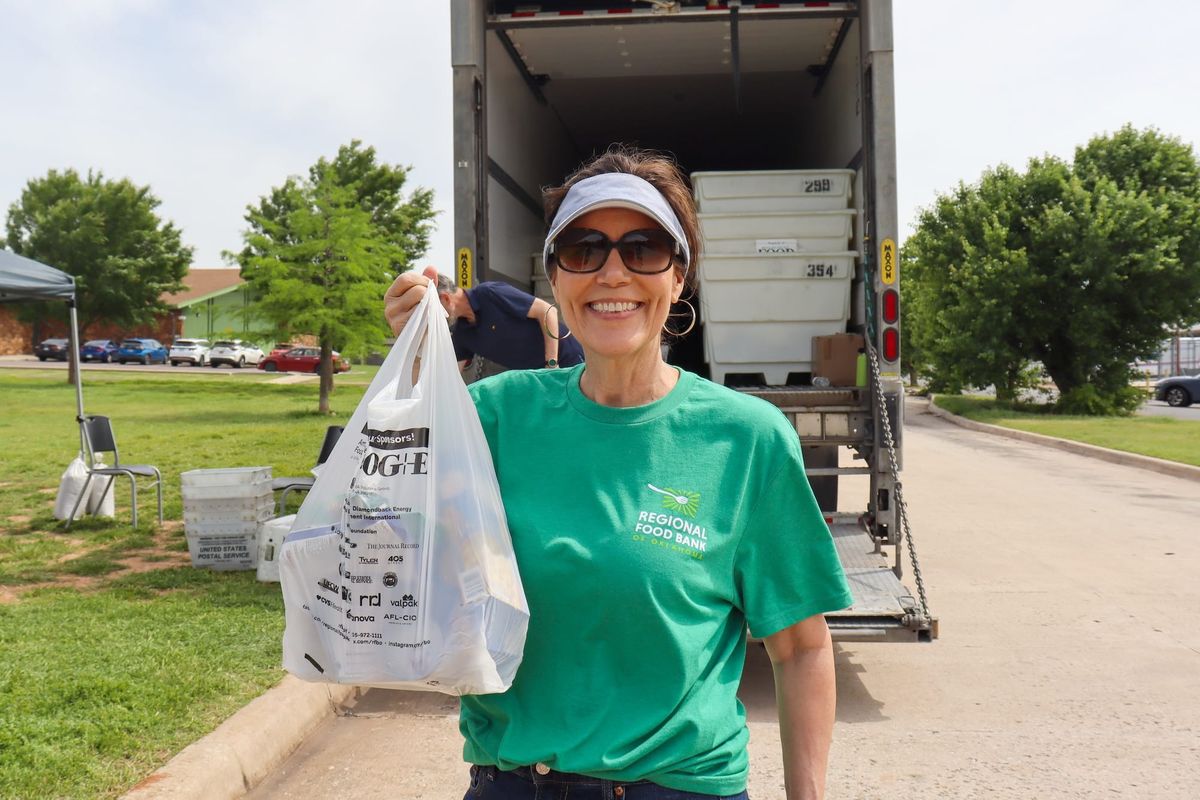
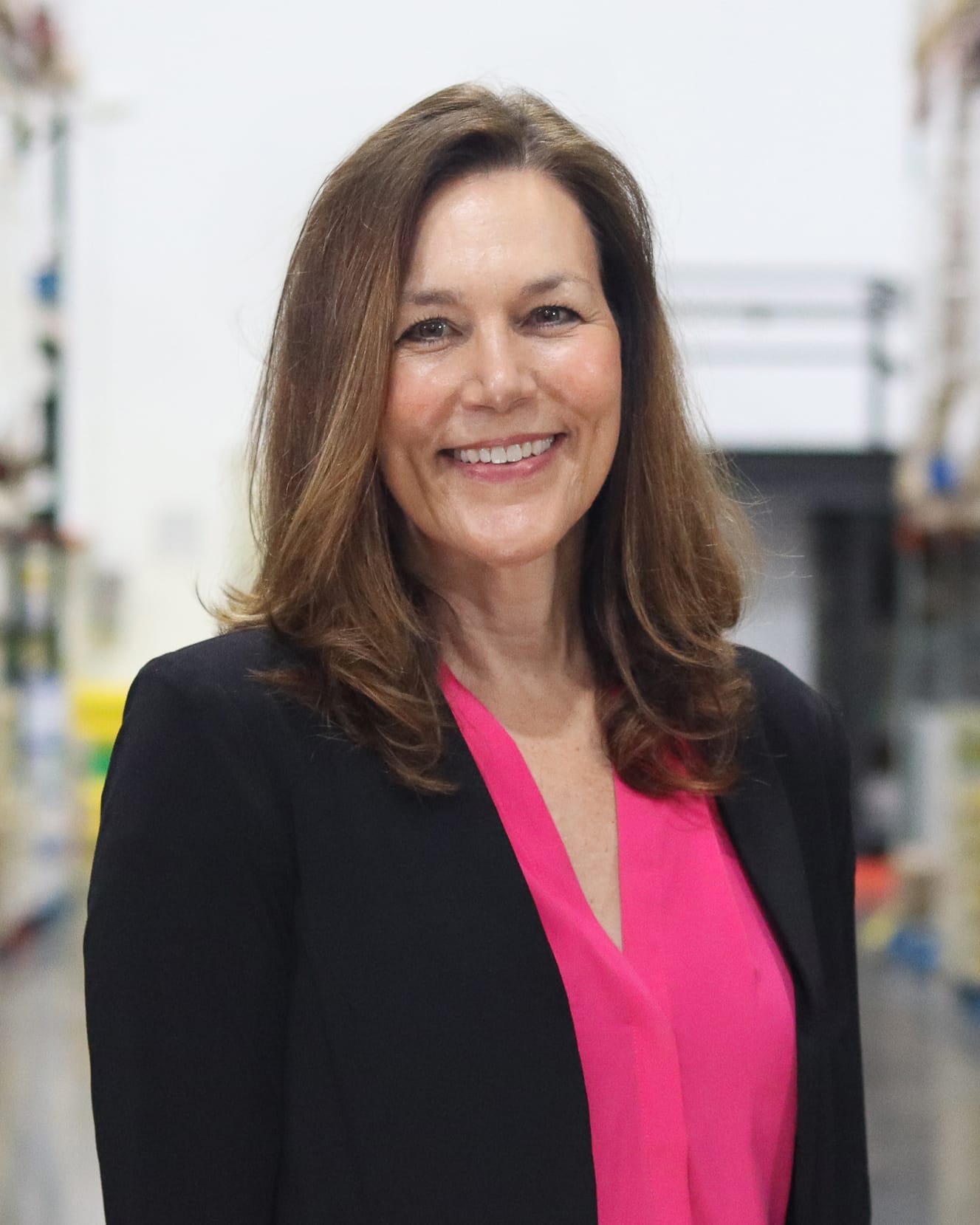
On any given day, Dr. Stacy Dykstra has around 413,830 people on her mind. That’s how many Oklahomans don’t have enough food in the 53 counties her agency, the Regional Food Bank of Oklahoma (RFBO), serves. One in four children and one in six senior citizens are food insecure in our state. “One of the things people probably don't realize is that many of the people we serve are families with children, and that the families we’re feeding are working families,” Dykstra says.
She’s just wrapped up her fifth year at the helm of RFBO, which means she began her time as CEO during the first year of the pandemic, an exponentially tougher than usual time for people struggling with food insecurity. If she had her way, everyone would be well fed, and her job would disappear.
“It’s an honor to get to do this job. Although, I would love to put us out of business,” she says. “Trust me, there would be nothing I would be happier about.” She conceded that unfortunately there’s no danger of that, adding, “We’re going to do the best job we can in the moment to remove the barrier of access [to food] and just make sure we feel certain that if someone is courageous enough to ask for help, they can find it.”
Before accepting the position at RFBO, she served as executive director at Smart Start Central Oklahoma, a nonprofit focused on early childhood education. She holds a bachelor’s degree and Ph.D. from the University of Oklahoma, the former in early childhood education and the latter in instructional leadership and academic curriculum. Dykstra worked her way through school, taking a few hours each semester, as she and husband Chris raised their two girls.
Helping people thrive has been the focus of Dykstra’s academic and professional careers. When she talks about her life, her work and her philosophy, it’s clear as a bell: This woman was born to care for others. Her vibe is enthusiastic, joyful and energized. When she talks about specific clients, or the plight of impoverished people in Oklahoma trying to make it day by day, her empathy is palpable. She refers to herself and her team as “hunger fighters.” It’s got a superhero ring to it, wouldn’t you say?
Dykstra was immediately intrigued by the opportunity to serve so many, and so directly. “The panel of people I interviewed with loved the Regional Food Bank. They believed in what they were doing, and they were just amazing. Their passion drew me in, and I’ve learned so much. One of the things is that this is all related. When someone comes to you facing hunger, there is a whole potential slew of other issues they're challenged by,” she says.
Oklahoma ranks in the top five hungriest states, with 15.4% of the population experiencing food insecurity, about two points above the national average. Of those who are able to work, many work multiple minimum or low-wage jobs. Most of them, like most of the rest of us, hate having to ask for help. “As Oklahomans, we are pull-ourselves-up-by-our-bootstraps folks. People are very uncomfortable asking for help; they’re going to try to take care of it on their own. That’s why we serve so many more people at the end of the month. They’ve exhausted every other resource they have, and then they come to us and our partner system,” she says.
Dykstra likens the system to a web. If it’s spun well, nobody falls though—it catches everyone who needs help. “When that web breaks, or when we allow people to fall through the web, things get much, much messier,” Dykstra says. “We’ve got to keep the system strong and access points available, so that when people fall on hard times, they’re just taken care of until they can get back on their feet. Because I’ve never met anyone who says they don’t want to get back on their feet.”
What does she mean that things get messier? She started her explanation by reiterating that people really try to make it on their own before asking for help. Someone working a full-time, minimum-wage job makes about $15,080 per year in Oklahoma, where minimum wage is $7.25 an hour. That full-time annual wage is about $500 below the poverty line.
“Let’s say somebody runs out of food money, payday is a ways away and they decide to try to solve their budget problem by selling their bicycle,” Dykstra says. Maybe they’re too embarrassed to ask for help, or maybe they don’t know what resources are available. “But that bicycle is how they get to work. Now, they either have to walk, or find another way to work,” she continues. Now, they’re coming in late or missing their shift—and pretty soon they lose their job.
With no safety net, before long, they’re in danger of being evicted. Maybe in a matter of days or weeks. “When you actually fall through the web, it means you’re even more resource-strapped. Everything is going to require money to get out of, and money is the one thing you don’t have extra of. Once you get down there, it is really, really hard to work your way back up. This is why we’re so worried about our neighbors in this moment. Because not only did we have the government shutdown, which put a lot of people in a pickle, but to also take away SNAP benefits, even temporarily? That gave people stability. Now the situation is unstable for so many of our neighbors.” That instability creates a ripple effect that is simply too much for those already living on the edge.
The team at RFBO, under Dykstra’s leadership, is doing everything they can. “We have about 1300 partners across our 53-county service area, which is all of Western and Central Oklahoma. Our friends at the Food Bank of Eastern Oklahoma cover the other third of the state,” she says.
They work with nonprofits, operate resource centers where people can come “shop” for food, partner with grocery stores to distribute food that might otherwise go to waste, deliver food boxes to senior citizens and work to offer nutritious, fresh and healthy foods to their clients.
Crucially, RFBO partners with more than 500 schools, providing children with on-site food pantries. Through its Backpack Program, elementary school children receive a pack full of kid-friendly, non-perishable and nutritious food on Fridays to get them through the weekends and school holidays. It’s a huge undertaking. Solving food insecurity will take all of us.
“Can you imagine how amazing our state and our communities and our neighborhoods would be if everyone had the opportunity to be who they wanted to be, to fully realize all of the gifts they had to share with us?” Dykstra says. “For me, that’s what drives me to go to work every day—to try to solve this problem.”
The link has been copied!
Your link has expired. Please request a new one.
Your link has expired. Please request a new one.
Your link has expired. Please request a new one.
Great! You've successfully signed up.
Great! You've successfully signed up.
Welcome back! You've successfully signed in.
Success! You now have access to additional content.