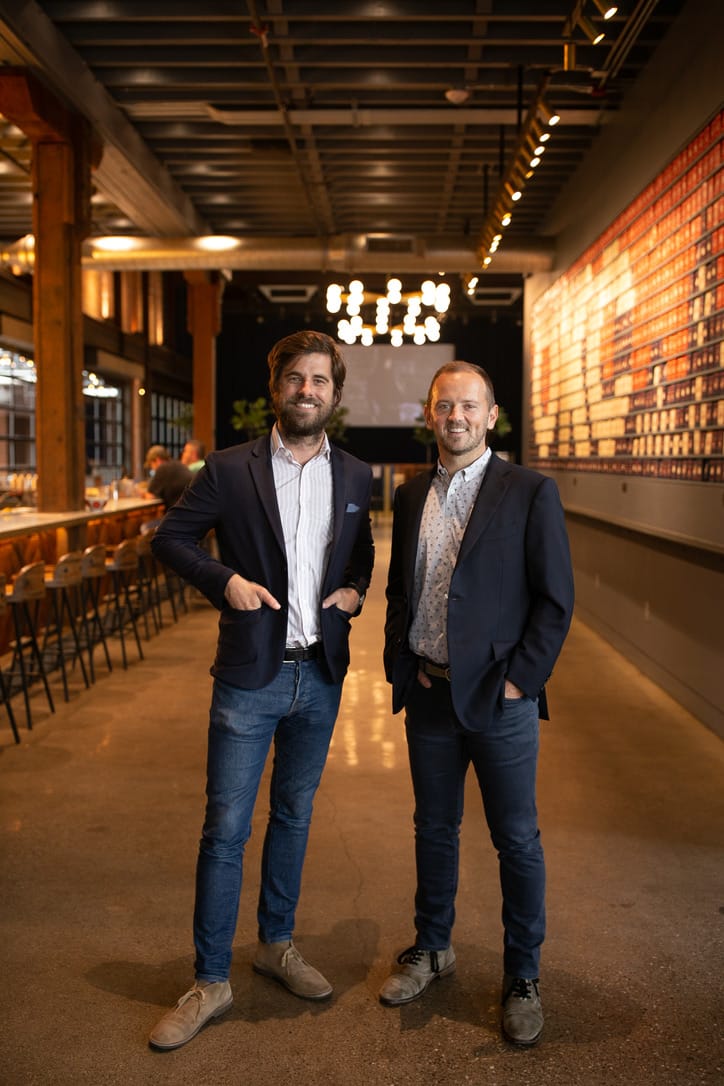
The Social Order Dining Collective founders and co-owners Brian Bogert and Manny Leclercq
“Experience is the secret sauce at The Social Order Dining Collective,” Brian Bogert says. The founder and CEO of the company behind The Jones Assembly and Spark, as well as Fuzzy’s and Dave’s Hot Chicken franchises, turns 50 this year, and a half-century of living typically invites reflection. We first sat down at Citizen House—a members-only club in downtown that will soon be part of the Social Order experience—to navigate this story.
Summarizing 50 years ordinarily requires a book-length treatment, but two words came up repeatedly in our two sessions—plus years of conversations over cocktails and Jones events: “experience” and “downtown,” as in downtown OKC. One of the things that age provides to those who are paying attention is clarity of identity, and from that clarity of purpose or calling. For Bogert, an Oklahoma City native who has spent most of his life in the city, that clear sense of purpose is focused on downtown.
“Every decision I’ve made since opening Jones has been based on a question I asked myself after deciding OKC is where I belong,” Bogert says. “‘What can we do to help progress this city?’ That question shapes all our decisions from Jones to Spark, and next Citizen House.”
Bogert was deeply entrenched in a career with Accenture after graduating Southern Methodist University with a degree in finance, and minors in marketing and Spanish. “Immediately after 9/11, Accenture won a government contract to implement new security measures in U.S. airports,” Bogert says. “Oddly enough, the first to roll out was Mobile, Alabama, and I’d been in charge of procurement for that airport—new security equipment, scanners, every detail down to the dog bowls you toss your keys in.”
(I will never toss my key into one again without thinking “dog bowl” and “Brian Bogert,” so score one for Mr. Bogert.)
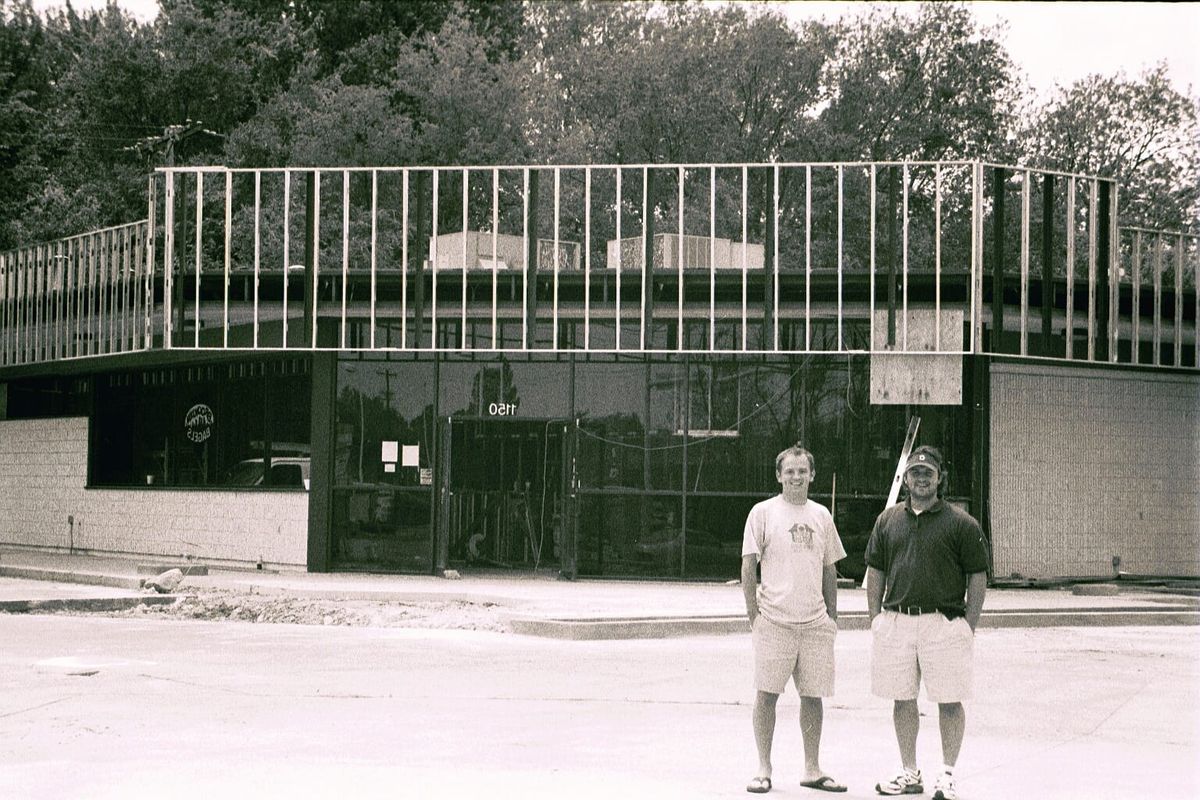
The period immediately after being named Dallas Consultant of the Year seems an odd time to consider a career change, but he’d always found his joy in events, entertaining, dining—experiences, basically—and flying from city to city every week of the year had proved stultifying to his joy and creativity. “I knew I needed to do my own thing,” he says, “so I moved to Norman in 2003, and my college friend Manny Leclercq and I opened Texadelphia. It had been our hangout in Dallas, so we wanted to recreate that experience in Norman.”
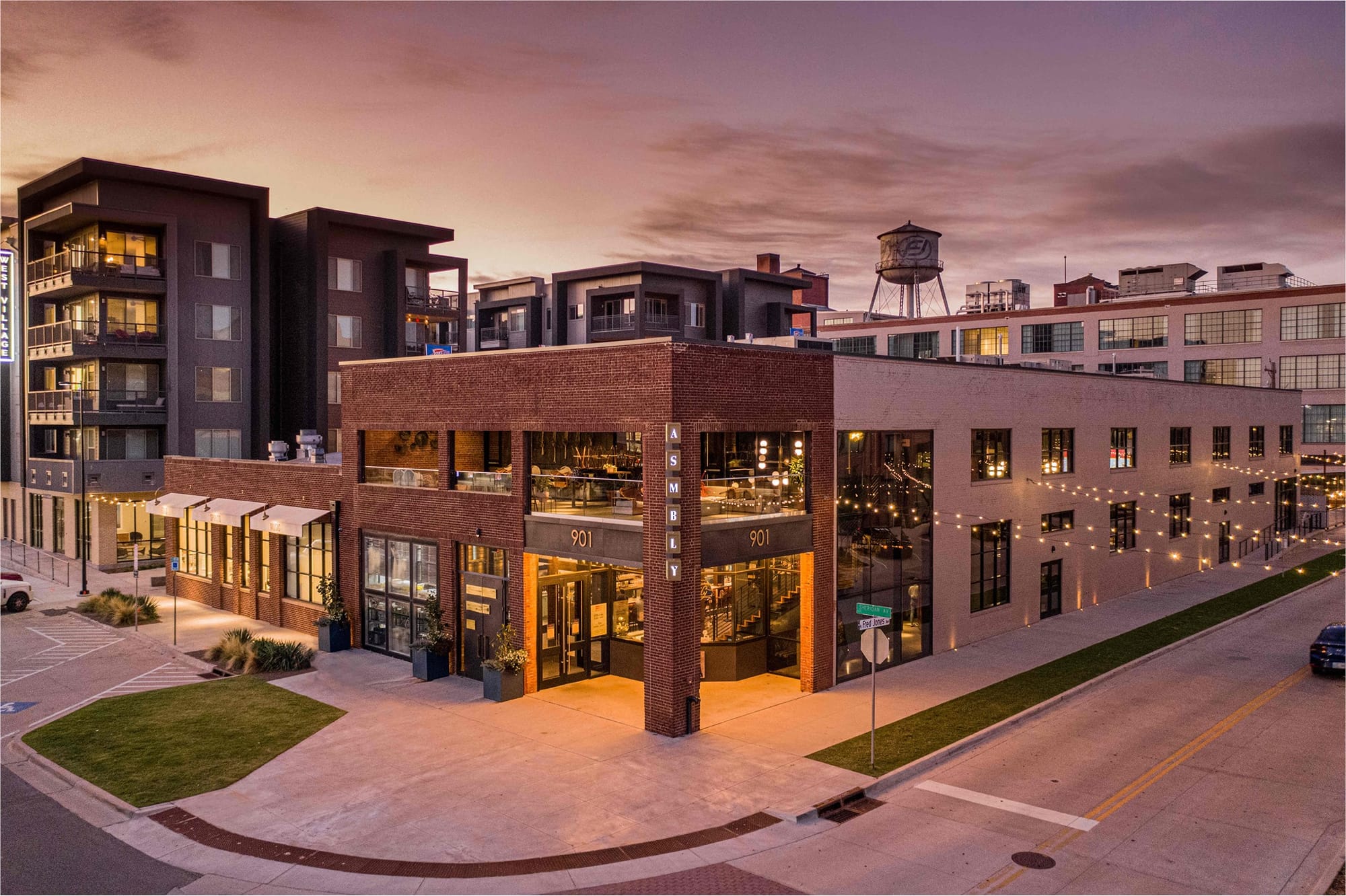
Bogert’s successes with restaurants are well publicized, but the shortest version is: Texadelphia, Seven47, Fuzzy’s, The Jones Assembly, Dave’s Hot Chicken, Spark. The takeaway is that Bogert was succeeding at the highest level possible in consulting, but he recalled the moment of reflection not as one of satisfaction or joy, but of the realization that he’d seen where his life was headed, and he wasn’t interested in that narrative. The man who started his hospitality career as a 15-year-old line cook at Quail Creek Country Club, who had fallen in love with hospitality in his paternal grandfather’s Hobnobbers bar (NW 59th and May) as a kid, whose family always treated dining out as an event, figured out that his life’s trajectory was pointed squarely at a career in food and beverage.
The Jones Assembly co-owners Graham Colton & Brian Bogert
When the world slowed down in 2020, he had another moment to home in on his identity, and this time, the decisions would affect his personal and professional life. He had always been close to his paternal grandparents, and he lost both, which led to what he called a “very lonely time.” It was also when he finally had time to come to grips with a key component of his identity, one that had been shaped in the heteronormative environs of Oklahoma sports.
“I don’t shout my personal life from the mountaintop,” Bogert says, “and until Tanner, I’d dated women, but I’ve honestly only had two serious relationships because of my commitment and passion about my career. Growing up in the heteronormative world of sports had shaped me into someone who hadn’t really questioned who I was in that respect, but it became clear that I’d been toning myself down in certain settings—I don’t think repressed is the right word, but maybe.”
He and Tanner Muse, an artist now and Realtor then, had started dating, and Bogert said while he’d met many of Muse’s family and friends, he’d been unfair to Muse by not reciprocating. “I learned that I was still worried about what people would think of me.”
That experience of sporty Oklahoma has had its effect on more than a few Okie kids. Bogert was individual and team tennis state champion in high school at Heritage Hall, and at one time, he and his father and two siblings coached five sports at that school: football, soccer, volleyball, tennis and golf. Bogert was still coaching tennis two years after Jones Assembly opened, but his schedule eventually meant that he had to leave sports behind. He’s leaned into the relationship now, because after realizing he’d been unfair to Muse, he had an epiphany.
“At some point, I just decided ‘F–k it! Why am I trying to appease everyone around me?’” He’s always been an advocate and haven for young people of all kinds who come to Jones and the other SO concepts, and his reluctance to talk about himself at a personal level has changed into open advocacy, such that when I called a couple of years ago to ask about adding him to a list of LGBTQ-owned businesses for Pride Month, he enthusiastically agreed.
The other change in 2020 was the meeting that led to Social Order’s relationship with Citizen House. It will assume operations on behalf of owners Bond Payne and Renzi Stone formally on March 1, but the transition began Feb. 2. “When we met in 2020, I thought I just wanted to be a member,” Bogert says. “Social clubs are having a renaissance all over the country, and our commitment to Oklahoma City, especially the urban core, means that we had to seriously consider our level of involvement—and the operational responsibility makes sense given our understanding of our own role in the community and our desire to progress this city.”
The link has been copied!
Your link has expired. Please request a new one.
Your link has expired. Please request a new one.
Your link has expired. Please request a new one.
Great! You've successfully signed up.
Great! You've successfully signed up.
Welcome back! You've successfully signed in.
Success! You now have access to additional content.