
Ryan RedCorn’s Layered Outlook
Humor as weapon, film as home, story as responsibility

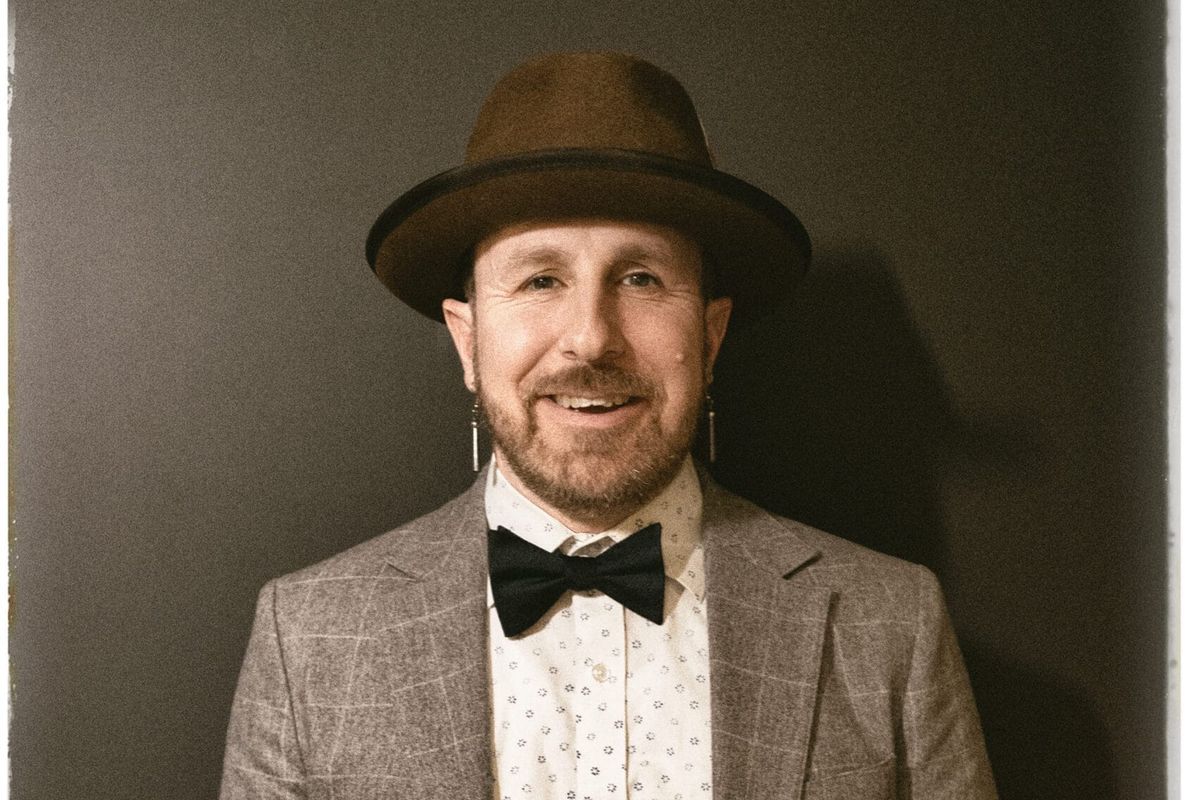
Ryan RedCorn was born into a family of preachers, politicians and salesmen—“which are basically the same job,” he jokes. In that kind of environment, humor isn’t optional. It’s oxygen.
“When you’re born into a disposition and everybody around you is using it, it just becomes the water that you tread in,” he says. Public speaking, reading a room, holding attention … these weren’t learned skills so much as inherited survival tools. Watching elders command crowds from pulpits and podiums taught him early that voice matters. The question was not whether he’d be heard; it was how.
That instinct—part performance, part protection—would grow into something much larger: a career spanning graphic design, viral satire, international advertising, independent film and television writing. Along the way, RedCorn would help redefine Indigenous comedy through sketch comedy group the 1491s, launch Buffalo Nickel Creative from Pawhuska, Oklahoma, and carve out space for Native storytelling that refuses both stereotype and sentimentality.
At the center of it all is a deceptively simple philosophy: Make the thing. Don’t wait for permission.
RedCorn’s relationship to humor sharpened in moments most people would find unbearable. As a teenager, he walked into a hospital room where his uncle lay battling brain cancer. His mother nudged him to tell some jokes; lighten the mood.
So he did what came naturally; he roasted his uncle.
It was awkward. It was tense. It worked.
That moment clarified for RedCorn the fundamental truth that humor can puncture fear. It can break pressure when grief threatens to swallow a room whole. In Osage community life—where teasing, wit and sharp observation are woven into daily interaction—comedy is connective tissue rather than escape.
His grandfather gave white dignitaries the same “Indian name” every time, smiling as they thanked him solemnly. The translation? “Big wind and no rain.” The joke was layered, playful, pointed. It revealed something about performance, ego and who gets to define meaning.
This tradition of humor-within-truth became the backbone of RedCorn’s creative worldview. It’s also what fueled the 1491s—the Native comedy collective he co-founded alongside Sterlin Harjo, Dallas Goldtooth, Bobby Wilson and Migizi Pensoneau.
“We were just sick of crying Indians,” RedCorn says.
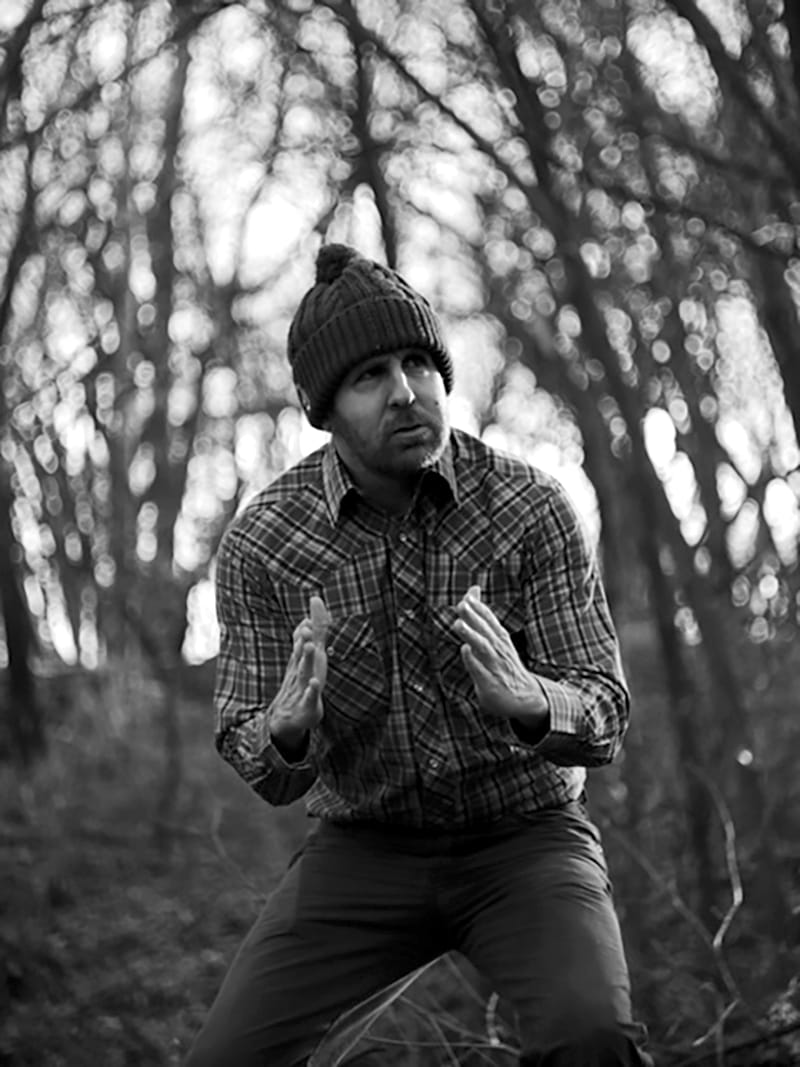
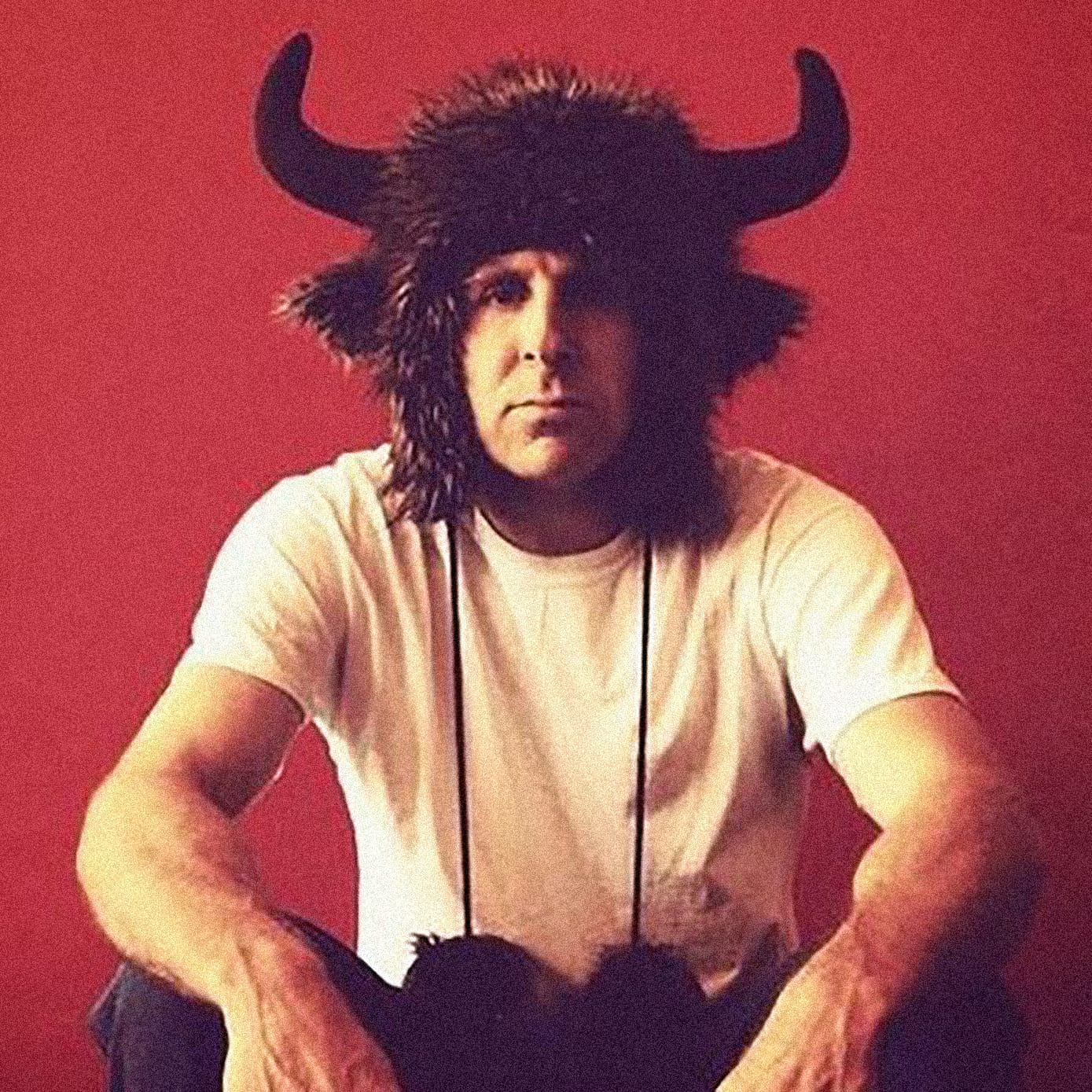
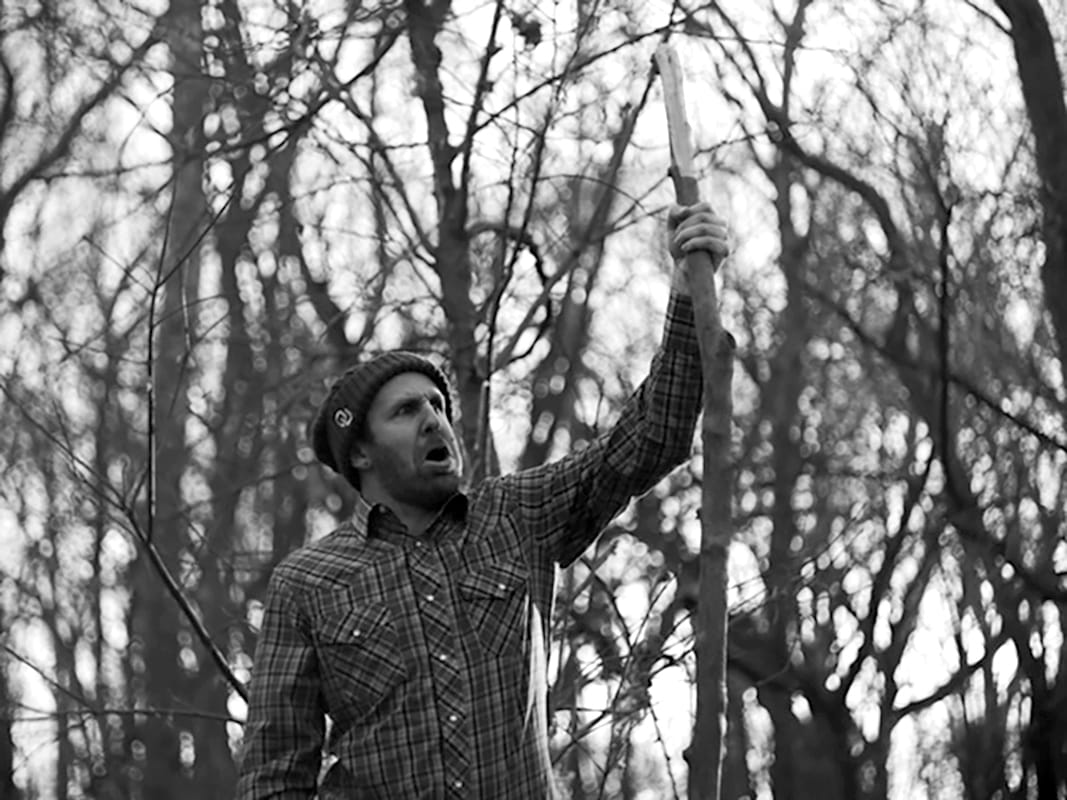
Left/Right Photography by Laronn Katchia, Middle by Steve Judd
At film festivals, he watched Indigenous films stack trauma upon trauma. While catharsis has its place, he noticed a lack of laughter, joy and irreverence. So the 1491s went the other way. If the dominant narrative was despair, they made satire. If the room demanded solemnity, they sharpened their knives.
Their videos—absurd, biting, culturally fluent—traveled into dorm rooms and reservation houses alike. Native students far from home binge-watched sketches that made them feel seen. The group was making comedy and at the same time exporting community and a reminder that Native identity is not singular, tragic or frozen in sepia.
Humor, in RedCorn’s hands, is both shield and scalpel.
And the future humorist’s creative confidence began young, in garages and backyards. He and his father built things from scratch: basketball goals out of two-by-fours, additions onto the house, roofs in Oklahoma heat. If you needed something, you made it. That mindset translated directly into entrepreneurship.
After graduating with a graphic design degree—“six and a half years,” he laughs —he applied to dozens of firms. Only one offered an interview. It didn’t hire him.
So he started a T-shirt company instead.
Within six months, he was selling thousands of dollars a day. His designs landed in Urban Outfitters, on MTV, even on Conan O’Brien. The traditional career path evaporated, as he had hit his 20-year goal in half a year.
But success didn’t pull him toward Los Angeles or New York. It pulled him home.
People told him there were no jobs in Pawhuska. He moved back anyway. E-commerce untethered him geographically, so why not run an agency from Osage country?
At the time Buffalo Nickel Creative was born, most Indigenous-focused advertising was handled by non-Native firms. The results were a predictable stream of dreamcatchers, Papyrus fonts and vague “tribal” graphics with no cultural specificity. RedCorn and his Ho-Chunk partner, Joseph Brown Thunder, offered something radically simple: understanding.
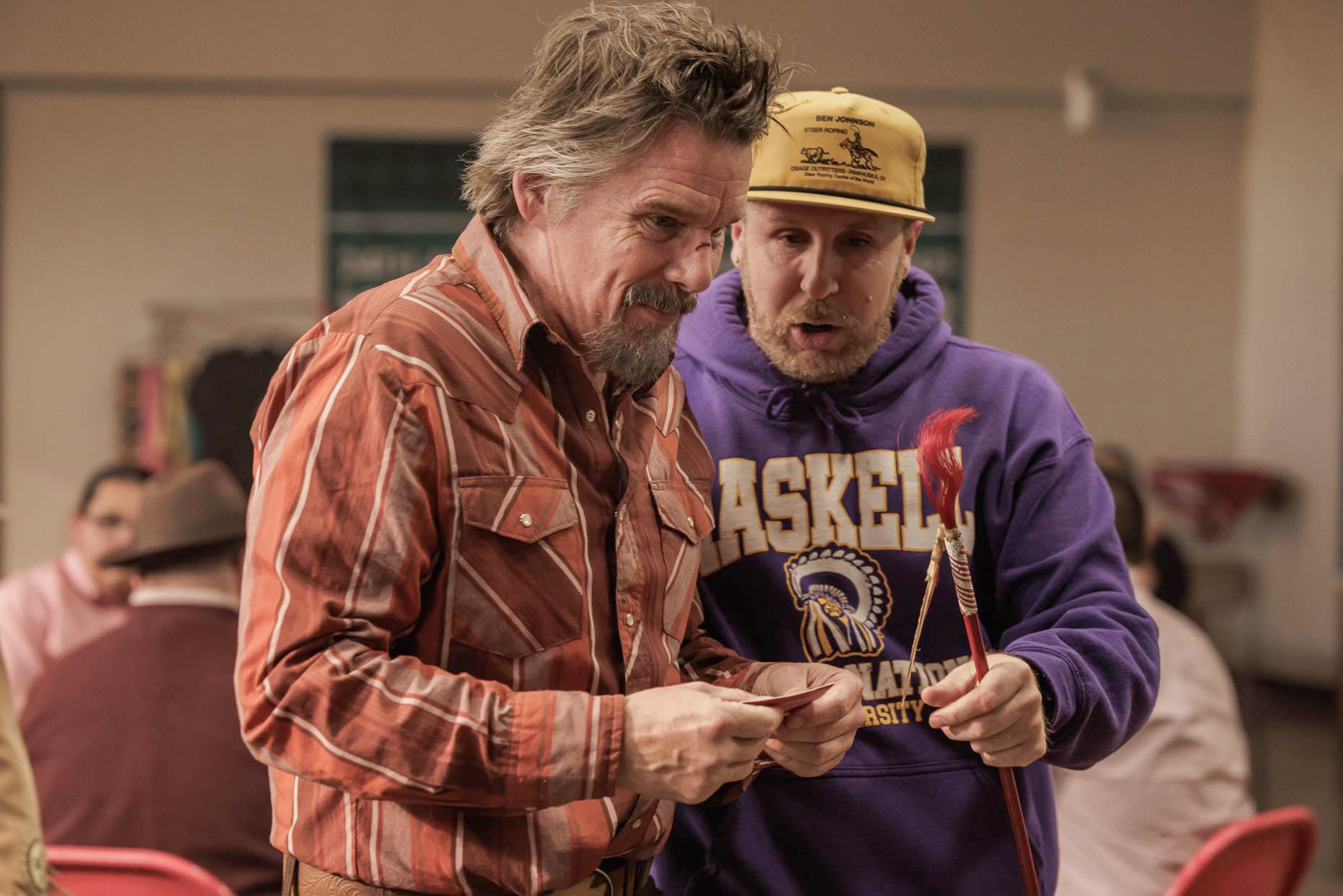
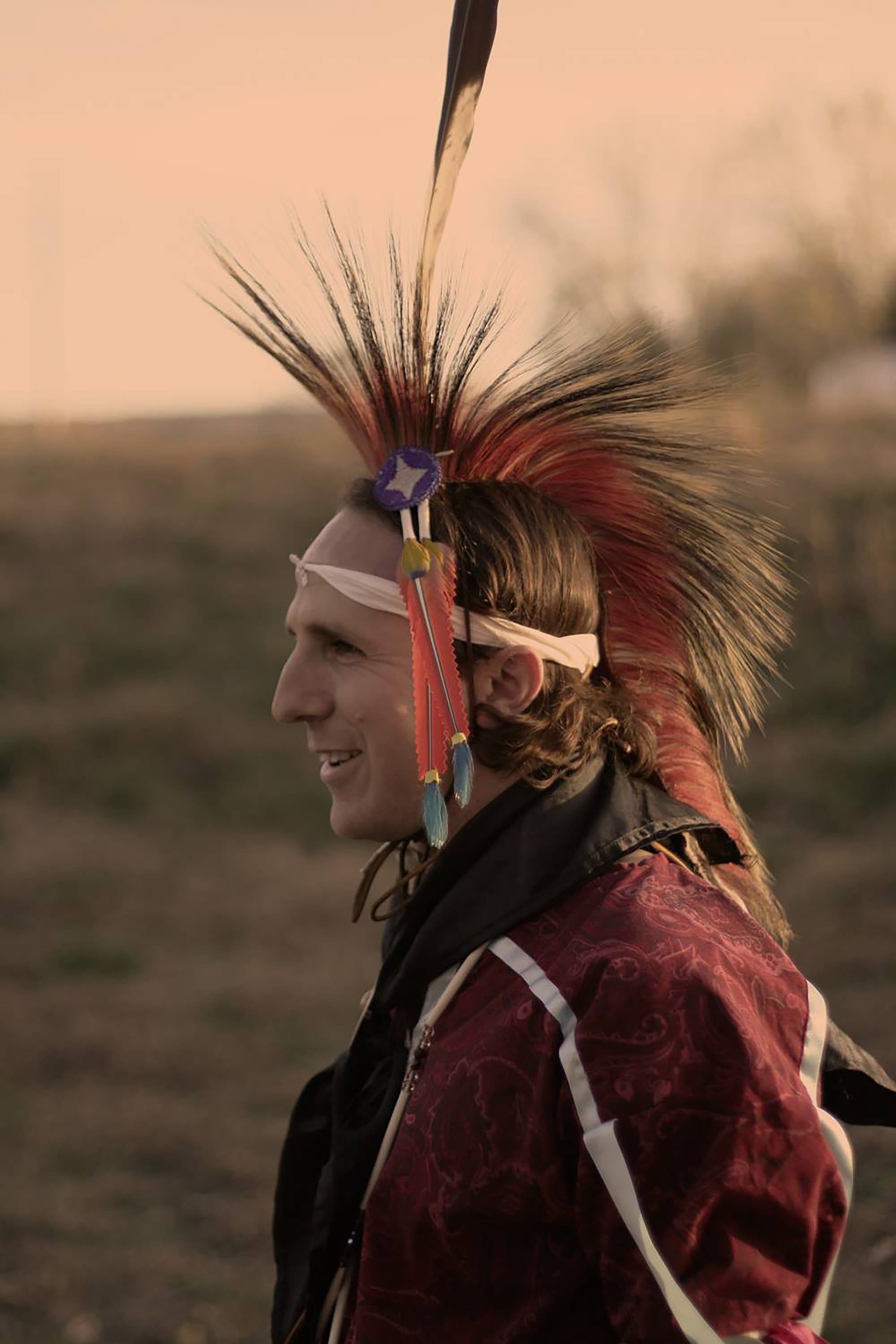
LEFT: Ethan Hawke and Ryan RedCorn on the set of Sterlin Harjo’s “The Lowdown", Photograph by Charles E. Elmore. RIGHT: RedCorn in traditional Osage dress at Kihekah Steh Powow, Photograph by Ben Brown
Every community has its own patterns, language, tone. “Make it look like they made it,” RedCorn says, not like you did. While that might sound like activism disguised as design, it was good business. Serve the client. Reflect their identity accurately. Don’t impose yours.
The work spoke for itself.
To outsiders, RedCorn’s career can look fragmented—ad executive, comedian, screenwriter, filmmaker. But for him, these are different tools serving the same purpose: translation. Comedy allows difficult truths to slip past defenses. Advertising teaches clarity and audience awareness. Film demands structure and patience.
When he enrolled in an MFA in screenwriting at the Institute of American Indian Arts, it was curiosity, as well as stress testing. He wanted to know if he could do it.
Formal training gave him structure. He already had instinct, concept generation, rhythm. What he lacked was long-form architecture—how to hold 90 minutes of story without collapsing.
That discipline paid off. The 1491s were commissioned by the Oregon Shakespeare Festival. Their play became the highest-grossing production of its season, later traveling to Yale and New York. He wrote for “Reservation Dogs.” He is currently developing a documentary on Osages and a heavy metal Western set in northeast Oklahoma.
“I had a lot of meat and no sausage casing,” he jokes about his early writing. The MFA gave him the casing.
But the through-line remains consistent: Don’t wait for someone to validate your voice. If you believe you can do it, get ready and do it.
RedCorn is the father of three daughters. Parenthood, he said, sharpened his worldview and shifted his priority. He placed his daughters ahead of himself—his task is to ready them for a world he did not inherit.

He embedded them in Osage community life: language, ceremony, responsibility. His eldest now serves as the current Osage princess. He worries less about whether they’ll be brilliant and more about whether they’ll be grounded.
“I’m not worried about them being stupid,” he says. “I’m more worried about them being sad.”
In Pawhuska, his daughters inherit irreplaceable community infrastructure: people who will feed you when your house burns; show up without being asked; bury you when you die.
“You have to put in more than you take out,” he says. That principle governs economies, relationships, ecosystems—and art. The idea is simple. The execution is lifelong.
As a younger artist, RedCorn reacted to the news cycle, the outrage, the absurdities of the moment. Now, his focus has shifted toward evergreen ideas—stories that outlive headlines.
“When the world gets so crazy, it becomes very difficult sometimes to concentrate and make art,” he reflects. The solution is scale, not silence. Create worlds. Develop characters. Build narratives that hold complexity—anger, joy, grief, absurdity—without collapsing into one note. Life is not flat. Comedy cannot be perpetual. Grief cannot be total. Human emotion is layered, and in that layering lies Indigenous storytelling’s power.
Humor can cut. It can comfort. It can destabilize authority—like the court jester speaking truth to the king. But it cannot be the only register. A creative life demands range.
When asked what advice he would give Native creatives who feel outside expected paths, RedCorn doesn’t hesitate.
“Don’t ask for permission,” he says.
There are cultural spaces where listening is required and speaking out of turn carries meaning. But art is not one of those spaces. If you have something to make, make it. If it’s a poem, a film, a shirt, a sketch—make it.
Some people will love it. Some won’t. That’s irrelevant.
“If you’re somebody who makes something, you’ll finish making this thing and then you’ll make something else … and you’ll just continue to do that until they bury you.”
In a media landscape still learning how to see Indigenous creators as people beyond stereotypes, RedCorn stands as proof that expansion does not require relocation. You can run an international agency from Pawhuska. You can write for major television while raising daughters in Osage country. You can build comedy from community values rather than apology.
And when asked for final words, his answer cuts through everything: “Take care of yourself. It’s rough out there.”
Humor, film, advertising … these are tools. But care—of self, of community, of culture—is the foundation. Ryan RedCorn doesn’t wait for permission. He builds the thing he needs. And in doing so, he builds space for others to do the same. •
