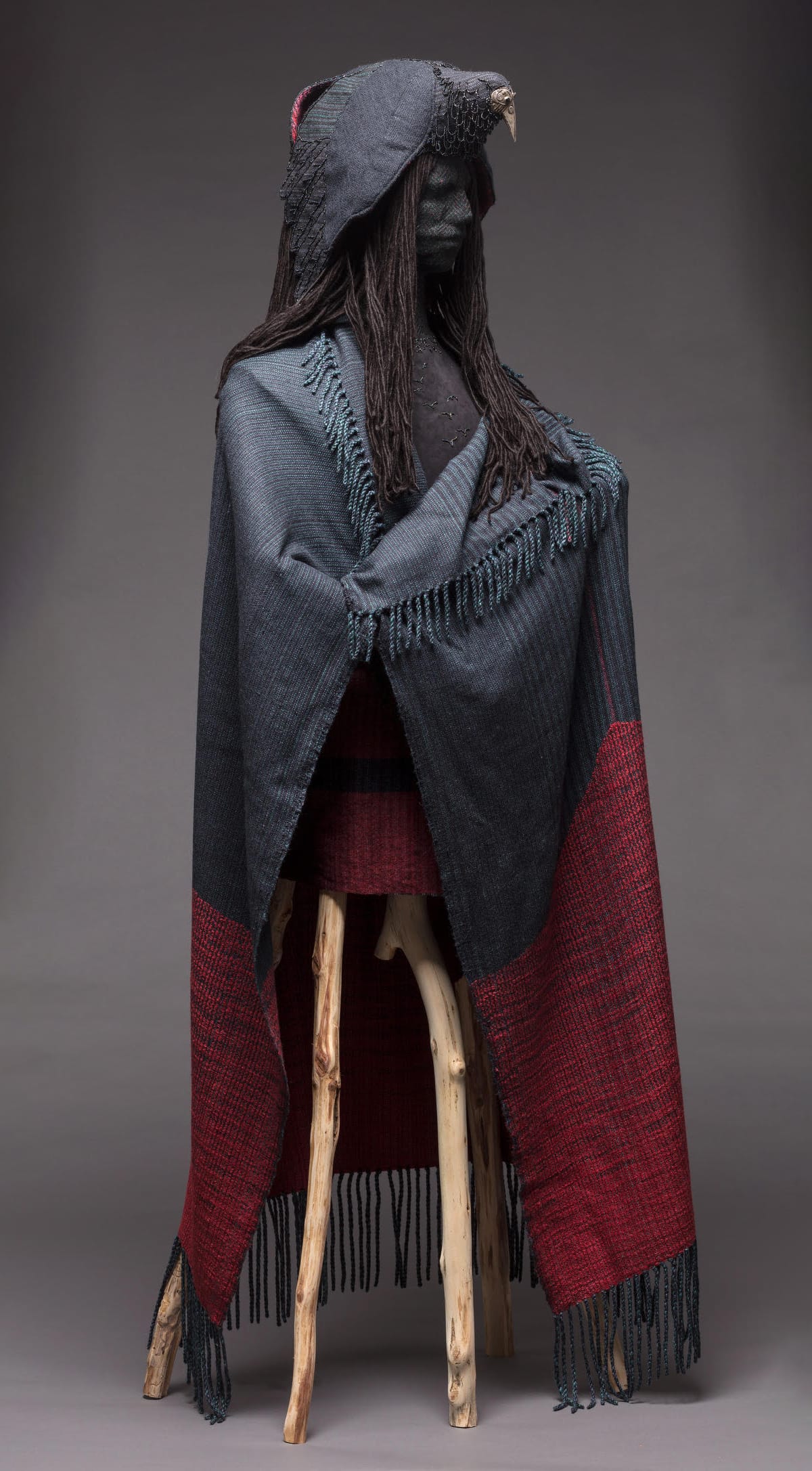
Long before she ever sat at a loom; before awards, museums, or national recognition, her earliest memories were stitched together by women—mothers and grandmothers whose needles moved instinctively, whose lives were measured in acts of making. Fabric surrounded her childhood. Sewing, crocheting, knitting—these were not hobbies but a way of being. By the age of 3, she already held a needle with confidence.
What she did not yet know was that she would become one of the most influential Chickasaw textile artists of her generation—an award-winning weaver, painter, sculptor, educator, historian and cultural bearer whose work would reconnect centuries of Indigenous knowledge to a contemporary world.
Today, at nearly 83, Wheeler speaks with quiet clarity about her life’s singular mission: to weave. Not merely cloth, but memory. Not simply garments, but identity. Her work carries the voices of the women who came before her—her great-great-great-grandmother Mahota, Nancy Mahota, her grandmother Juel, and her mother Rubey—forming an unbroken matrilineal lineage of Chickasaw strength, creativity and resilience.
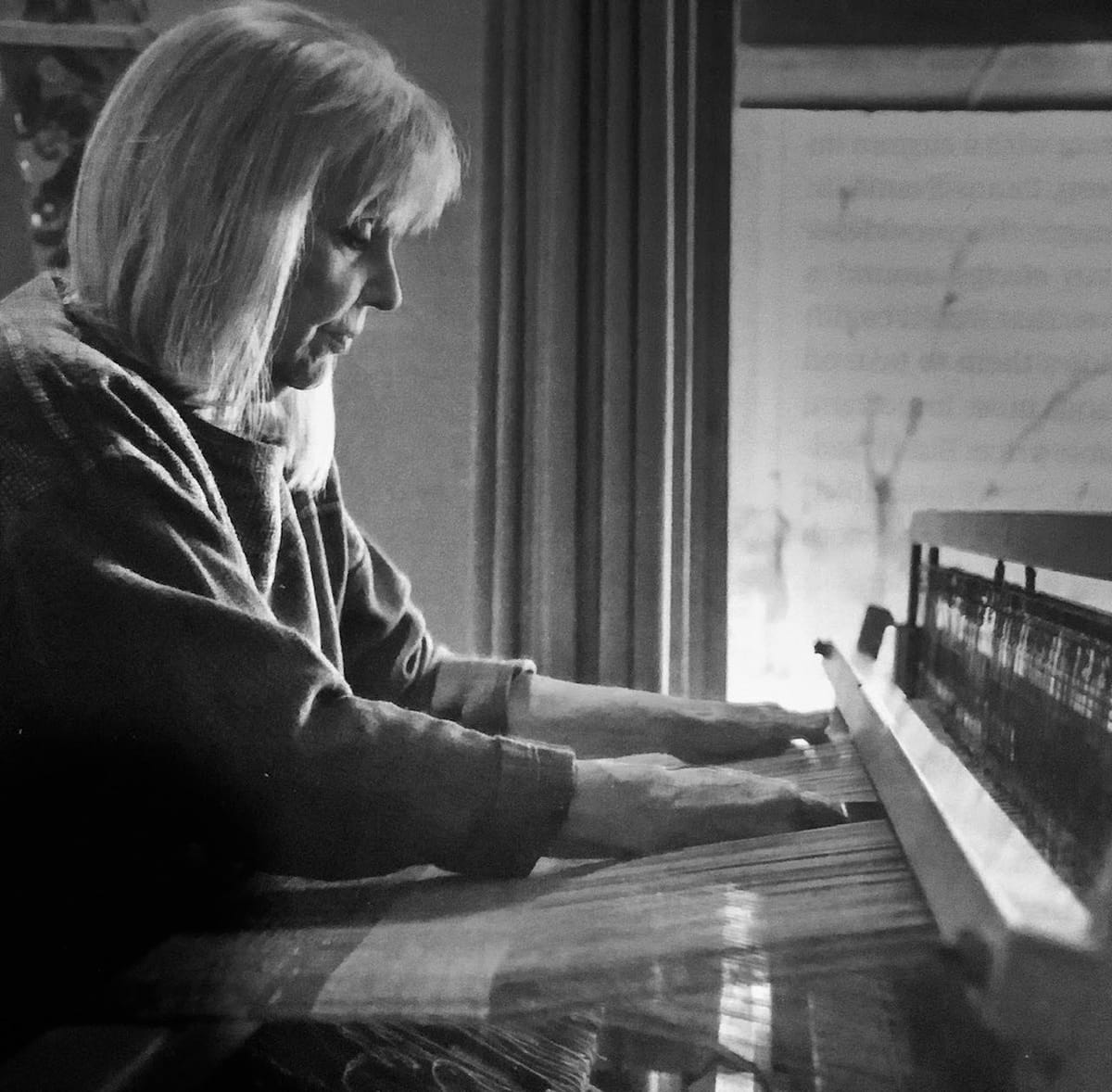
Wheeler’s formal training began in fine art. She studied painting and sculpture, winning early recognition—including first place for welded sculpture at the Philbrook Museum in the 1970s. But during graduate studies, while exploring jewelry, she noticed something quietly transformative: the looms in the textile studio behind her.
The moment she sat down at one, she knew.
Unlike knitting or crocheting—techniques with which she never felt entirely at ease—the loom offered order, structure and balance. It “kept her straight,” she says. Over time, she would understand that this physical alignment mirrored something deeper: Weaving gave her a language for who she was becoming.
In the 1970s, textile art was still largely relegated to wall hangings and experimental forms. Wheeler was not yet creating garments. That changed when she decided, almost casually, to weave herself something to wear. Using a summer-and-winter weave pattern she adapted instinctively, she created a dress that, when worn, felt unmistakably familiar. Buckskin-like. Fringed. Alive with movement.
The revelation was immediate: Weaving could become clothing; clothing could become cultural expression. This moment ignited what would become her pioneering handwoven fashion practice—and eventually, her internationally recognized body of work.
Wheeler never viewed weaving as craft alone. From the beginning, she approached it as painting with yarns and sculpting her fabric for the body. Critics and writers soon echoed this sentiment, describing her work as “painting on fabric” and “sculpting through cloth.”
Her process was methodical yet intuitive. She developed her own patterns, worked extensively with samplers, meticulously documented her experiments—colors, treadlings, structures—before committing them to finished works. The loom became a site of constant inquiry, a place where research and instinct met.
Though her early influences spanned Plains and Southwestern tribes—reflecting the regions where she lived—her focus sharpened dramatically after a pivotal return to Chickasaw Nation territory in the mid-2000s.
In 2006, Wheeler attended a Chickasaw Nation listening conference. She brought her portfolio with her, not knowing that this single decision would redirect the remainder of her career. Introduced to cultural leaders and artists, including composer Jerod Tate, she was invited to participate in Lowak Shoppala’, a multimedia stage production chronicling Chickasaw history through clothing, music and poetry.
Tasked with designing a thousand years of Chickasaw dress—from mound-builder societies to boarding-school eras—Wheeler immersed herself in historical research. The project was transformative. For the first time, her work became wholly, unapologetically Chickasaw.
Shortly after, she was named a Chickasaw Nation Artist in Residence.
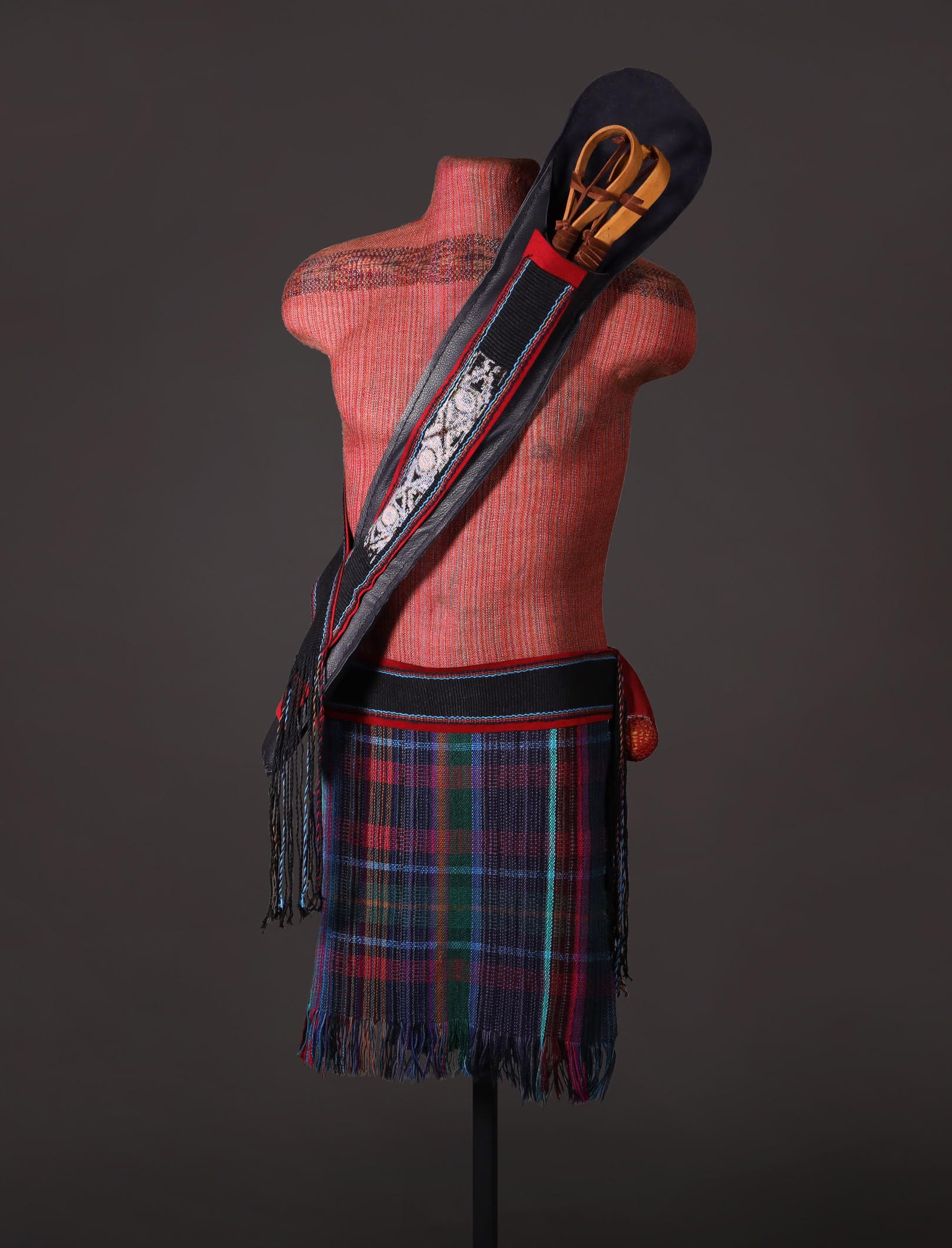
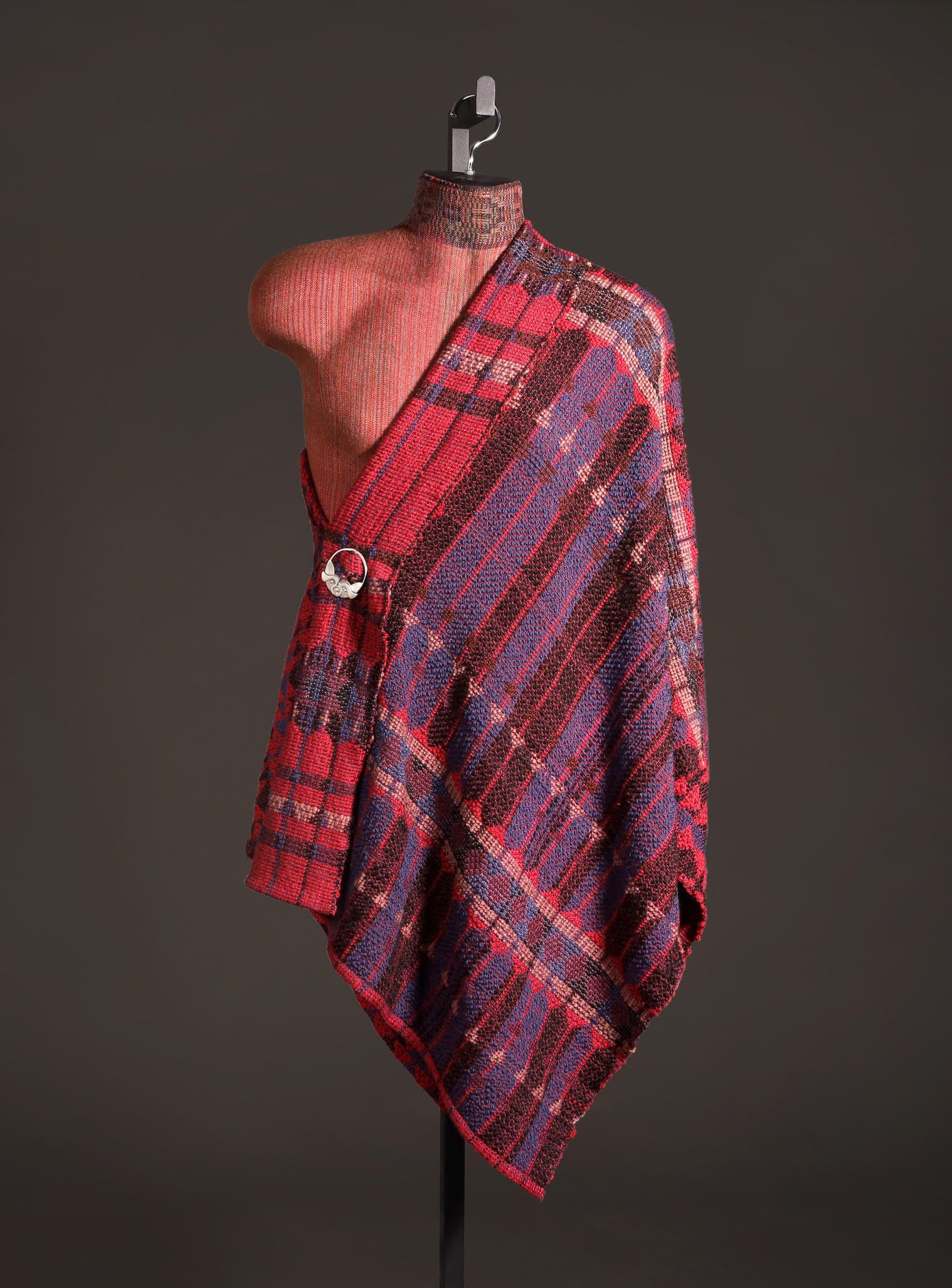
LEFT: “Little Man of War” (2020) Created for Chiefs, Clans, and Kin Margaret Roach Wheeler. RIGHT: “James Boyd” (2022) Created for Chiefs, Clans, and Kin Margaret Roach Wheeler
From that point forward, her artistic focus narrowed not in limitation, but in depth. Southeastern Native design became her sole influence. Her meticulous research translated into garments and textiles that brought history vividly into the present; hunting coats, ceremonial pieces, contemporary interpretations grounded in ancestral knowledge. When one such Chickasaw hunting coat earned Best of Show at the Heard Museum Indian Market, Wheeler understood the power of cultural specificity. By returning home, both physically and creatively, she had found her truest voice.
The name Mahota had long carried weight for Wheeler. She had used it publicly since opening her studio in 1984, to honor her great-great-great-grandmother, who was remembered in historical records as Granny Hoda or Granny Love. Though the precise translation of “Mahota” remains debated, Wheeler understands it poetically as “pulling apart the strands”—a metaphor that perfectly mirrors her life’s work.
Mahota eventually became more than a name. It became a collective.
Through Mahota Studios and later Mahota Textiles—a nationally recognized textile company owned and operated by the Chickasaw Nation—Wheeler helped establish one of the first Native-owned weaving enterprises of its kind. The venture would not have been possible without institutional support. Wheeler is candid about this: She is an artist, not a businessperson. What the Chickasaw Nation provided was not charity, but partnership, requiring business plans, product development and accountability. In return, they offered infrastructure, funding and belief. That belief, Wheeler said, made everything possible.
Perhaps Wheeler’s greatest pride lies not in accolades, but in people.
Over the years, she mentored dozens of weavers, many of whom entered her studio knowing nothing about the loom. Some would go on to make a living through their craft; others carried weaving into leadership roles within the Nation. Even today, former students return weekly—drawn not only to the looms, but to the sense of community Wheeler fostered.
She speaks of camaraderie, shared lunches, intergenerational exchange. Of watching young artists realize they belong—not just within their tribe, but on the world stage. One of her initiatives sent Chickasaw fashion students to New York, where they encountered peers from across the globe and recognized their own excellence.
Mentorship, for Wheeler, is not instruction. It is permission.
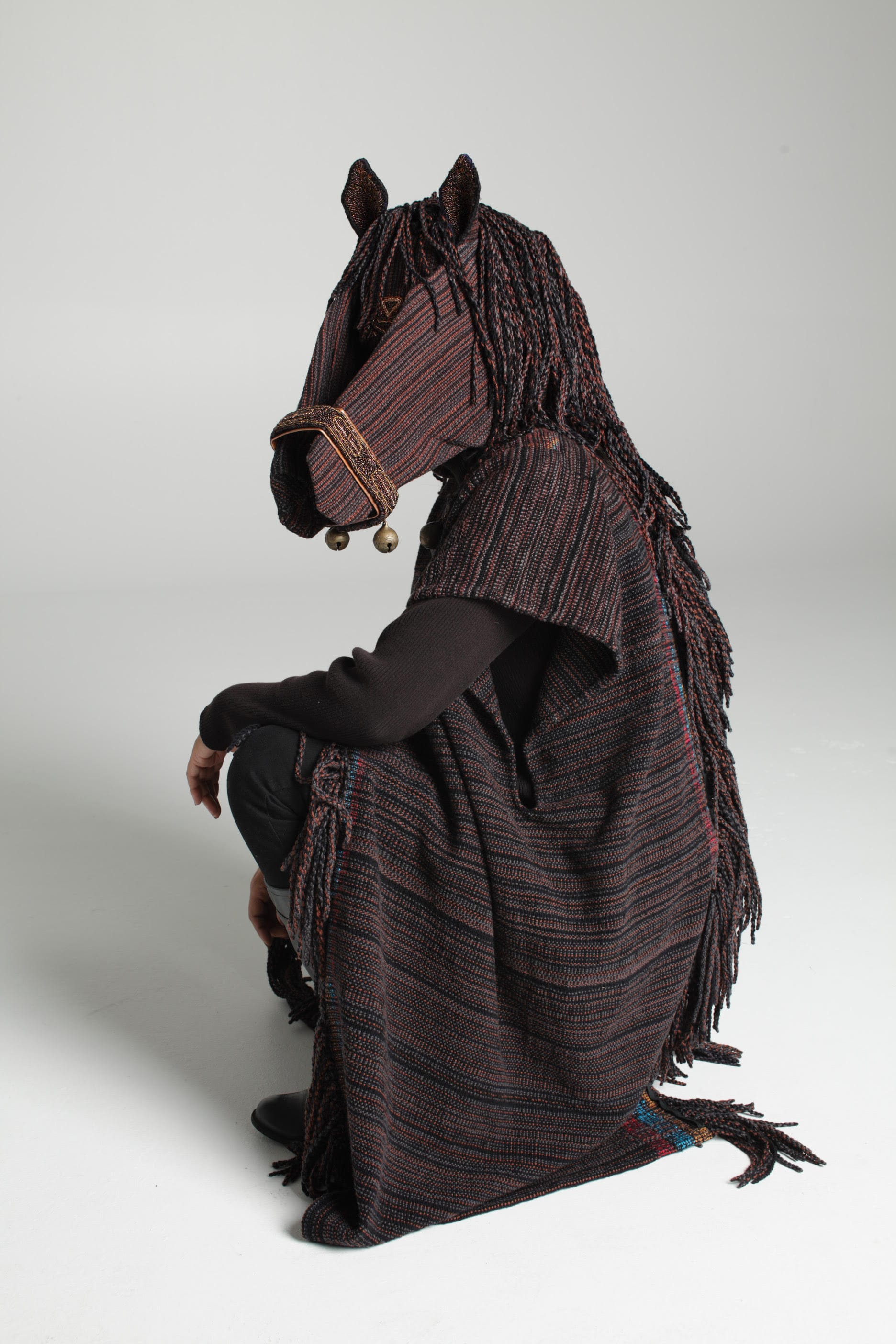
LEFT: “Chikasha Issoba, Chickasaw Horse” Margaret Roach Wheeler. RIGHT: “Murder of One, The Crow” Margaret Roach Wheeler Headdress collaboration with Alice McKee and Maria Mayo
In recent years, recognition has arrived in waves: induction into the Chickasaw Nation Hall of Fame, the Oklahoma Governor’s Arts Award, designation as a Creative Arts Ambassador, the United States Artists Fellowship and being named Chickasaw Nation Dynamic Woman of the Year.
These honors came after decades of persistence—after being rejected from exhibitions, told fibers were not a “serious” medium, and forced to rebuild her reputation from scratch when weaving was excluded from major Native art shows.
A stroke in her early 80s tested her resolve yet again. Determined to see her work exhibited at the Metropolitan Museum of Art, she used that goal as motivation for recovery—walking farther each day, rebuilding strength step by step.
“I’m resilient,” she says simply. “I didn’t know that about myself before.”
Today, Wheeler has stepped back from formal roles, but not from purpose. She still weaves. She still teaches. She still lives deliberately—on Chickasaw land, in a compound inspired by ancestral architecture, within miles of her forebears’ graves.
Asked what she hopes a future Chickasaw girl might understand when encountering her work decades from now, Wheeler paused. Then she spoke not as an artist, but as an elder.
She hopes that girl finds purpose. That she follows her dream. That she understands belonging, not as permission granted, but as a birthright.
Margaret Roach Wheeler’s legacy is not confined to museums or accolades. It lives in hands newly learning the loom, in fibers pulled apart and rejoined, in a matriarchal continuum that refuses to fade.
Her life is proof that when tradition is honored and innovation embraced, culture does not disappear—it endures.
The link has been copied!
Your link has expired. Please request a new one.
Your link has expired. Please request a new one.
Your link has expired. Please request a new one.
Great! You've successfully signed up.
Great! You've successfully signed up.
Welcome back! You've successfully signed in.
Success! You now have access to additional content.