
The Theta Effect
An Oklahoma alternative for holistic health

Biohacking may have started as fringe experimentation—cold plunges, nootropics, glucose monitors strapped to otherwise healthy bodies—but the concept has evolved into a billion-dollar movement obsessed with optimization.
Doctors who once rolled their eyes at self-trackers are now studying wearable data, personalized nutrition and longevity science with genuine curiosity. That coincides with a new era of patients who arrive at appointments armed with sleep analytics, hormone panels and enough biometric data to fill a filing cabinet.
The medical establishment, predictably, has responded with a mixture of fascination and caution. Biohacking’s influence is pushing healthcare toward something more tailored, preventative and performance-driven.
That is where Deana and Chad Glenn step into the picture. The co-owners of OK Theta & Wellness are at the tip of the spear when it comes to biohacking in Oklahoma, as their nearly three-year-old facility in Oklahoma City has been at the forefront of introducing the concept into the Sooner State.
Despite both having long histories in the traditional medical field, the Glenns are more apt to search outside the box when it comes to helping people find solutions to some of life’s most persistent ailments. And that is how they discovered the Theta Chamber, the foundation that OK Theta & Wellness was built upon. Deana and Chad see it as a biohacking game-changer in the holistic field that has yet to be fully embraced by the wider medical community.
The Theta Chamber, which was originally developed by Loran Swensen in 1989 for his son with cerebral palsy, is designed to gently guide the brain into a theta state, in which it becomes more receptive to forming new neural pathways. Each 30-minute session uses a combination of vestibular motion, microcurrent signaling, binaural audio beats and visual pattern light stimulation, all while the client lies on a pulsed electromagnetic field mat.
“The more exposure you have to theta, the greater its effect on you,” Chad says. “What that means is, as you do a session, the first time is the least amount of time you would be in theta; it’s the least depth you would have, and that experience grows with subsequent exposures. And where that’s useful is that theta is giving people a space between the stimulus and the response. It lets you notice where you otherwise may not notice.”
The wellness cocoon essentially bathes its occupant in low-frequency theta waves—those elusive brain rhythms linked to deep meditation, creativity and memory consolidation.
Patients quickly get past its futuristic appearance and focus on the benefits.
“Our clients come to us looking for help feeling calmer, sleeping better, thinking more clearly or resetting after a stressful day,” says Deana. “We see every age here. The spinning gives the brain vestibular input, the same thing kids get from swings and merry-go-rounds. For the kids who can’t get that on a playground, it works alongside the care they’re already getting.”
Chad is a former neurosurgeon who specialized in complex brain tumor surgery, while Deana was a nurse practitioner for neurosurgery at OU Health. However, the Glenns didn’t come upon the Theta Chamber while working at a local hospital or learn about it in any medical class. As is often the case in this era, their fascination started with social media.
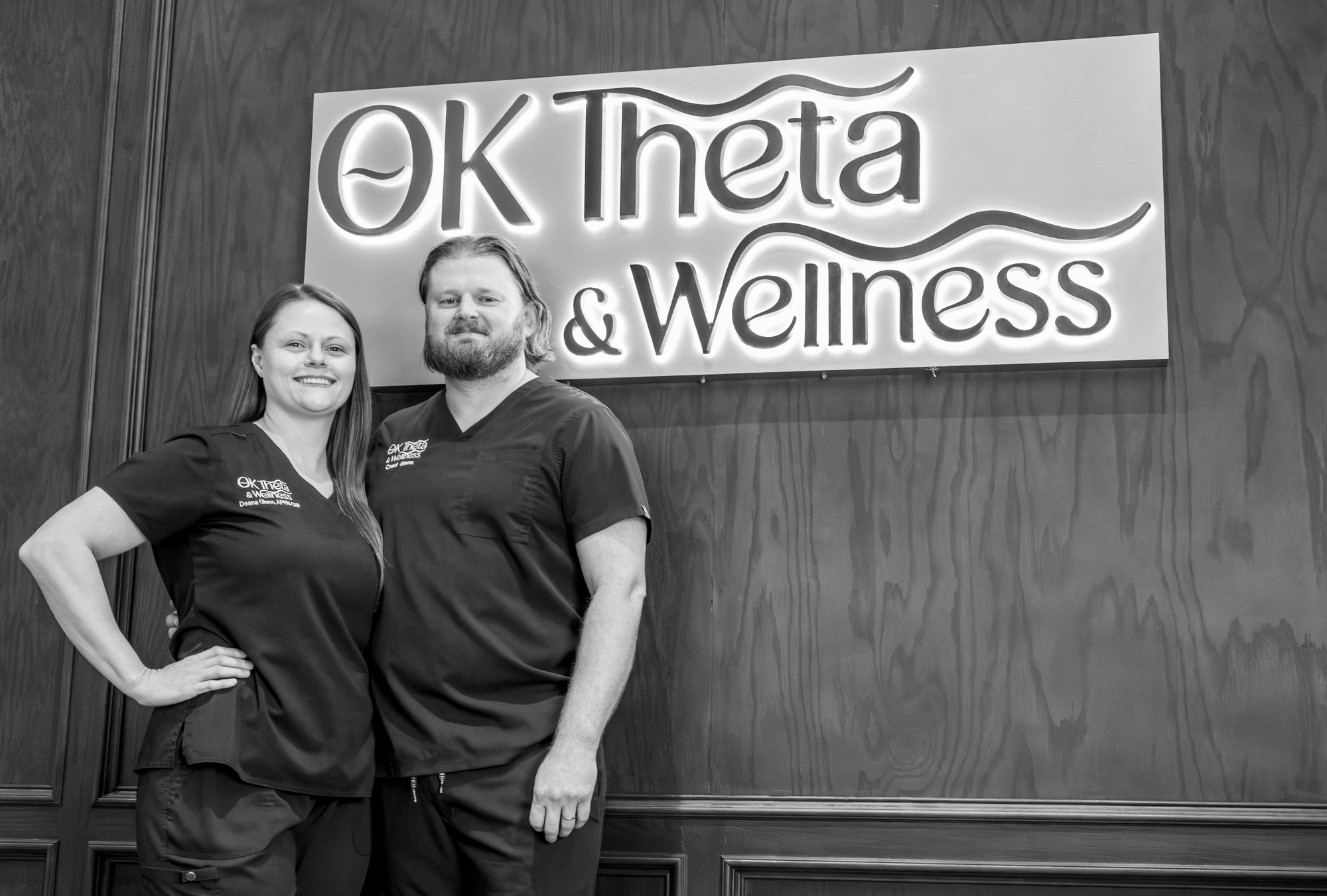
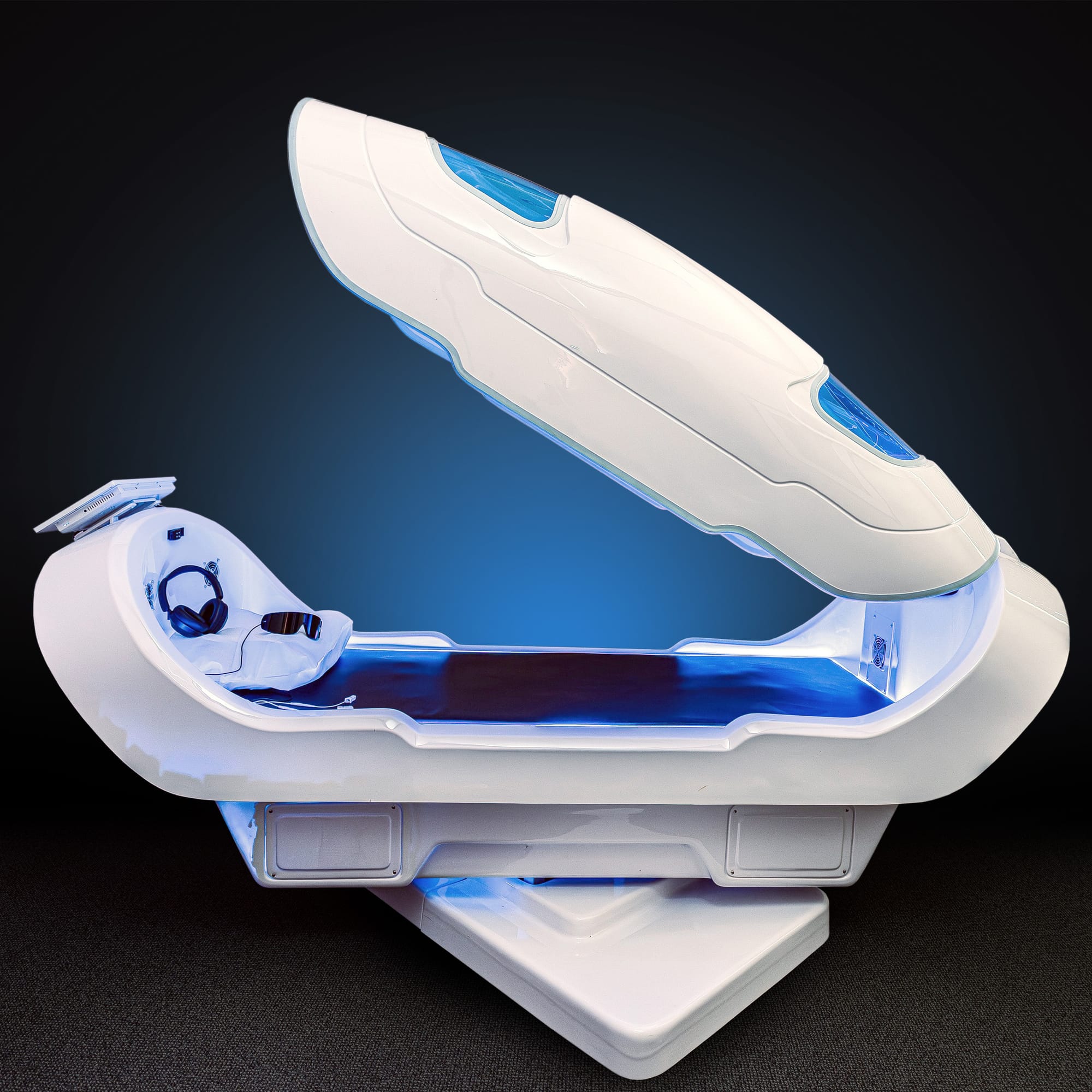
LEFT: OK Theta & Wellness founders Deana Glenn, NP and Dr. Chad Glenn. RIGHT: The Theta Chamber located at OK Theta & Wellness in Oklahoma City
Deana was scrolling through TikTok one day in the summer of 2023 when she came across a video for the Theta Chamber that piqued her interest.
“It looked like a spinning tanning bed to me,” Deana says. “The video was of a little boy who had been diagnosed with fetal alcohol syndrome, ADHD and intermittent explosive disorder. His mom described how he was regulating his emotions, finally sleeping, his night terrors had stopped, and he was starting to follow directions.”
Then she discovered that there was not a single Theta Chamber in the state of Oklahoma, and the entrepreneur in her clicked on.
“I called my husband and said, ‘You have to look at this. We have to buy one,’” Deana recounts. “That’s how OK Theta was born.”
The Theta Chamber is not FDA-approved, but the Glenns did their homework before buying their first one.
“There’s no published research on the Theta Chamber itself, but each of the modalities it uses has its own science behind it,” Deana says. “We dug into everything we could find, and every one of those pieces has been studied individually. Our thinking is that combining them does even more than any one on its own.”
While Deana said she was a believer within a week of discovery, it took Chad a little longer. As a neurosurgeon who had spent years learning how the brain functioned, to call him skeptical would have been an understatement.
“I tried to tear it apart. I said it was phooey,” he says. “I tried to tear it down for six months. In fact, I was so resistant to it that we had one for six months before I would even get into it. It took me getting into it and having this wild experience that is theta, where I really started to go, ‘Hey, there’s really something here.’”
Since then, Chad said, he has had hundreds of sessions in the chamber, and it has done wonders for him, both professionally and personally.
“Running the Theta Chamber has literally been therapeutic for me,” Chad says. “Now it’s a thing I love to do, which is to help people achieve whatever they’re trying to achieve with their mental state, with their well-being, with their health. It’s a labor of love, so to speak.”
After the Glenns purchased a second Theta Chamber, they moved to their current address in North Oklahoma City, at 13838 Quail Pointe Drive, Suite A. The extra space allowed them to partner with Power-House Infusionz IV Vitamin Bar and add two massage therapists, StemWave shockwave therapy and another unconventional treatment to their wellness practice.
In May, an Enhanced External Counterpulsation (EECP) system was delivered to their office. It’s a noninvasive therapy guided by continuous EKG that improves blood flow to the heart and throughout the body. During a session, cuffs wrapped around the calves, thighs and buttocks inflate in time with the heart’s resting phase, driving more blood to the heart, then deflate the instant before it pumps so the heart meets less resistance. That heartbeat-synced timing is what sets it apart from the compression boots common at other wellness studios, which simply squeeze the legs on a timer. Often called a “natural bypass,” EECP is thought to coax the body, over a series of sessions, into forming collateral vessels, small natural detours that carry blood around a narrowed or blocked artery rather than attempting to force blood through it. Where a stent physically opens a single blocked artery, EECP works the other way, encouraging the body to grow its own network of these vessels, which is part of why it suits people who aren’t candidates for a stent or bypass.
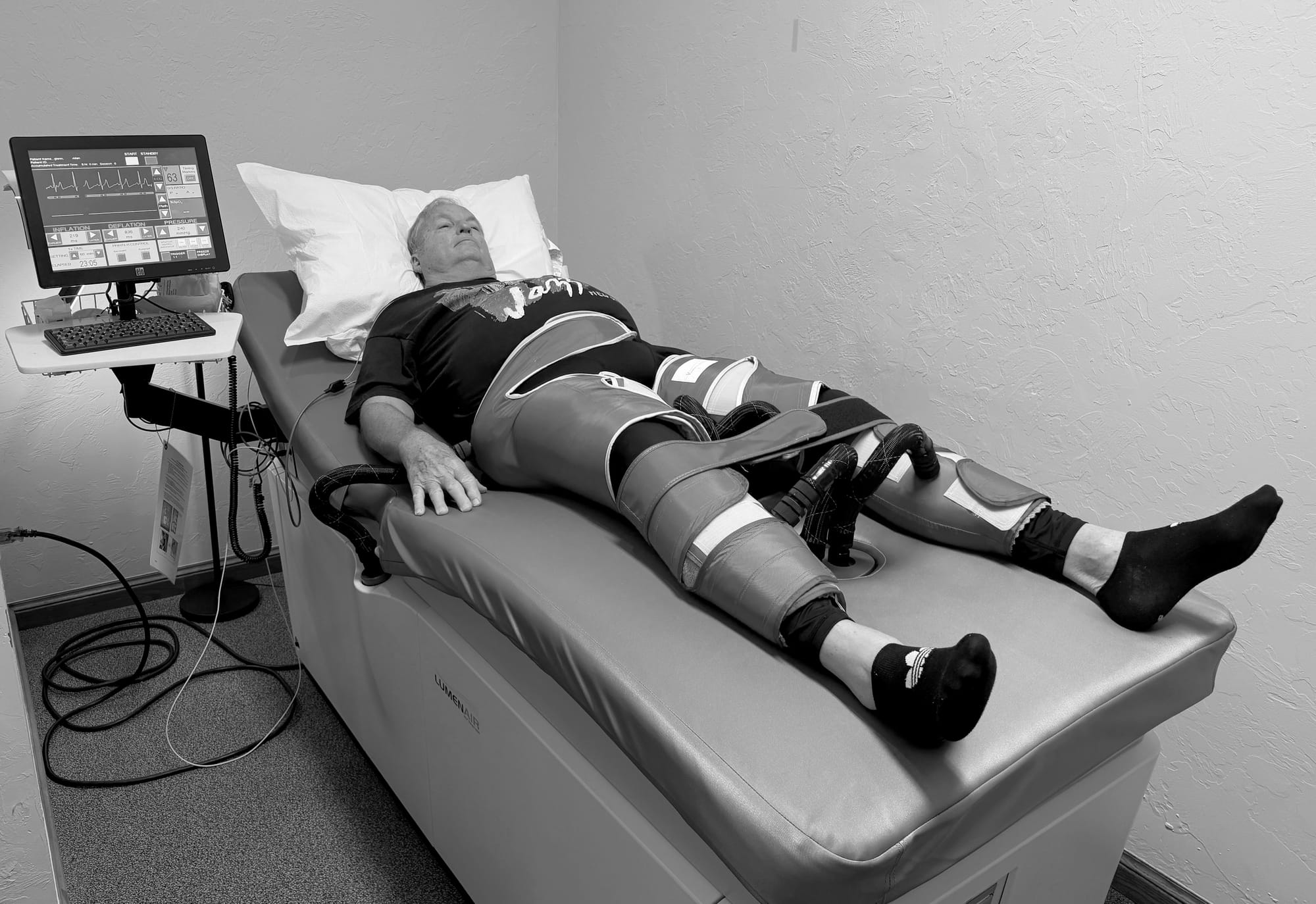
While the technology surrounding EECP has been around for decades, like the Theta Chamber, it has not been fully adopted in the standard medical community. Oklahoma has yet to fully embrace the idea, though there are already six locations around Dallas that make use of it. Even professional athletes like Shaquille O’Neal, Peyton Manning and Tom Brady have reportedly used EECP to boost their endurance.
“It’s not new technology. Insurance will cover EECP for people with refractory angina,” Deana says. “That’s someone with ongoing chest pain from heart disease whose medications aren’t controlling it, and who isn’t a candidate for a stent or bypass surgery.”
According to Deana, EECP is being studied for ischemic stroke recovery, long COVID, POTS, neuropathy, erectile dysfunction, dementia, cognitive decline, tinnitus, diabetic complications, kidney disease and other conditions.
“It is just as valuable as a preventive therapy for cardiovascular health, brain health, athletic recovery and healthy aging,” Deana says. “We are one of the only clinics in the region offering it on a cash-pay basis without the typical insurance gatekeeping.
“OK Theta & Wellness is for everyone,” she adds. “We care for patients managing real challenges, and we care for the people who simply want to feel sharper, calmer and stronger for the long haul. Prevention, performance and longevity are every bit as central to what we do as recovery.”
The Glenns have built OK Theta & Wellness on their willingness to think outside the box when it comes to taking care of their patients. They are the only facility in the state with Theta Chambers and the only one offering EECP for wellness in addition to its standard cardiac use.
“We are Oklahoma City’s destination for advanced, drug-free therapies that support the whole person, whether you are working through something difficult or simply investing in your long-term health,” Deana says. “Our two flagship offerings, the Theta Chamber and EECP, sit at the intersection of neuroscience and cardiovascular medicine, and together they let us care for an incredibly wide range of patients.” •
