
Lights, Prairie, Action!
Oklahoma’s film festival circuit is redefining the heart of American cinema

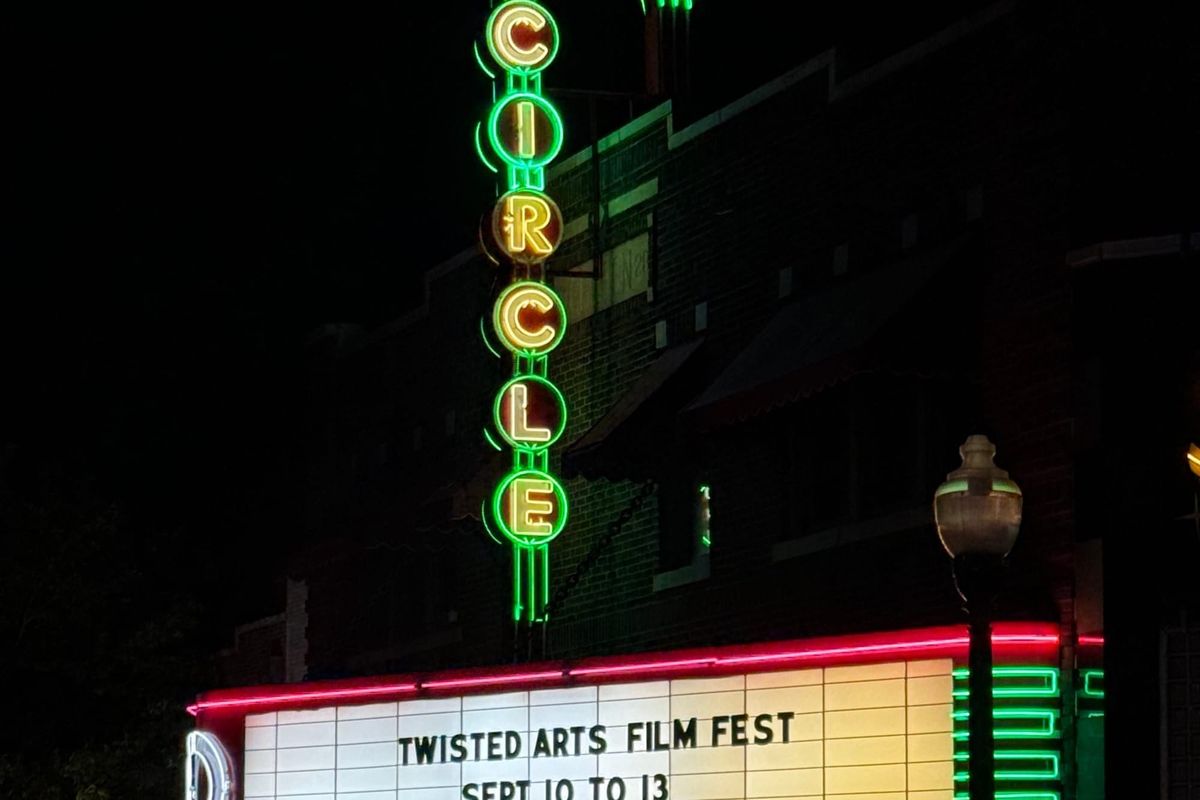
It begins, as all great revelations do, in the dark. The house lights dim inside a century-old theater on South Lewis Avenue in Tulsa. On screen, a Mohawk woman navigates the seductive pull of social media and the older, deeper pull of land. The audience—students, tribal members, filmmakers, the simply curious—leans forward. When the lights come up, there is no rush to leave. People stay. They talk. They recognize something.
That scene, from a 2025 Indian Territory Film Festival screening of Kaniehtiio Horn’s Seeds at Circle Cinema, drew such demand that a second theater had to be opened. Programmer Colleen Thurston, a filmmaker and Choctaw Nation citizen who serves on ITFF’s board, was not surprised.
“It’s become pretty well known here that there is a hunger for Indigenous storytelling,” she says. “People not only want it—they expect it. We see audiences traveling from Oklahoma City, from Tahlequah, to come to these events. That’s what really builds community.”
Oklahoma has long carried a narrative not entirely of its own making—of oil derricks and borrowed mythology, of a state you leave if you want to become someone. But something is shifting, quietly and then all at once. The state has become, with startling conviction, one of America’s most compelling film destinations, not simply as a backdrop for someone else’s story, but as a place where stories are born, shown, debated and celebrated year-round.
The production numbers are striking: Since the passage of the Filmed in Oklahoma Act in 2021, the state’s film and television industry has generated a $484 million economic impact, with employment growing more than 56%. But the more intimate, more culturally resonant story is unfolding in theaters, community centers and improvised screening rooms across the state—in the form of a burgeoning, deeply diverse film festival circuit that is transforming Oklahoma into a destination for filmmakers and film lovers alike.
Any serious accounting of Oklahoma’s film festival landscape begins with deadCenter. Now in its 26th year, the Oklahoma City festival is the state’s largest and only Oscar®-qualifying event, drawing roughly 1,800 submissions and curating nearly 200 films for its five-day annual run. Named one of the “20 Coolest Film Festivals in the World” by MovieMaker Magazine, deadCenter has evolved from a scrappy 2001 showcase into an institution of genuine national standing—one that has begun deliberately reaching northward, hosting satellite screenings at Tulsa’s Philbrook Museum of Art and Circle Cinema for the first time in 2026.
Beyond the marquee event, deadCenter operates year-round education programs that have reached more than 67,000 students statewide, many in rural communities where arts access has historically been limited — a festival that understands the real work happens not on the red carpet but in the classroom.
If deadCenter is the main stage, Circle Cinema is the spiritual anchor of the state circuit. Operating out of a building that has shown films since 1928, the Tulsa nonprofit has evolved far beyond exhibition into something more essential: a civic institution, an artists’ incubator, a year-round cultural festival unto itself.
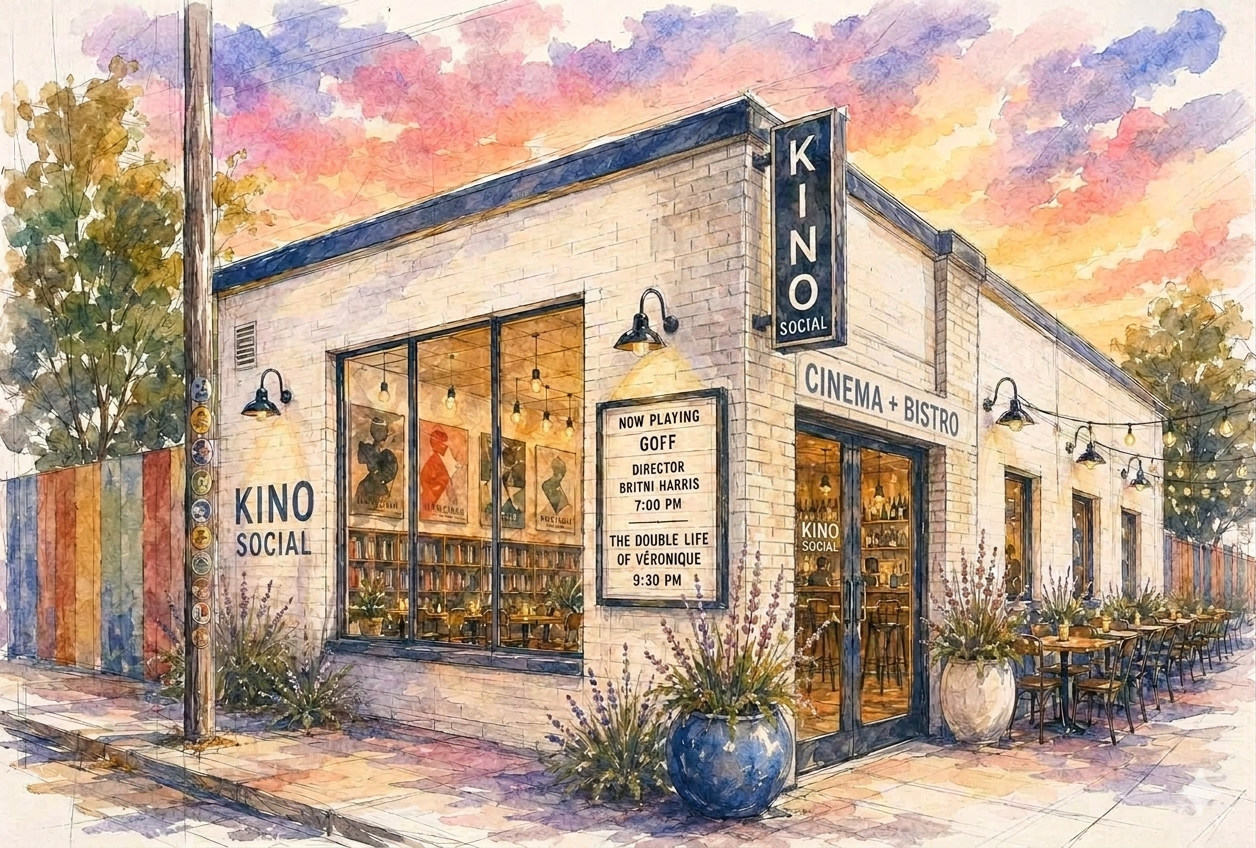
It is here that Michelle Svenson—film programmer, filmmaker and half-Korean, half-Swedish daughter of Indian Country—has returned with a vision that could transform how Tulsa experiences cinema. She calls it Kino Social: a microcinema designed not merely as a screening room, but as a shared home for the entire ecosystem of Tulsa’s film organizations.
“We have some great film venues like Circle Cinema, and I’m still a champion of that,” Svenson explains. “But a lot of us film festival organizers have brought all these experiences from national and international film festivals. We want to bring something to Tulsa and share it with our community, but we have to pay for film rentals, marketing and the venue. It’s not cheap.” Her solution is structural: a co-operative microcinema with a restaurant and bar generating sustainable revenue, hub space for every film organization in the city and a 100-seat theater collectively programmed by the community it serves.
“I want people outside Oklahoma to ask, ‘Have you been to Tulsa?’” she says, allowing herself to dream. Svenson draws inspiration from arthouse-cinema-with-bar models in Prague and elsewhere, but her eye is always local. “The biggest message is about that support system. We need to be there to support each other.”
In a state where 39 tribal nations maintain their government-to-government relationships with the United States government, where the very land was once called Indian Territory, it would be extraordinary if Indigenous cinema did not have a home. The Indian Territory Film Festival, hosted at Circle Cinema, is ensuring that it does.
Thurston, whose debut feature documentary Drowned Land—an examination of displacement and water rights in the Choctaw Nation—won Best Documentary at both the Circle Cinema Film Festival and deadCenter in 2025, brings a filmmaker’s precision to her curatorial work. She seeks out films that lack marketing budgets or major laurels but carry something more essential. “That’s the responsibility of strong programming,” she says. “Knowing what’s out there, really looking for it and having that commitment to our community.”
Her eye is also trained on what’s emerging locally. At a panel co-presented with Tulsa Litfest, she spotlighted three filmmakers whose work has genuinely moved her: Katie Hoffman Fox, developing her first feature Push County; Shay Vassar Gomez, whose queer 1990s-inspired short Runaway Bride signals an original and daring vision; and Paris Burris, a programmer for deadCenter who has been directing and producing shorts while working on her debut documentary.
ITFF has recently reorganized under a new name, the Indian Territory Film Foundation, and is filing for federal nonprofit status that will eventually allow it to grant funds directly to Indigenous filmmakers. It is a structural leap from festival to foundation, from exhibition to infrastructure.
“We have an entire community of filmmakers here,” Thurston says. “We need to make sure they are sustainably supported from within our own community.” The Foundation has already partnered with the Tulsa Film Collective and deadCenter and is in conversations with tribal nations about satellite programming on reservations, turning a destination festival into something more like a road.
Kevin Lovelace did not set out to build a cultural institution. He started Twisted Arts in 2020, he says, “out of boredom during COVID.” Tulsa had not had an LGBTQ+ film festival in a decade, and the impulse was connection and community at a moment when isolation had become the dominant condition of public life.
Six years later, Twisted Arts has generated approximately $600,000 in economic impact for queer artists in Oklahoma, hosted the state’s first all-trans fashion show and brought Margaret Cho to Tulsa for its fifth anniversary. It screens Icelandic trans dramas alongside films about gay rodeos, and its Drag Me to the Movies series has transformed screenings into theatrical events. “You can’t just screen a movie anymore,” Lovelace says flatly. “People want some sort of interactive experience.”
Lovelace names his festival with the same defiant playfulness that characterizes its programming. “I wanted something that was a playfully queer word,” he says of the name Twisted Arts, “not necessarily derogative, but still kind of fun. And I knew I wanted a logo with some sort of tornado reference.” The result is an organization distinctly, unapologetically Oklahoman. Screening a film about a gay rodeo, he points out, “would do better here than San Francisco.”
His curatorial philosophy is rigorous beneath the irreverence. “First and foremost, it has to be a good film,” he says. “And then we try to find a balance of representation for everybody in the rainbow, as well as local interest, as well as showing films that people may not see—an Icelandic film, a film from Amsterdam.” He is now looking toward two-spirit stories, trans narratives, disability pride … stories that even an expanding mainstream has not yet found.
For the queer teenager in Enid or Lawton who has never heard of Twisted Arts, Lovelace’s message is direct: “If it doesn’t exist in their town, they should create it. That’s the way things start.”
These three organizations—ITFF, Twisted Arts, Kino Social—are not isolated initiatives. They are nodes in a constellation that also includes the Tulsa Film Collective, co-founded by filmmaker Sterlin Harjo (“Reservation Dogs”) and Cherokee Nation citizen Jessi McEver, which has brought the Sundance Institute Indigenous Film Tour to Tulsa and hosted Oklahoma premieres of films like Wildcat, with director Ethan Hawke in attendance for a post-screening Q&A. The Greenwood Film Festival, now in its sixth year, carries the weight of Black Wall Street’s legacy into the present through days of screenings and community dialogue. The Oklahoma Jewish Film Festival brings interfaith storytelling to Circle Cinema each March, and deadCenter’s growing satellite presence signals that the circuit’s ambitions are no longer confined to any single city.
Svenson, who also programs for the California Film Institute’s DocLands and Mill Valley Film Festival, has a filmmaker’s sense of what the ecosystem is collectively building. “We have a wealth of amazing film programmers here,” she says. “We’ve seen these films that are really impacting people, and we need to bring them here.” The microcinema, in her vision, becomes the place where those returns converge and shared infrastructure makes the whole circuit more than the sum of its parts.
What is striking about this ecology is not any single event but the cumulative effect of the whole. Taken together, these festivals constitute a year-round alternative to mainstream cinematic culture. They’re more diverse, more locally rooted and more willing to take aesthetic risks than anything a multiplex can offer. They give exhibitions to filmmakers who might otherwise struggle to be seen, and audiences to stories that corporate distribution would never greenlight.
There is a tendency, when describing Oklahoma’s film renaissance, to reach for economic superlatives: booms and revolutions, Hollywood coming to the heartland. Such language is not entirely wrong. But it risks obscuring the more interesting story that Oklahoma is not becoming a satellite of the entertainment industry. It is becoming itself.
As the lights in Circle Cinema dim again, outside on South Lewis Avenue, the marquee glows against an Oklahoma sky. Inside, in the dark, something is being made that cannot be streamed, cannot be algorithmed, cannot be replicated on a phone. It is the experience of a community gathering to see itself—complicated, beautiful and entirely worth the journey. •
DEADCENTER FILM FESTIVAL
Oklahoma City | June | Oscar®-qualifying
deadcenterfilm.org
CIRCLE CINEMA FILM FESTIVAL
Tulsa | July | Oklahoma-centric independent cinema
circlecinema.org
INDIAN TERRITORY FILM FESTIVAL
Tulsa | Annual | Indigenous storytelling
Indian Territory Film Foundation
OKLAHOMA JEWISH FILM FESTIVAL
Tulsa | March | Interfaith cultural dialogue
jewishtulsa.org
TWISTED ARTS FILM FESTIVAL
Tulsa | Fall | LGBTQ+ cinema and performance
twistedfest.org
GREENWOOD FILM FESTIVAL
Tulsa | August | Black storytelling and civic healing
TULSA FILM COLLECTIVE
Tulsa | Year-round | Community screenings and filmmaker events
NATIVE CROSSROADS FILM FESTIVAL
Norman | Annual | Free global Indigenous cinema
BARE BONES INTERNATIONAL FILM FESTIVAL
Muskogee | Annual | Independent cinema
KINO SOCIAL MICROCINEMA
Tulsa | Coming Soon | Community hub and co-operative cinema
DREAMLAND TULSA
Tulsa | Year-round | Celebration of music, art and creativity
dreamlandtulsa.com
NAM COMMON
Year-round | Asian culture, community and diaspora through art and media curated programs
KINSHIP FRAME
Tulsa | Year-round | Film-based initiative
