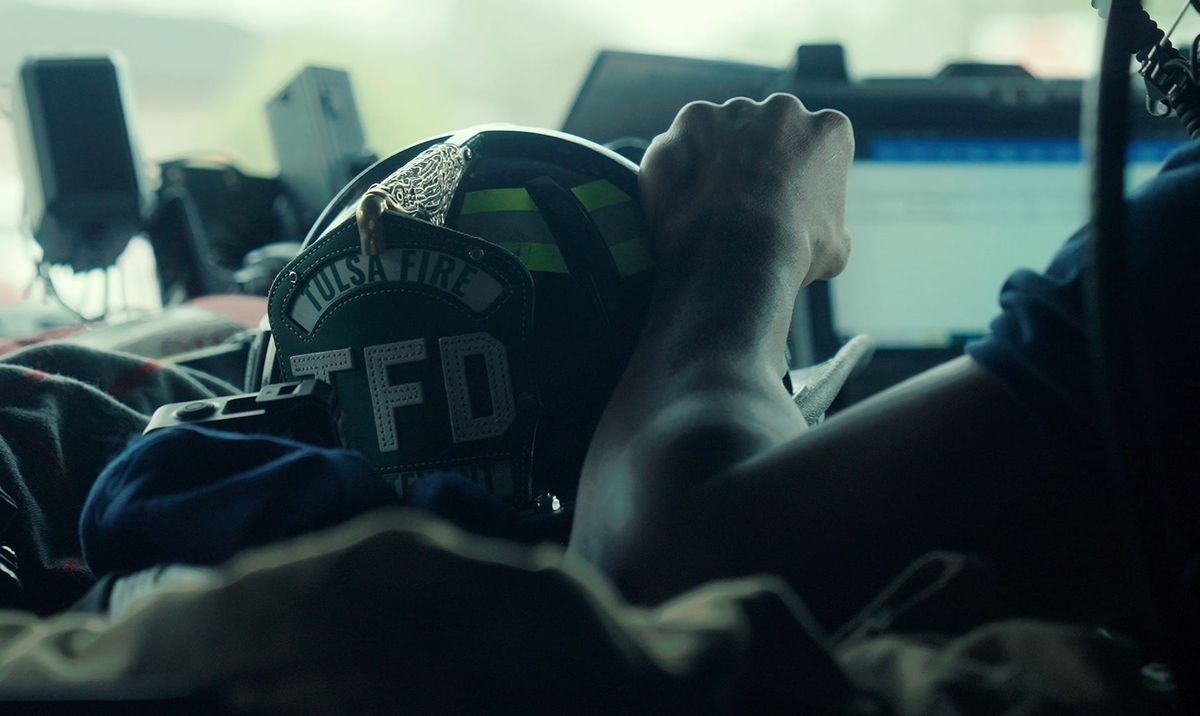
Tulsa Fire Department Lieutenant Osha Davis, photo by Benji Osborne
On the eve of his second documentary’s film festival premiere, award-winning filmmaker Keith “Sneak” Daniels reflects on why the time was right for this story to be told.
“This story’s personal to me; I want to tell it, and if I don’t tell it, nobody will,” says Daniels, whose feature-length documentary Fighting More than Fire premiered at deadCenter Film Festival on June 12, in downtown Oklahoma City.
Fighting More than Fire aligns with Daniels’ themes of documenting untold Black history, legacy and resilience. His previous documentary, Fire in Little Africa: The Doc, captures the collaboration of over 50 Black artists as they record a hip-hop album honoring the resilience of Tulsa’s historic Greenwood District for the centennial anniversary of the Tulsa Race Massacre.
Daniels, a Greenwood native, said the inspiration for his second documentary came from his friends in the Tulsa Fire Department who shared first-responder stories that clued him in on the bigger picture of the history of Black firefighters in Tulsa.
“This is when I was making my first doc, and I was like, ‘There’s a story here; I don’t know what it is yet, but you guys are telling me a lot of cool stuff,’” says Daniels. “I did some research on the origins of Black firefighters in Tulsa, and found out there wasn’t much info on it, so I was like, ‘Okay, there might be a lane here that nobody’s explored.’”
But this story gets even more personal for Daniels. In 1996, Tulsa firefighter James “Big Daddy” Walker made a split-second decision that would affect Daniels and his family forever.
“Big Daddy, he saved my mom’s life, which we had in the film as well,” says Daniels. While off duty, Walker rescued Daniels’ mother, Heather, from a crushed car that was on fire. Walker received Firefighter of the Year in 1997 for his actions that day.
“That was one of those [situations] where he’s a family friend, so I’ve known him my whole life, but I didn’t know about that story until I was much older.”
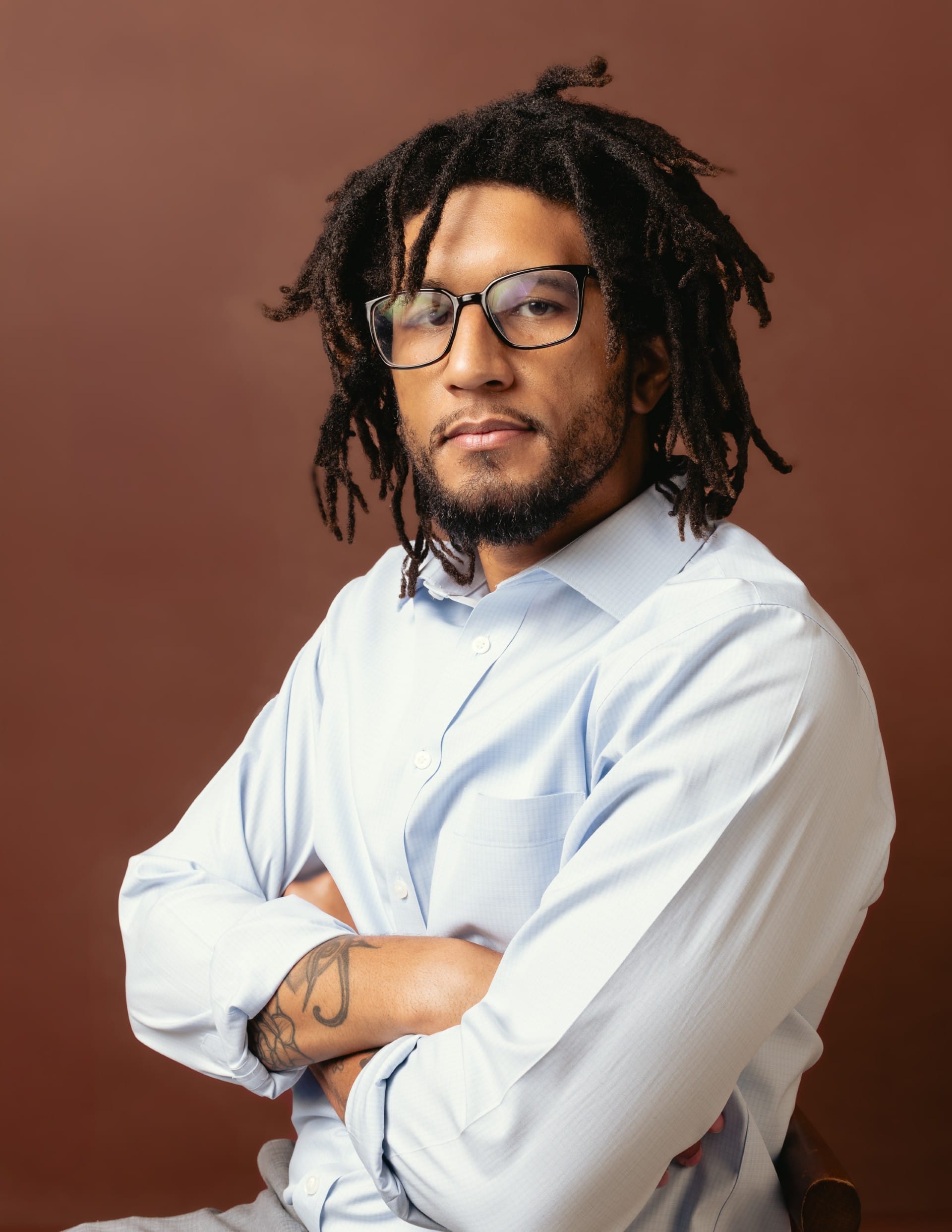
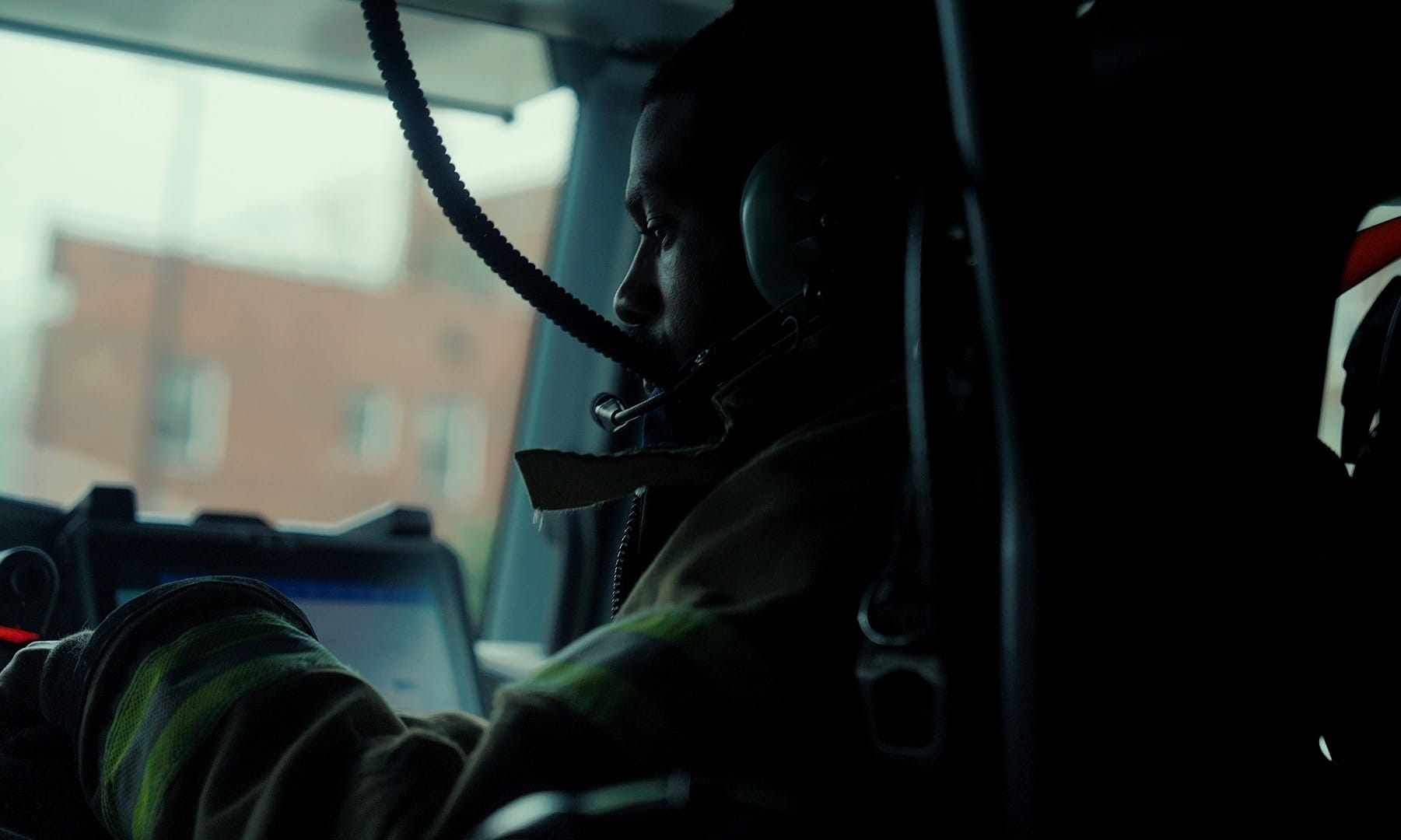
LEFT: Director Keith “Sneak” Daniels, photo courtesy of Taylor Mae Photography. RIGHT: Tulsa Fire Department Lieutenant Osha Davis on a call, photo by Benji Osborne
Untold Stories
Besides brief mentions on local news stations during Black History Month, there was not an in-depth chronicle of the history of Black firefighters in Tulsa. The City of Tulsa’s 35-page history of the fire department, written in 2017, details that the city hired Black firefighters in 1956 but notes no other contributions by Black individuals; the document also does not mention the fires of the Tulsa Race Massacre.
Daniels’ documentary, in contrast, explores the living history and legacy of multiple generations of Black firefighters serving in the Tulsa Fire Department, beginning with those first Black firefighters in 1956. Known simply as The Six, these were the first six Black firefighters hired by the department for the newly built, segregated Station 19 at Mohawk and Peoria.
“Fire Station 19 was the only fire station [The Six] could work in,” says retired Tulsa Firefighter Ronald Stephens in Fighting More than Fire.
“They had to park the fire truck in the middle, and one side was for the whites and one side was for the Blacks. Whites had all real nice stuff, bathrooms and bedrooms. Blacks had a locker room with a table and a kitchen. And when they had a fire, they all got on the truck together to fight the fire.”
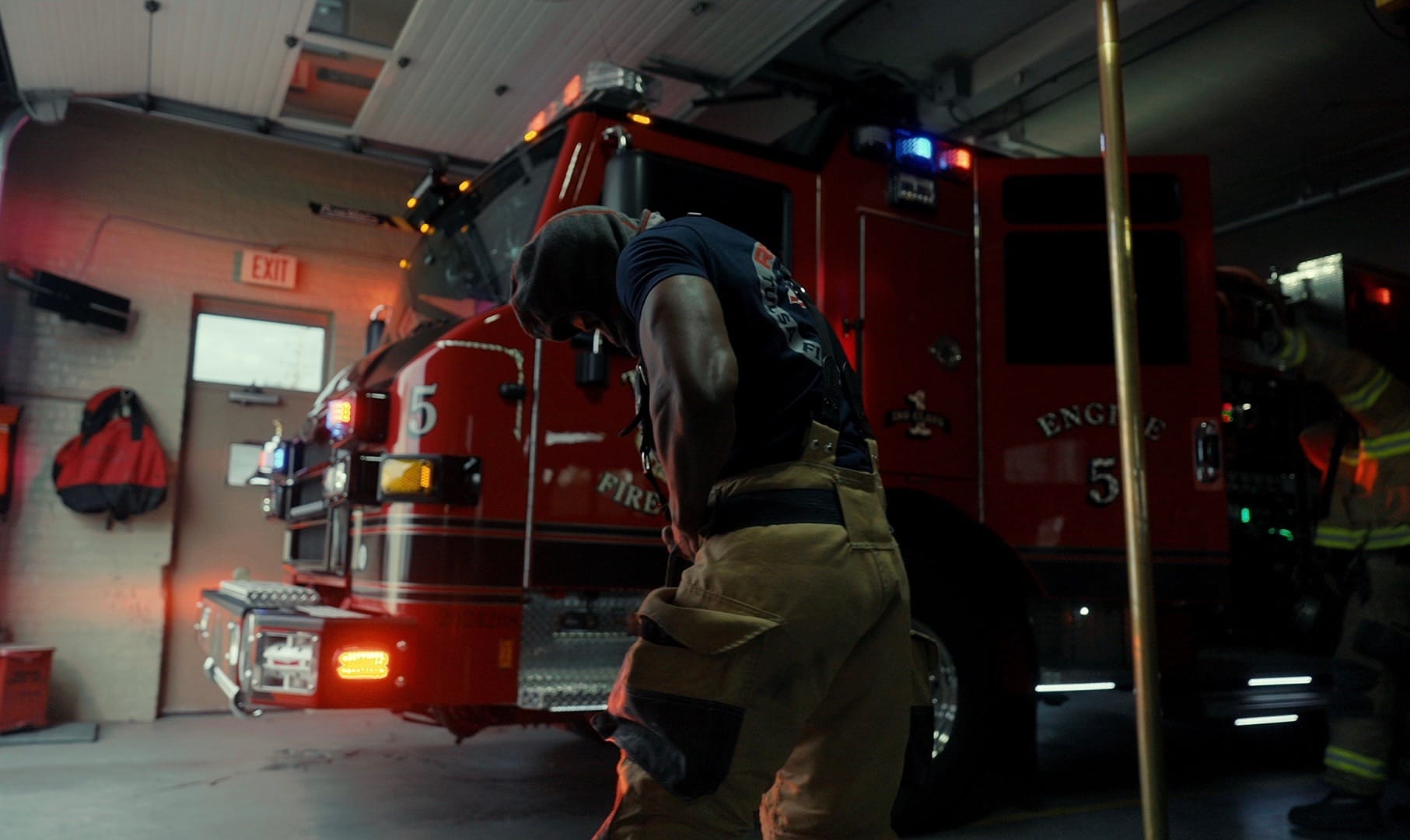
Tulsa Fire Department Lieutenant Osha Davis prepares for an emergency call, photo by Benji Osborne
Ronald Stephens, retired firefighter and son of Cleatus Q. Stephens, one of the original six Black firefighters at Station 19, was one of the over 20 active-duty and retired firefighters Daniels interviewed on camera. Ron and his twin Don—who was also interviewed in the film—both served in the Tulsa Fire Department for 31 years.
Seeing a role model like their father in the profession had a substantial influence on Ron and Don. But without a family member in the field, many Black children don’t see Black firefighters often.
“That’s the thing that was said throughout by a lot of people, like ‘growing up, I didn’t really see Black firefighters,’ and that’s why I put it in there so many times,” says Daniels. “Growing up, the only one I knew was my friend’s dad, and that was it. I didn’t know any other Black firefighters.”
Untold Challenges
Citing data from Deloitte’s DataUSA, the documentary states that 79% of firefighters are white and only 7% are Black. After the Civil Rights Act was passed in 1964, systemic barriers in fire departments across the country—including the Tulsa Fire Department—didn’t end. Cledella Evans-Stearns, the first Black female firefighter in the Tulsa Fire Department, wasn’t hired until 2001.
“I was getting it bit by bit, and was beginning to piece it up,” says Daniels about hearing stories about the discrimination faced by Black individuals throughout the hiring and promotion processes, which yielded the issuance of a federal consent decree to fix the disparities.
“Multiple people were saying the same thing about the consent decree and malpractice of hiring. They would do it for a few years, and then there would be these 10-year gaps where they wouldn’t hire many Black people, and then there was another wave, in like the ’80s and ’90s, so it was a pattern that I began to see.”
Some of these challenges faced by Black members of the Tulsa Fire Department caused them to decline to be interviewed for the film.
“Some people have a sour taste in their mouth about the department,” says Daniels. “I know a few people who did tell me no; they were just like, ‘Yeah, I don’t want to go up that tree,’ or they might have thought the film was demonizing the department more than uplifting Black firefighters.”
The film spends a good amount of its runtime doing the latter.
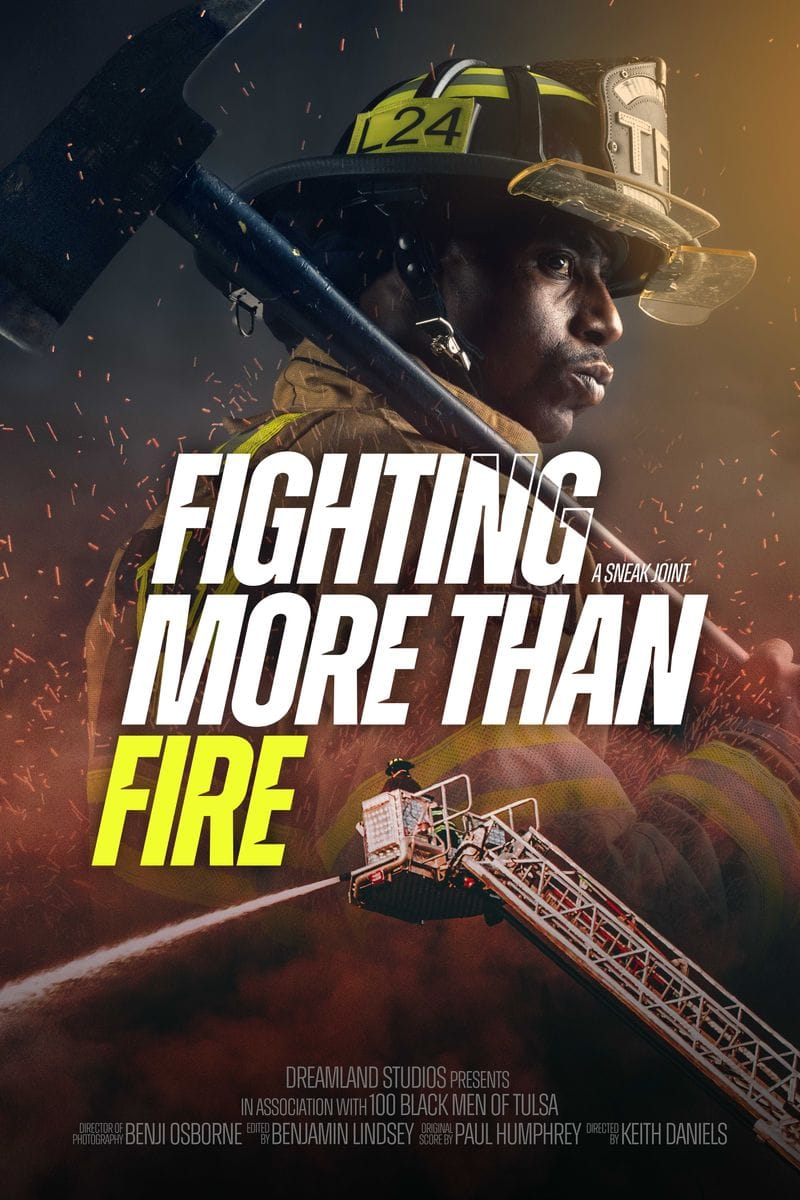
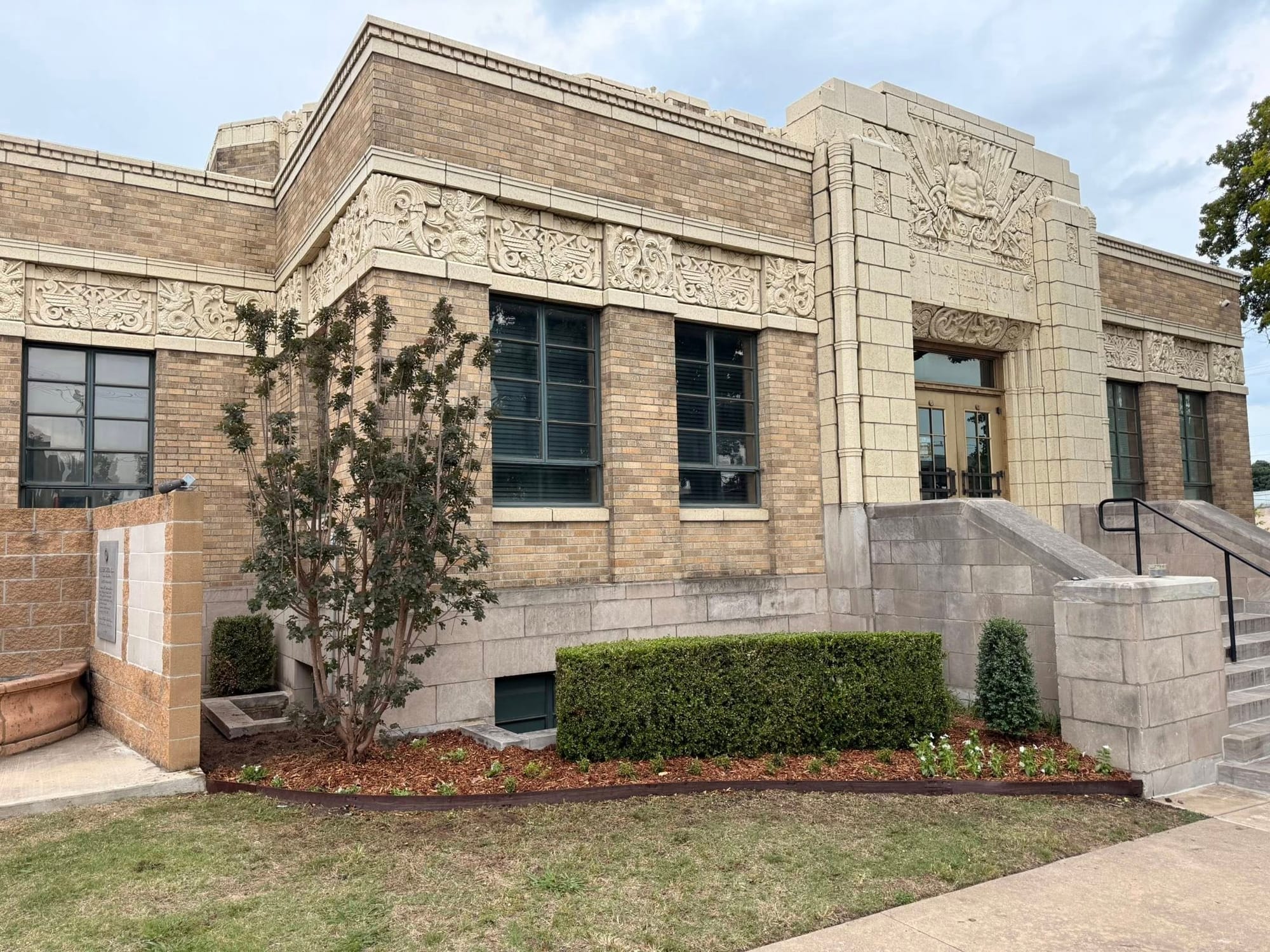
LEFT: Promotional poster art for Fighting More than Fire. RIGHT: Tulsa Fire Museum
Uplifting Black Firefighters
Throughout its approximately 90 minutes, audiences witness Black members of the Tulsa Fire Department teaching Black kids about fire safety and offering them career mentorship. Daniels also follows Tulsa Fire Department’s youngest Black lieutenant firefighter, Osha Davis, and fellow firefighter Walter Clark IV as they present at 100 Black Men of Tulsa, a community organization serving Black middle school and high school boys.
Not only does the 100 Black Men play a deep role in the lives of many Black Tulsans, but it also plays a deep role in the production behind Fighting More than Fire. It was through the organization that Daniels was able to apply for and receive a Commemoration Fund grant from the Anne & Henry Zarrow Foundation in 2024, which was game-changing for the film’s production budget, but still placed it in the ultra-low budget range.
“I had about 45 [thousand dollars] almost. For a feature, that’s really low budget, so a lot of people had to work underpaid,” says Daniels. “After the first day of following at the station, the whole crew was sold on the idea. They were like, ‘Whatever you need, let me know.’”
It was that first day of following the fire crew at the station when they got their first fire call.
“We happened to be downstairs when it happened, by the fire trucks, and then they get the call, and the mood just shifts suddenly, and they were moving quickly, and I could see the look on their faces,” says Daniels. “I looked at [Director of Photography Benji Osborne]. I’m like, ‘I hope you guys are recording.’”
Daniels hopes to screen the documentary in as many places as possible, particularly in schools, fire departments across the country and the Tulsa Fire Museum. Just as The Six influenced generations of Black firefighters in Tulsa, Daniels knows the power of mentorship and of seeing people from your community succeed.
“I owe it to the generation before me, like I had a mentor growing up named Tyrone Wilkerson. He was an actor, a director, a playwright, and he poured into me as a kid. And if it wasn’t for him, I wouldn’t have been in the arts,” says Daniels.
“You get a chance to pay it forward, like when I see up-and-coming Black artists, I’m always a free resource to just pour into, to listen, to try to give any advice I can, because I look back and so many people did it for me.” •
Fighting More than Fire continues to play festivals throughout the country and screen in select cities across Oklahoma. Keep tabs on where the film plays next by following Keith “Sneak” Daniels on Instagram at @sneakthepoet.
The link has been copied!
Your link has expired. Please request a new one.
Your link has expired. Please request a new one.
Your link has expired. Please request a new one.
Great! You've successfully signed up.
Great! You've successfully signed up.
Welcome back! You've successfully signed in.
Success! You now have access to additional content.