Sheamus Feeley has a conversation like many people have a meal—appropriate for a chef and restaurateur—so that while there is a central focus (the entree), there are also the side dish equivalents of tangents, rabbit trails, the occasional contextual excursus and the information you didn’t know you needed until he said it. In discussing Little Belly, his and Chef Marco Herrera’s new Japanese concept in Brookside, he offers:
“We wouldn’t have opened Little Belly or Noche, and much of the scene would not have existed—you wouldn’t be writing this story—if not for the foundation Elliot Nelson and his team created for us.”
The question was whether or not Tulsa had reached a culinary inflection point, that moment when things change in a way that nothing will be the same after, for better or worse, with the opening of Little Belly and Natsukashii. They’re two very different Japanese restaurants, but both wildly different than the general Oklahoma concept of “Japanese restaurant.” To understand this moment, it’s best to start in 2022, because that’s the year McNellie’s Group and Chef Ben Alexander opened Mr. Kim’s.
“I like to say that Tulsa is the most underestimated city in the country,” Feeley says, “and Ben Alexander is the most underestimated chef in the most underestimated city. What he pulled off with Mr. Kim’s couldn’t have happened without Elliot’s framework, and it was the beginning of something different.”
If we can be pardoned for using an agricultural metaphor, despite many of us having experienced food primarily as a commodity obtained in grocery stores: If Mr. Kim’s was the seed (or beginning) of the inflection point, Little Belly and Natsukashii are certainly the beginning of the harvest. It comes down to the archetypes in our heads for what things are.
Colin Sato, chef and co-owner at Natsukashii and co-founder of Et Al, says, “New diners who didn’t experience the Et Al pop-ups will occasionally come in and wonder ‘Where the hell are the noodles?’ It’s because the idea of a Japanese restaurant for them is sushi, ramen or noodles, and while we have versions of two of those, that is not what we do at Natsukashii.”
Sato’s take could be described as generous, as many of us can remember going to allegedly Japanese restaurants for decades and searching for the one or two sushi rolls on the menu that weren’t deep fried or stuffed with cream cheese, alongside the two sauce choices: teriyaki and soy.
At Little Belly diners are introduced to a thoughtful mash-up of an American tavern and a Japanese izakaya; both are taverns in a loose sense. “We have a burger on the menu,” Feeley says. “The goal is to give people a different version of what they want, and we tell our team the learning curve is overcome plate by plate, guest by guest.”
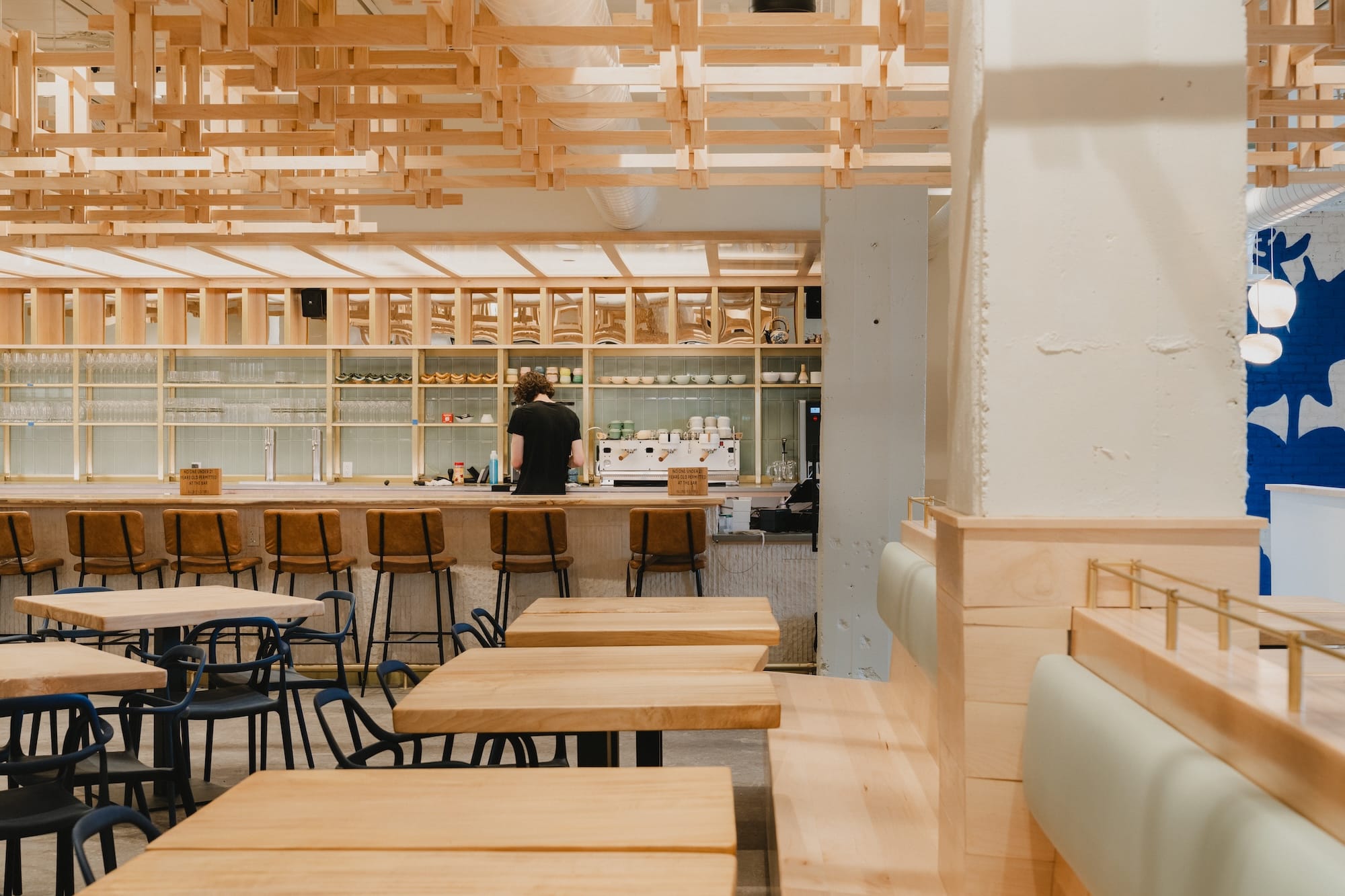
The dining space at Natsukashii
Feeley and Herrera had some practice introducing traditional versions with a modern twist
of familiar things at Noche when they were still involved. The menu was full of items that would not be instantly recognizable to diners accustomed to TexMex and taquerias, even traditional taquerias.
“Mexican food comes with all sorts of preconceptions,” Feeley says. “People arrive with the idea of ‘I know what a margarita is, and that’s not it.’ To overcome that, we presented what the Tulsa diner considered classics, like queso, next to cochinita and tlacoyas.”
The latter two are actual classics, while queso is barely in the Venn diagram of what constitutes Mexican food, but the archetypes are there, and they are impossible to argue with. So the goal is to win people over with quality and flavor, alongside great service and an unintimidating approach. The analogy is pretty solid where Japanese and Mexican are concerned, because both have been in the state long enough to create an entire set of expectations among diners.
For Sato at Natsukashii, making the dishes he grew up with and offering them to Tulsa diners is an opportunity to tell his story through food and the experience of dining. He, too, thinks Tulsa has reached a turning point. “It’s not what Tulsa defined as Japanese food 10 years ago, or even a few years ago, but our guests seem ready to try food from people who are telling real stories by cooking the food they love and then offering it in a box the diners aren’t used to.”
That’s progress by any definition. When significant numbers of diners set aside preconceptions—typically poorly formed ones based on non-traditional dishes that have been Americanized or Okie-ized—and begin to try food for the joy of the experience, it’s safe to say the inflection point has been passed.
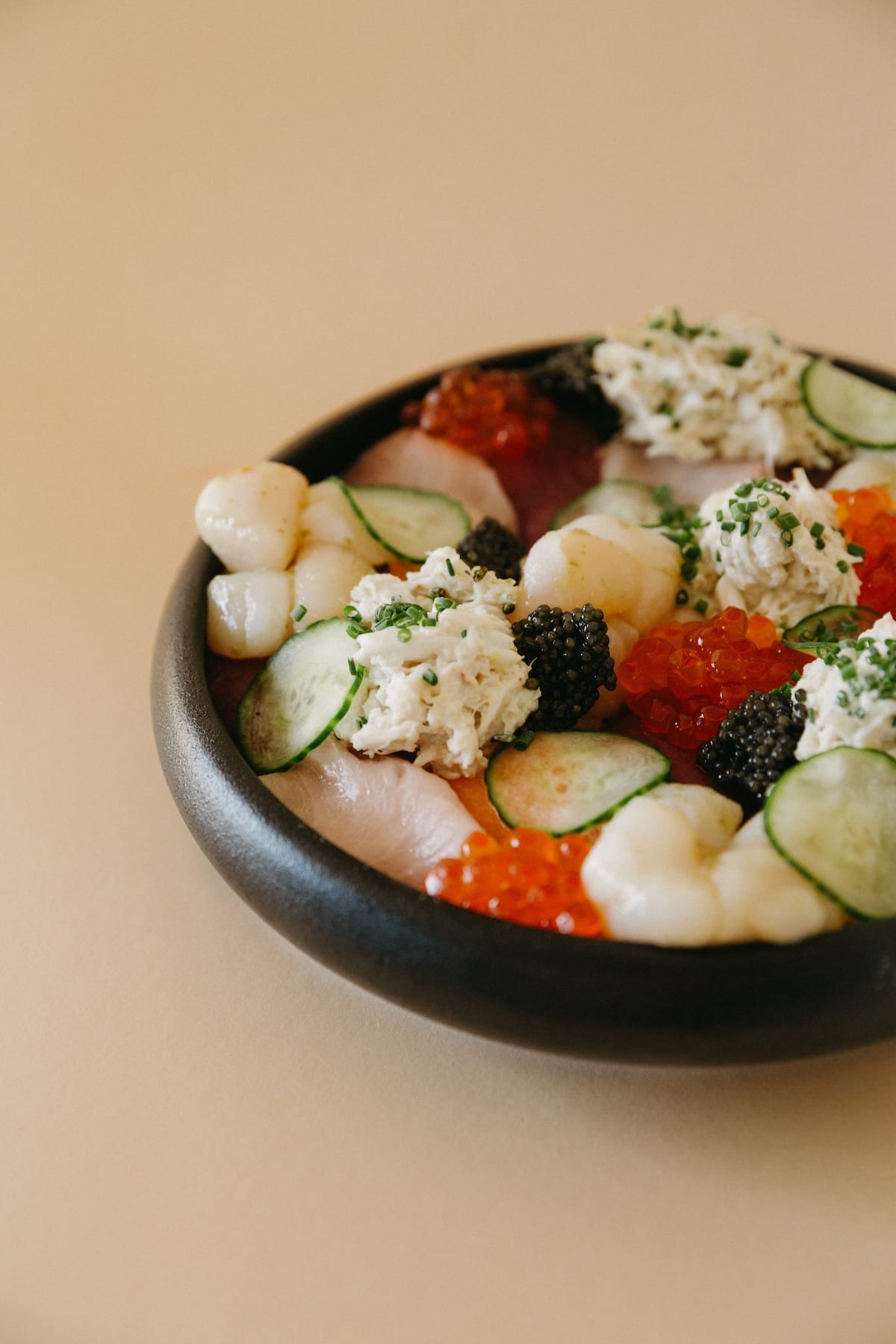
Chirashi Royale at Little Belly
Why Asian food, broadly understood, though? The answer probably emerges from our experiences eating at home growing up. Our families likely put gringo tacos on the menu once a week or a couple of times a month, and we learned to love crunchy shells, shredded orange cheese and beef seasoned with McCormick’s taco seasoning. Same with Italian food: Ragu plus overcooked spaghetti, or lasagna (sub cottage cheese). Japanese was not on very many Oklahoma tables, nor were Lao, Korean or regional Chinese. We went to restaurants to get those. Sure, we formed preconceptions, but they weren’t deeply embedded in our nostalgia like the other dishes.
Neither Little Belly nor Natsukashii suffers from a dogmatic approach—to borrow Feeley’s words—to the genre. Little Belly has an “okiemiyaki” on the menu, made with smoked brisket. Sato calls co-owner Chef Chloe Butler’s baking program “the jewel in the crown” of Natsukashii. They began as Et Al, and that chef-driven diversity lives on in the various menus, or as Feeley puts it, “Neither of us are trying to do Japanese right down the center of the fairway definitionally.”
Sato sums up the moment well: “We’re an ambitious restaurant. We’re open 14 hours a day, and we have different menus from different chefs. We’re a community of risk takers, and it seems that has finally translated to the consumer side, where Tulsa diners are becoming risk takers with their choices as well.” •
The link has been copied!
Your link has expired. Please request a new one.
Your link has expired. Please request a new one.
Your link has expired. Please request a new one.
Great! You've successfully signed up.
Great! You've successfully signed up.
Welcome back! You've successfully signed in.
Success! You now have access to additional content.